25
Oct
Special Report
Finishing school: Peters, Kereama pitch WNBL to WNBA players

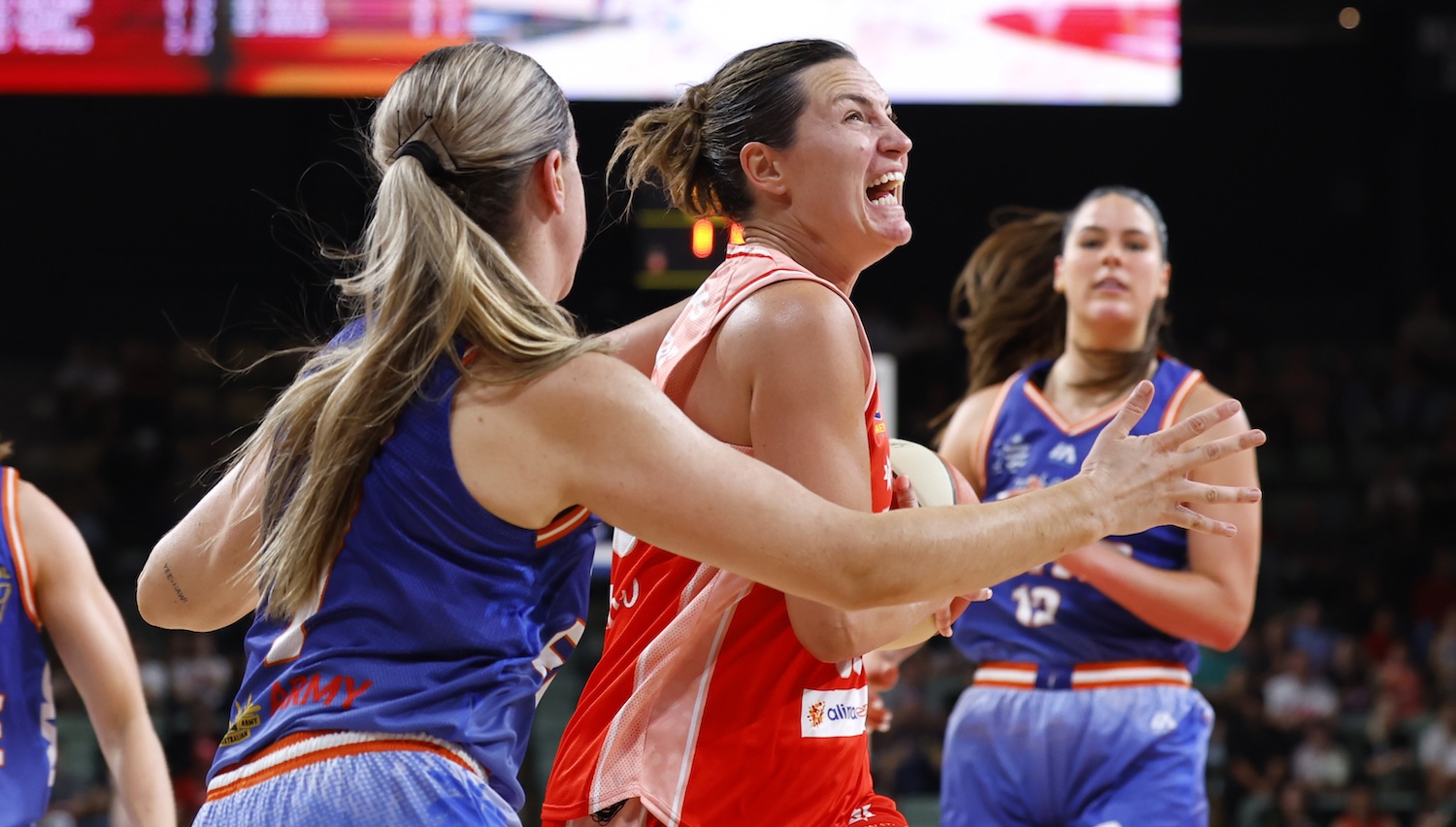
Perth Lynx’s Haley Peters drives to the basket during their Round 1 WNBL clash against Townsville Fire at Perth High Performance Centre on October 17, 2026. Photo: James Worsfold/Getty Images.
A WNBA veteran and the WNBL26 Coach of the Year agree the WNBL is where WNBA players can get better.
- Haley Peters says the WNBL's schedule lets WNBA players play the full year
- Kennedy Kereama says the WNBA's boom showed Australia a pathway forward
- Peters had 17 points and five assists in Perth's 90-82 win over Adelaide
Former Duke Blue Devil and WNBA veteran Haley Peters and Bendigo Spirit head coach Kennedy Kereama are on opposite sides of the floor in WNBL27, but they agree on one thing: the WNBL is perfect for WNBA players to develop their games.
Peters, 34, signed with the Perth Lynx for WNBL27. She played 75 WNBA games for San Antonio, Connecticut, Atlanta and Washington.
“I think this is a great league for players in the WNBA to come to,” Peters said.
“It’s a pretty fast-paced league. Obviously, the schedule works really well.
“There aren’t many leagues that a lot of WNBA players can play the full year in, so it works really well for them that way.
“It’s just a high, high level. You can see it’s an adjustment for some of them still because this is a really high-level league.
“Even coming over from the WNBA, it takes a little while to figure out the league here and how it works.
“(Teonni Key) and Georgia (Amoore) are just super fun to play with, really great people and pretty good hoopers so far.”
WNBL27 has 21 players with WNBA experience, with a combined 1,521 games between them.
WNBL26 Coach of the Year Kereama said the WNBA has exploded in the past four years and has created a beacon on the hill for Australia’s professional women’s league.
“You could probably see it if you watched Game 2: the Golden State owner there and how he’s poured into this Valkyries program,” Kereama told basketball.com.au in an exclusive interview.
“A lot of these WNBA teams now are starting to really step up and inject the resources.
“What effectively has been a lot of wish-list items for women’s basketball in the WNBA has now become the norm: skills trainers, multiple medical staff, private jets, training facilities and full-time staff. It’s just incredible.
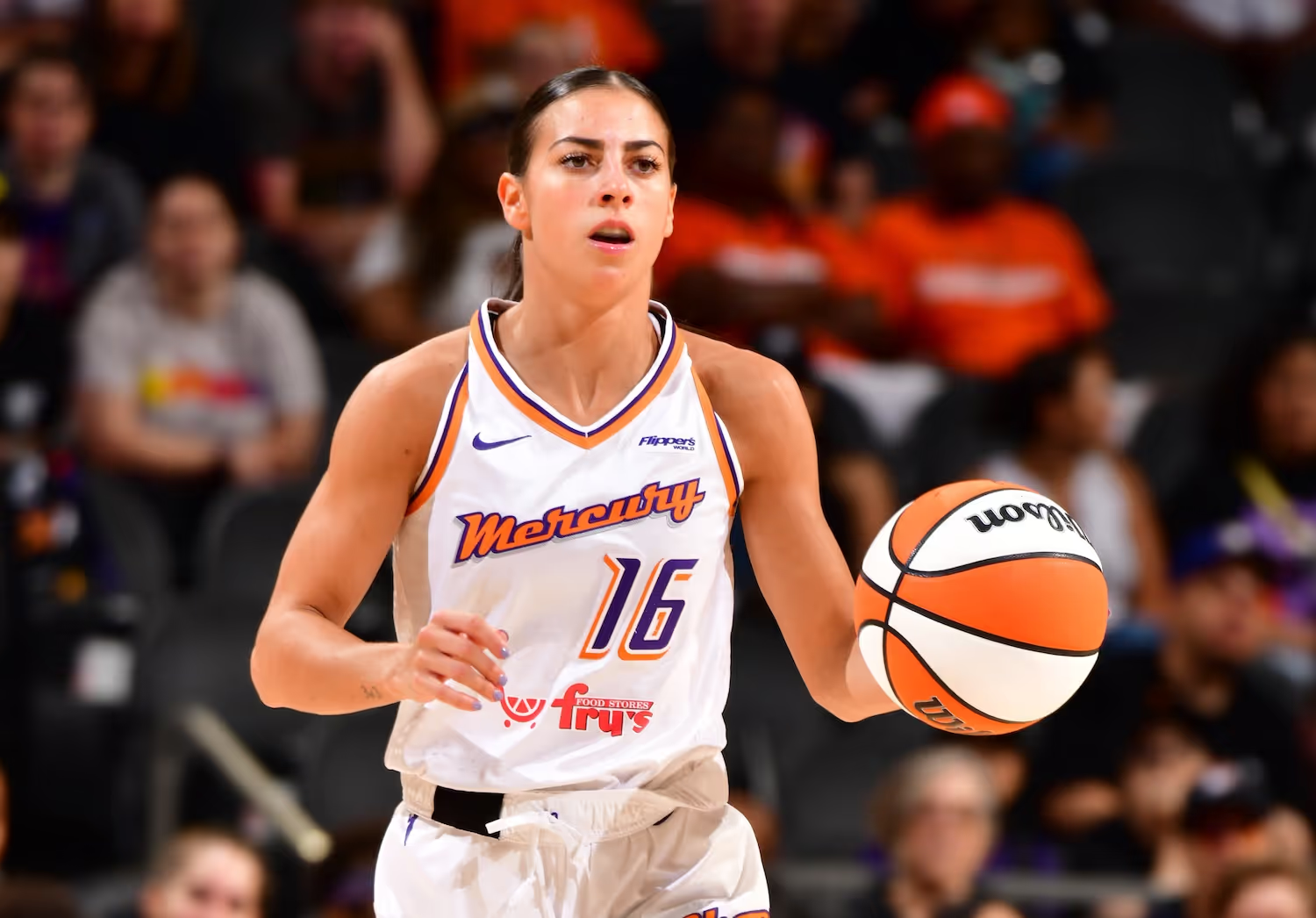
“I just resonate with the time when I was able to go and spend some time with the Phoenix Mercury, with some professional development and coaching activities, and Fleur McIntyre and the team there in Phoenix.
“To me, it really showed me where basketball can get to, where the sport can get to and where it needs to get to.
“Sadly, at the same time, it made me realise how far behind we are here in Australia.
“Not to say that it’s because of a lack of intent or want, but just seeing what resources are available and knowing what potential you are capable of when you have access to so many things – provided you have all the right people there to actually manage it.
“You can have all the tools and not know how to use them. It’s a bit like my tool shed: I’ve got these tools; I don’t know how to use half of them. [Laughs] I’m talking in the home sense here, not basketball.
“It’s incredible how much it has grown, because certainly my early experiences with the WNBA have only been from the athletes I’ve coached who have played in it.
“Outside of Kelsey Griffin, I had Lindsey Moore, who won a championship with the Minnesota Lynx, when I first started coaching in the WNBL here. She was with me at West Coast Waves.
“Just them talking about their experiences and what it was like, it sounded like it was really bloody tough – tough times back then. Now, to see what they’ve got is just incredible.
“I think that’s a lot of the reason why these athletes are thriving in these environments and producing the level of basketball they are, outside of the fact that they’re very talented basketball players.”

It puts greater emphasis on the health of Australian women’s basketball that 19 players are connected to WNBA franchises in 2026, including Isobel Borlase and Miela Sowah in the Finals. The series is tied at 2-2.
“Thinking on this over the last four or five years, particularly while I’ve been coaching Bendigo, and thinking about how we maximise playing opportunities and where we sit on the basketball stage globally, it’s: how do we attract people to our league? And how do we attract Australians, more importantly?” Kereama questioned.
“I think for most of us WNBL coaches, when we’re thinking about recruitment, it’s about recruiting local Australian talent first. Can we fill the majority of our roster that way? Then where are the gaps, and do we need imports from there? What do those imports look like?
“We always start at the top. You get the WNBA, and if you strike out of the WNBA, you’re looking at Europe. If you strike out of Europe, you’re probably looking at college graduates from that point onwards. After that, maybe you’re looking at Asia these days.
“The reason I mention that, with so many Australians playing in the WNBA right now, is I truly believe the WNBL is the perfect platform for development.
“Certainly, I can only speak from my own perspective. I understand there’s the EuroLeague, but as far as style of play and the type of play – where there is an appropriate amount of fast-break basketball, an appropriate amount of great defensive schemes and a lot of set-based basketball – it’s, in my opinion, probably one of the closest leagues to the WNBA.
“Look, I understand we have some incredible athletes, but certainly Dominique Malonga’s not running around dunking on people, or the Lisa Leslies, if we’re talking early days in the WNBA, or Sylvia Fowles-type athletes.
“We have some incredible athletes, and I think this creates a perfect platform for people to go away and get better.
“That’s where I think the league is best marketed, because we do a great job of that here. I’m not just talking about the Spirit program. There are plenty of cases out there.
“Outside of the way the league is structured, it’s not a heavily travel-based league, day to day. In Europe and some leagues in Asia, the schedule’s so incredibly tight that you don’t actually get as much time as you’d like to work on some of the softer skills in the sport, do workouts and put the level of time into your game that’s required to actually get better.
“You can turn games around, watch video, review and really be deliberate with how you develop athletes. I think the WNBL allows that because we’re not trying to train twice a day, every day, like in Europe.
“Some of us coaches would probably love and thrive in that environment. I don’t know whether all of our players would necessarily.
“That’s why I think a lot of people make the choice to play in the WNBL. It is a high-level league.
“It demands a lot of you, but it certainly doesn’t demand as much of you, potentially, as some of the other international leagues out there.
“I won’t speak about my own coaching, but there are some highly credentialed coaches. I think a lot of the coaches in our league’s resumes would stack up against a lot of the coaches in the southern hemisphere – maybe the northern hemisphere too.”
Peters, who finished with 17 points and five assists on 6-from-9 shooting against Adelaide, said she chose Perth because of Lynx coach Ryan Petrik’s system.
“I’m really happy to be back in Australia,” she said.
“I wanted to come back and play in the league. I think it’s a really good league.
“I said this to him one of the first times we talked: you could see last year just how fun it is to play in the system that he has.
“People play with a lot of freedom, and you get to make a lot of decisions. I think that’s probably one of the strengths of how I play, just understanding the game a bit.
“When I have freedom to play and do that stuff, that’s what I enjoy the most and what I’m pretty good at.
“I think we just have a group that buys into that at the moment. We have a lot to get better at, but we’re all pretty much on the same page about wanting to get better at that.
“It’s been pretty fun so far.”