27
Aug
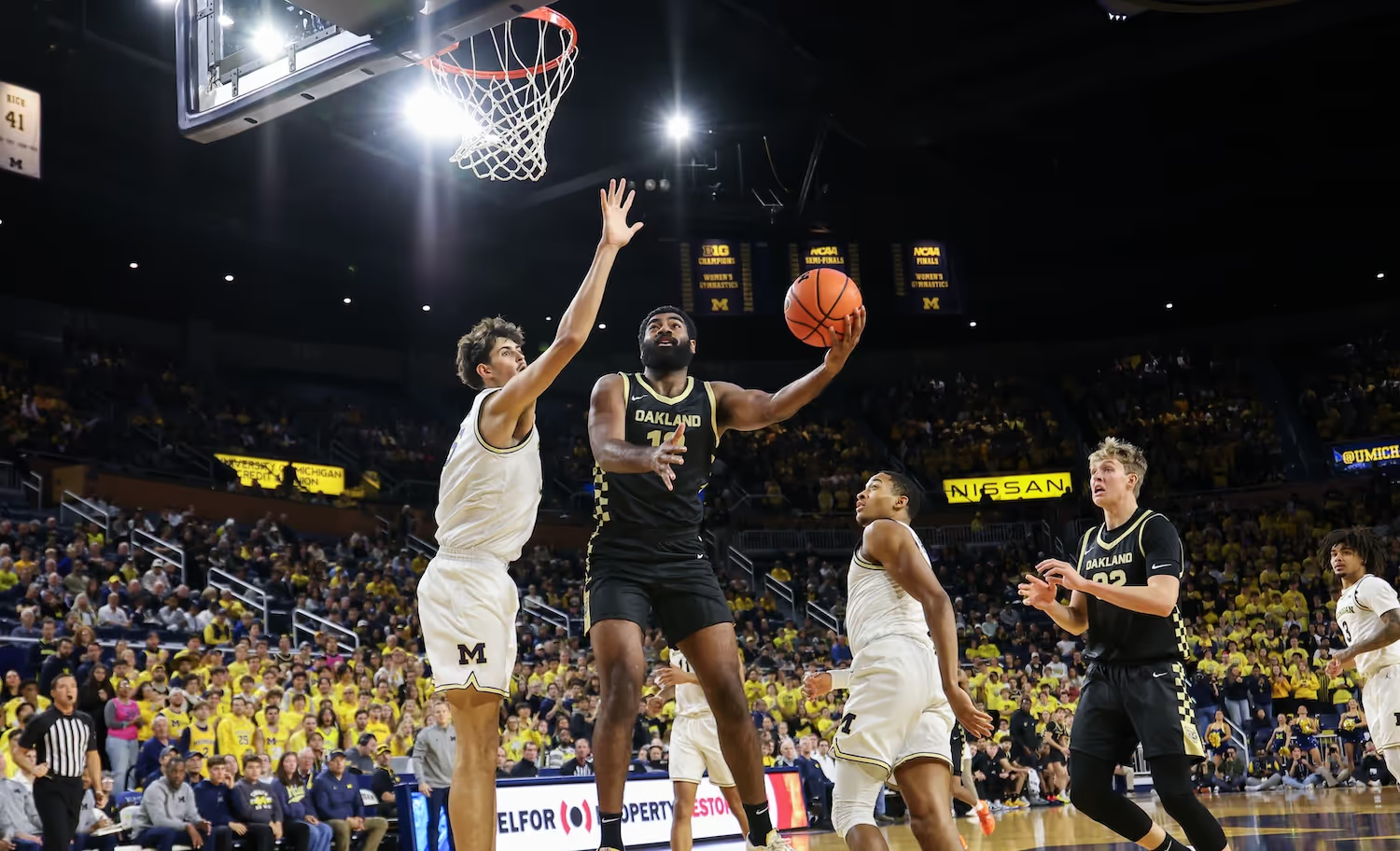
Aussies in NCAA
NIL impact 2026: Akoldah Gak denied as NCAA bans pros

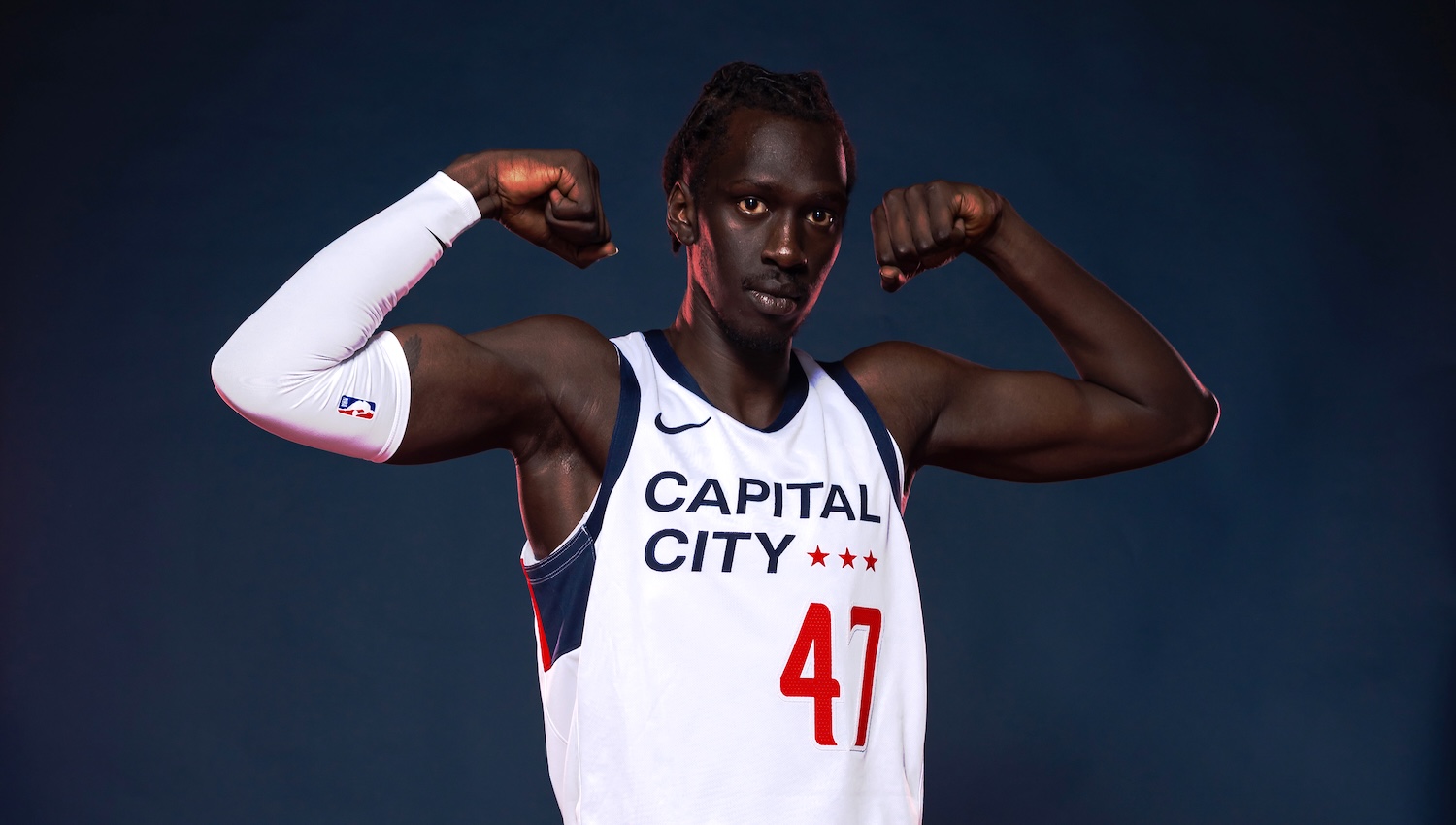
Akoldah Gak #47 of the Capital City Go-Go poses for a portrait during the 2025–26 G League Media Day at Entertainment & Sports Arena on October 29, 2025. Photo: Stephen Gosling/NBAE via Getty Images
Schools now pay athletes up to $21.3 million a year and Australians are right in the middle of it
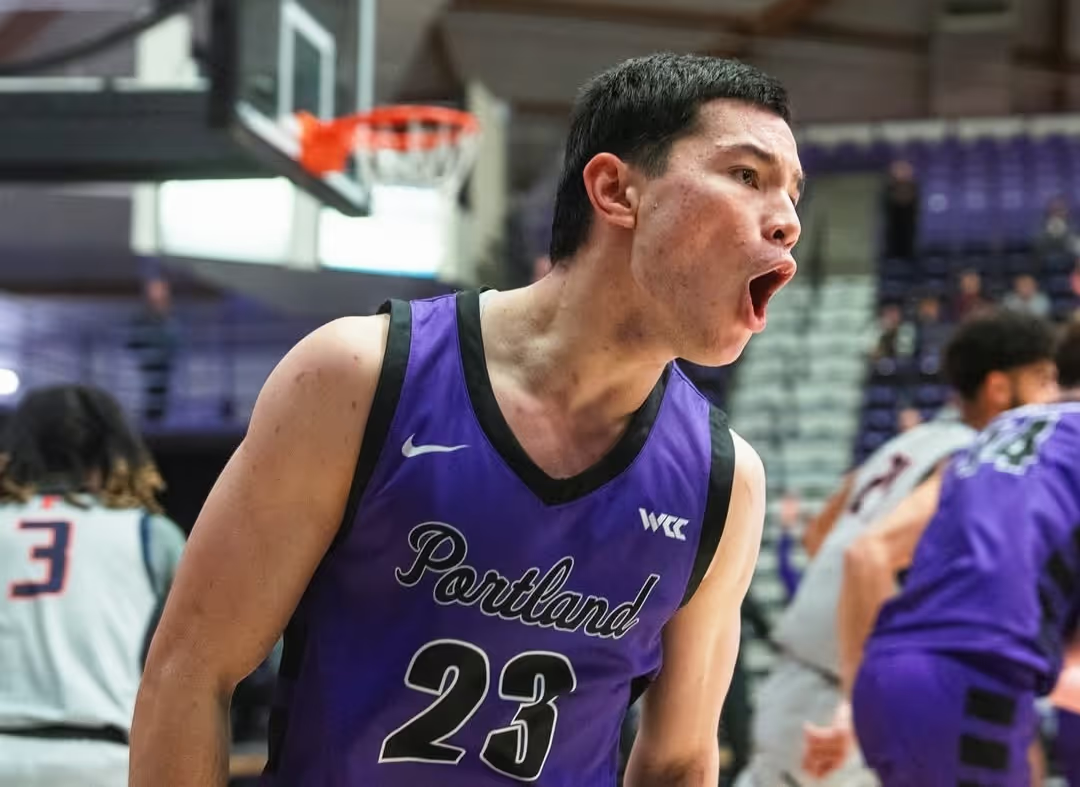
- Every Australian in the NCAA Men's basketball in 2026-27
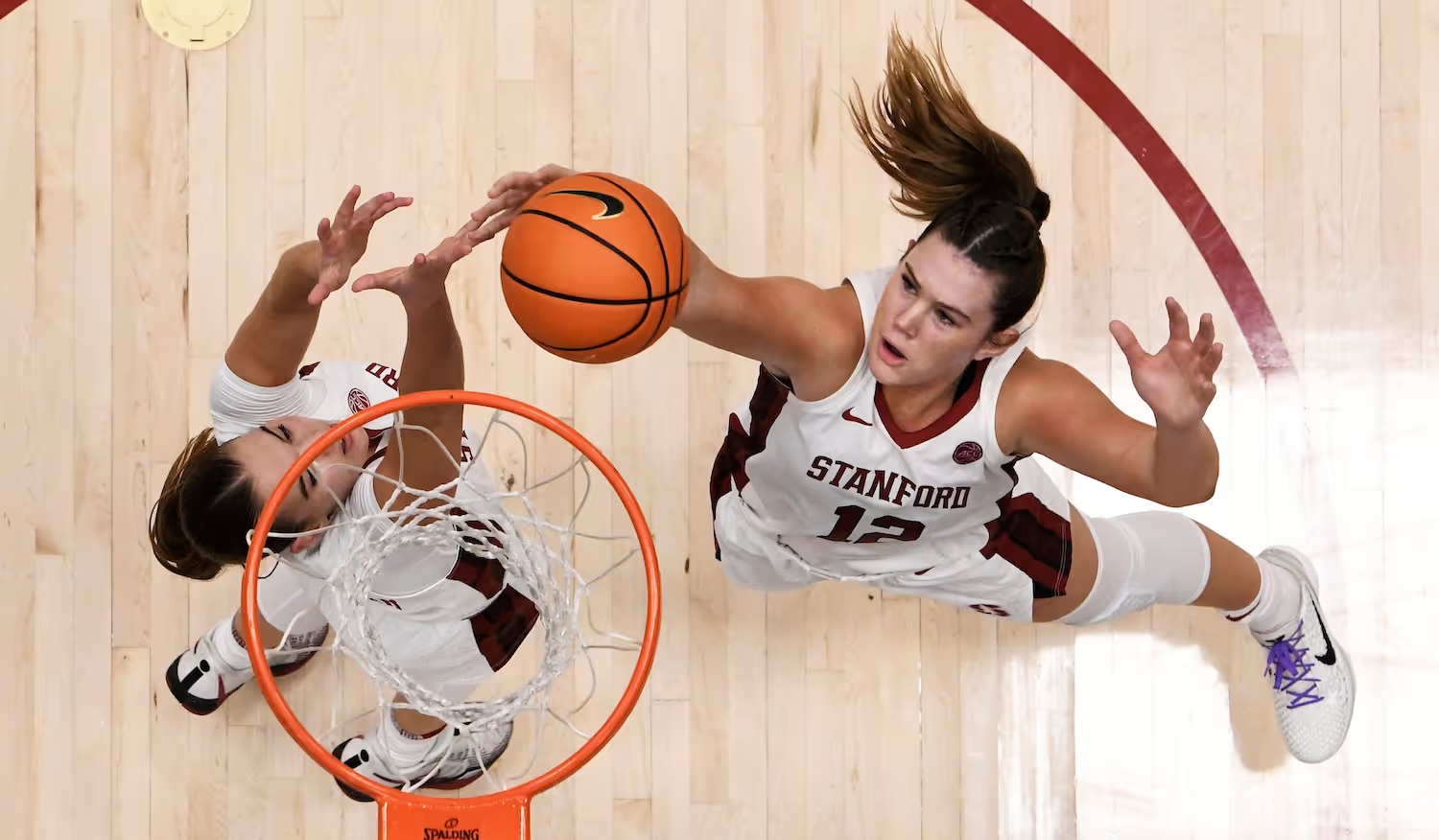
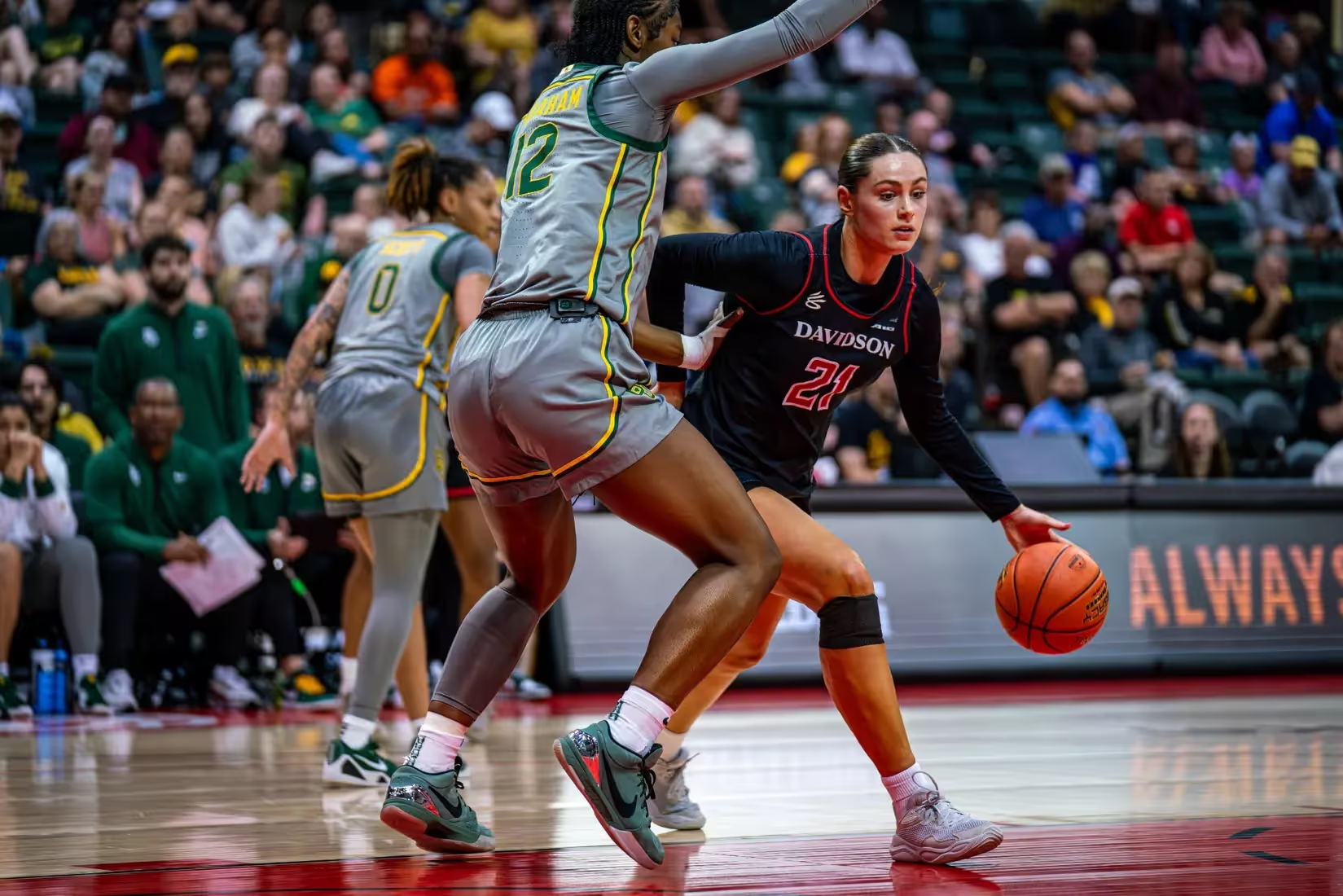
- Every Australian in NCAAW basketball in 2026-27
- Every Australian player in the 2026 Transfer Portal
Australian Akoldah Gak will not see a cent of Name, Image and Likeness money after the NCAA denied the 23-year-old Sydney centre's eligibility request – and Oklahoma does not plan to fight it.
His college career is over before it started.
Behind him are 223 Australians who remain eligible for NIL payments, and paid out of money like the $18 million an average SEC basketball roster now costs, through a legal structure their own lawyers describe as fragile.
That is the real state of NIL in American college basketball, and it is not the story usually told about it. The common version says international athletes are locked out. They are not. They are being paid through a classification that has never been tested, and the people who built it know it.
Gak's problem is a different one, and worth separating out. He is 23, he has played in the NBL and for the Capital City Go-Go, and it is that professional experience the NCAA has ruled on. Nothing about his case turns on the visa question.
THE MONEY IS REAL NOW, AND IT COMES FROM THE SCHOOL
The change that matters happened on July 1, 2025, when the $2.8 billion settlement in House v. NCAA took effect and universities began paying athletes directly for the first time. It runs a 10-year revenue-sharing model. Each school may distribute up to 22 per cent of the average revenue that ACC, Big Ten, Big 12, Pac-12 and SEC schools earn from media rights, ticket sales and sponsorships. That was about $20.5 million per school in year one. The College Sports Commission, which administers the settlement, estimates approximately $21.3 million per school for 2026-27.
Alongside it sits NIL Go, a clearinghouse run by Deloitte that reviews every non-school NIL deal above $600 for fair market value. In its first year the Commission approved 8,300 deals worth just under $80 million.
The Athletic reported in late July that basketball roster costs now average about $11.5 million per team in the ACC and about $18 million in the SEC, with one assistant saying three or four SEC teams are in the $30 million range. An SEC head coach said of it: "I do not think it's a sustainable model, but people keep paying for it."
HOW AN AUSTRALIAN ACTUALLY GETS PAID
Australians in the NCAA hold F-1 student visas. Immigration law defines employment very broadly, as "any service or labor performed by an employee for an employer within the United States", and F-1 holders may generally work on campus only. On the face of it, none of the money above should reach them. It does, through four structures.
The first is the school's own revenue share, and it is the biggest. Universities are classifying these payments as royalties for the use of a player's NIL, issuing a Form 1099-MISC with the money in the royalties box rather than a Form W-2. No wages, no payroll tax, no employment. That choice was made in large part because passive licensing income is permitted on an F-1 while wages are not.
The second is home-market work. An Australian brand pays an Australian player, in Australia, for a campaign running in Australia. The work is not performed in the United States, so the restriction does not bite. This is the cleanest route available and it is why a class of Australian NIL agents and advisers now exists.
The third is offshore work during team travel. Oscar Tshiebwe reportedly earned about $500,000 doing promotional work while Kentucky were in the Bahamas. Legitimate, and useless to most players, who are in America nearly all year.
The fourth is genuinely passive group licensing, the jersey and video game programs where an athlete does nothing beyond permitting the use of their name. Immigration lawyers describe this as the lowest-risk route there is.
WHY THE LAWYERS SAY THE BIGGEST ONE WILL NOT HOLD
The royalty classification is the one carrying the most money and the most risk. Ksenia Maiorova, the immigration attorney acting for Australian guard Last-Tear Poa in her case against US Citizenship and Immigration Services, co-authored a detailed argument that it is "legally fragile".
Her reasoning is hard to dismiss. The payments are predicated on athletic performance. Unlike a patent royalty, where the inventor collects while others use the invention, here the athlete has to keep playing for the revenue to exist at all.
The licence may be a fiction. Universities used players' names and images for decades without paying for them. What changed was a legal settlement, not a licensing need.
And the distribution formula gives the argument away. The money goes overwhelmingly to football and basketball. LSU gymnast Olivia Dunne carried one of the highest NIL valuations in college sport and would receive nothing under this model, because gymnastics does not generate revenue. If the payments really were compensation for NIL value, they would not be allocated that way.
Then there is Johnson v. NCAA, in which the Third Circuit held that college athletes can be employees under the Fair Labor Standards Act where they perform services for another party, primarily for that party's benefit, under that party's control, and in return for compensation. College sport already met the first three. The House settlement supplied the fourth.
THE RISK RUNS IN BOTH DIRECTIONS
For the player, unauthorised employment is a status violation. It can mean loss of status, ineligibility for future immigration benefits and removal proceedings, and it can surface years later at a visa application or a port of entry.
For the institution, 8 U.S.C. 1324a makes it unlawful to knowingly engage the labour of someone without work authorisation, and the statute is explicit that using a contract to obtain that labour counts as hiring. Calling the arrangement a licence does not settle it. Agencies look at the activity, not the label. That is why compliance offices are cautious, and it is part of why an advisory industry has grown around Australian players.
CONGRESS NOW HAS A DATE
S.4668, the Protect College Sports Act of 2026, was introduced on June 2 by Ted Cruz with Maria Cantwell, Eric Schmitt and Chris Coons. The Senate Commerce Committee reported it favourably on June 18 by 19 votes to 9, and it was placed on the Senate Legislative Calendar on June 24.
On July 31 the SEC and the Big Ten dropped weeks of resistance and backed the bill after the committee tightened language on the loophole that would have let schools route money around the cap through sponsors and collectives.
Then it ran into the Senate itself. In an all-night session before the summer recess that ended early on Saturday, August 8, the bill failed to reach a vote. Senators from SEC states, including Tommy Tuberville and Josh Hawley, were among its biggest sceptics. The Congressional Black Caucus and the AFL-CIO came out against it. Amendments on matters that were never part of the bill began appearing. A short-term funding bill and a contested attorney-general confirmation pushed it down the order.
It did gain a place on the September calendar. Majority Leader John Thune, who had said weeks earlier that he did not think the bill would get done, now says otherwise.
"College sports is something that needs to be fixed. They have a good solution," Thune said. "We got it teed up for next month."
Cruz predicts 60 or more votes. Cantwell says she looks forward to its passage in September. If it clears the Senate it still faces a narrower House, which spent months failing to bring the less athlete-friendly SCORE Act to a vote.
WHAT THE BILL WOULD ACTUALLY CHANGE
The headline feature is a redefinition of third-party NIL. Schools can currently share up to $21.3 million across an entire athletic program, but the money outside that, brokered through multimedia rights companies acting as "associated entities", is uncapped. The Act would pull much of it inside a newly expanded pool of up to $48.8 million, while leaving room for genuinely organic deals. Caitlin Clark's State Farm sponsorship is the example given: she got it for being Caitlin Clark, not for playing at Iowa.
Whether that curtails the spending is contested by the people who broker it. "It's going to continue to grow," Christy Hedgpeth, president of Playfly Sports Properties, told the Associated Press. "We have a lot of data that proves that they don't have to be nationally recognisable. On an average roster, you're going to have far more than 20 who are going to have several NIL deals."
And it would not fix this even if it passed. The Act is expressly neutral on whether athletes are employees, so it does not touch the visa question. Congress has separately asked the Department of Homeland Security to clarify whether F-1 holders can receive revenue-share payments. No guidance has ever been issued.
WHAT IT MEANS FOR THE AUSSIES
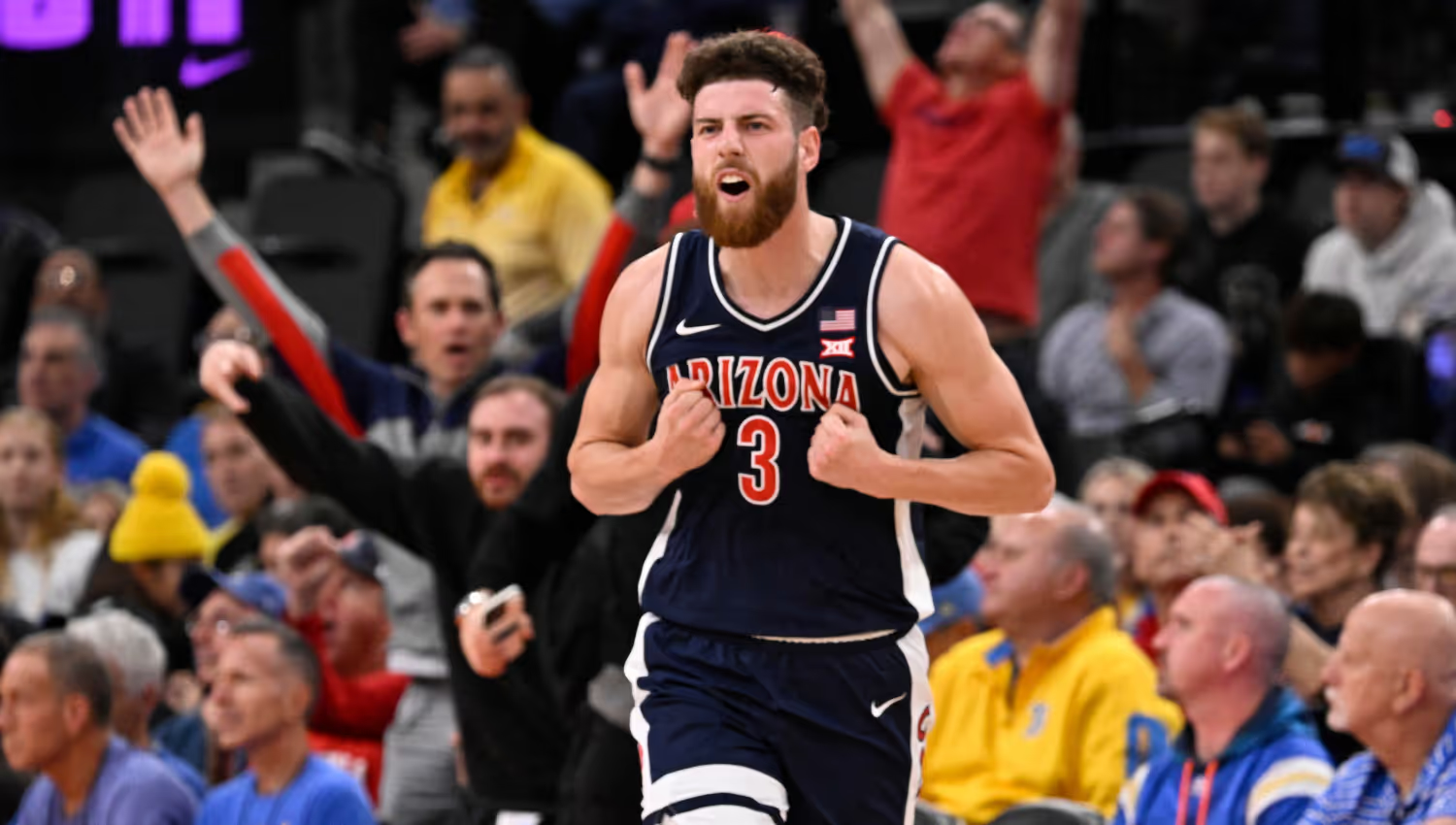
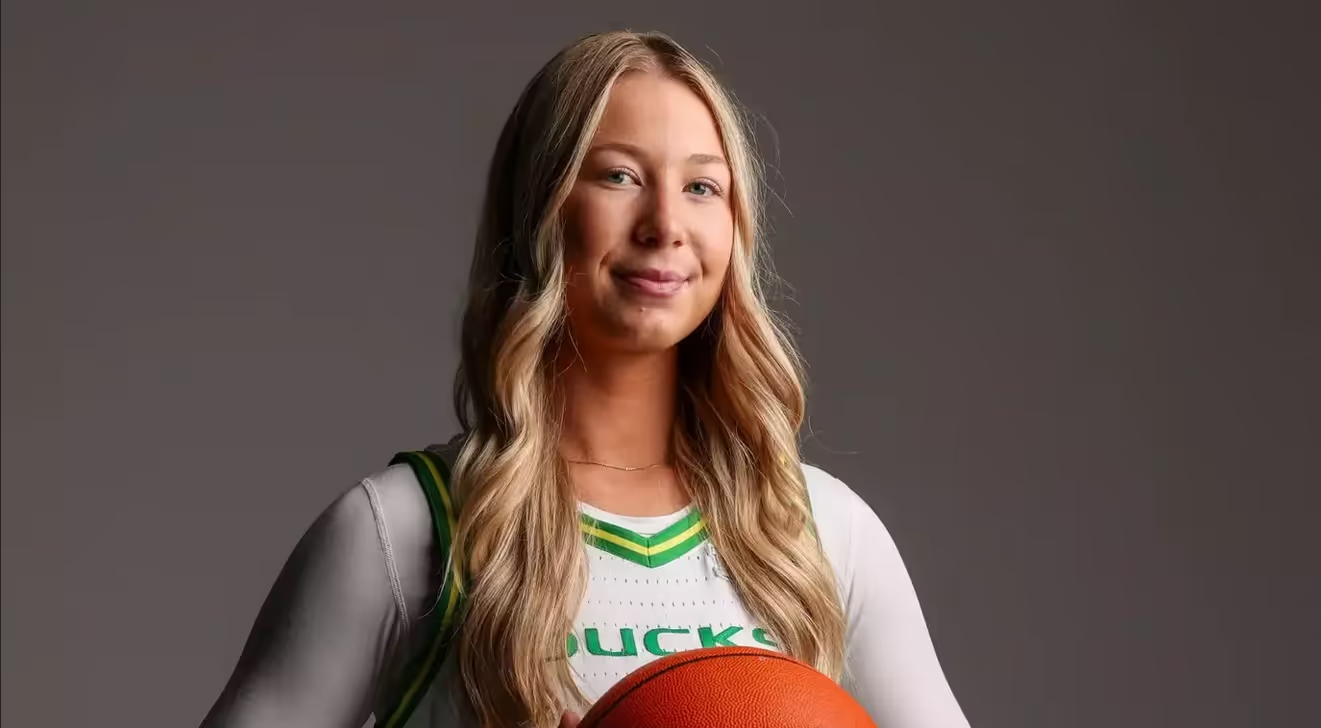
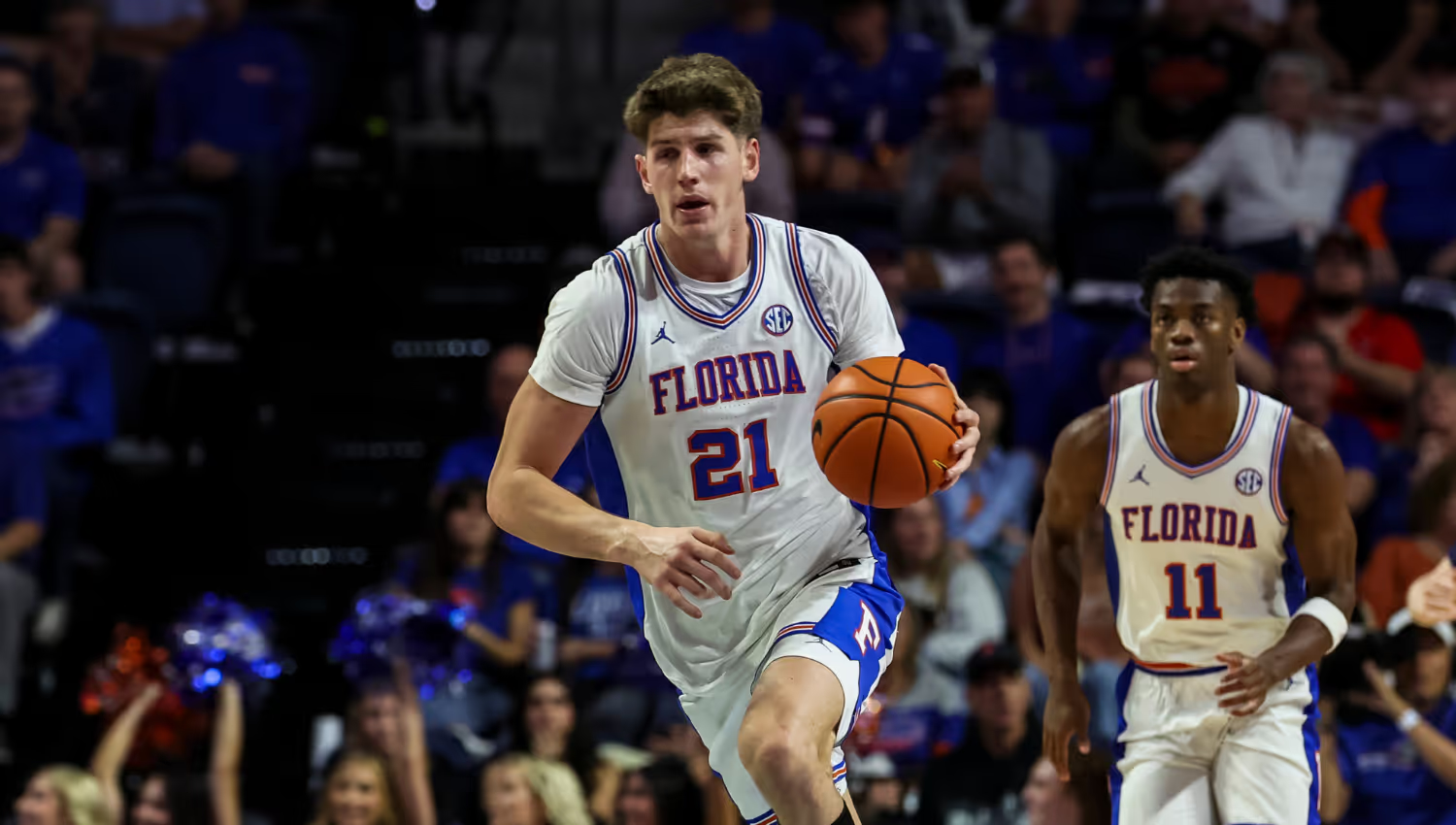
There are 224 Australians on NCAA Division I basketball rosters this season, 139 of them women. Many are being paid, some of them very well, on a legal footing nobody has tested.
Former Boomer and Sydney Kings captain Ben Madgen, 41, now an investment adviser, told basketball.com.au that the support around those players has not caught up.
"You've got college athletes between 18 and 23 earning seven figures a year, and for a lot of them, that NIL deal is the single biggest contract they will ever sign in their life," he said.
"Nobody sits an 18-year-old down and says, here's what this contract could mean for the next 40 years of your life."
For Australians there is a second conversation nobody is having, and it is not about investment strategy. It is that the structure delivering the money is contested, the consequences of it failing fall on an 18-year-old's immigration status, and the people best placed to explain that are lawyers rather than coaches.
Three things could resolve it. The Senate floor vote in September. A ruling in Poa's case. Or DHS finally answering a question it has been asked since 2024.
Until then the money keeps arriving, and so does the risk.
This is reporting on the state of the law, not legal advice.