10
Jan
Aussies in NCAA
NIL, sum gain: 'Money tearing college hoops apart'

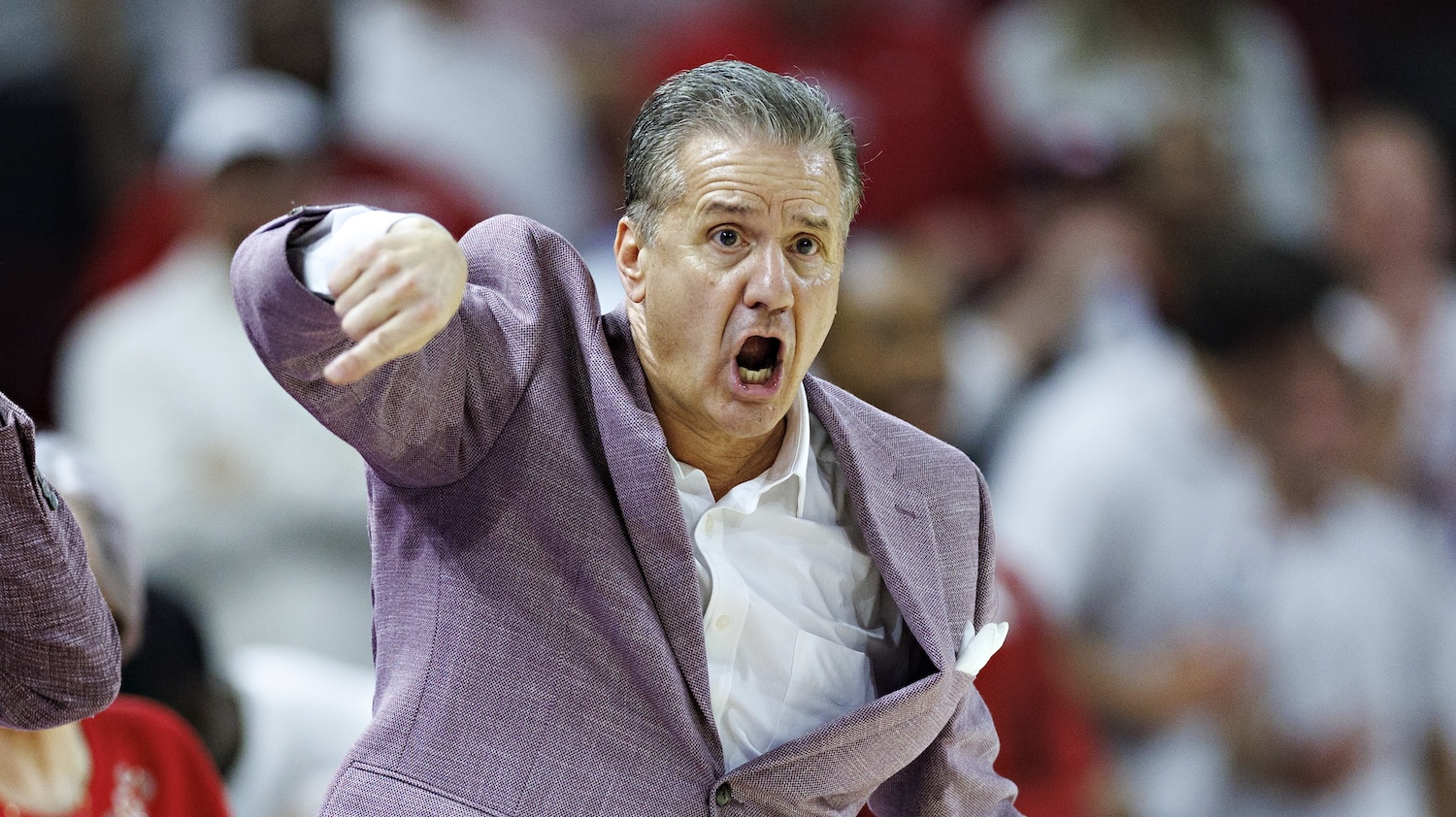
Head Coach John Calipari of the Arkansas Razorbacks directs his team during a game against the Tennessee Volunteers at Bud Walton Arena on January 4, 2026 (AEDT) in Fayetteville, Arkansas. The Razorbacks defeated the Volunteers 86-75. Photo: Wesley Hitt/Getty Images
John Calipari blasts NCAA rules allowing pro players into college basketball during the NIL era.
- Every Australian in NCAAM basketball in 2025-26
- Every Australian in NCAAW basketball in 2025-26
- Latest News: Australia's most comprehensive college basketball coverage
Hall of Fame head coach John Calipari has teed off on the NCAA granting already professional basketballers playing for US colleges in the NIL era that is changing the shape of the historically amateur pathway to the NBA.
The 66-year-old Calipari, who is a three-time Naismith College Coach of the Year, is the head coach at Arkansas Razorbacks and is stunned by established professionals now playing college basketball after Name, Image, Likeness (NIL) enabled players to get paid.
There are more than 160 Australians playing college basketball in the United States this season.
Calipari ended his press conference with: "I wish you wouldn’t ask me that question."
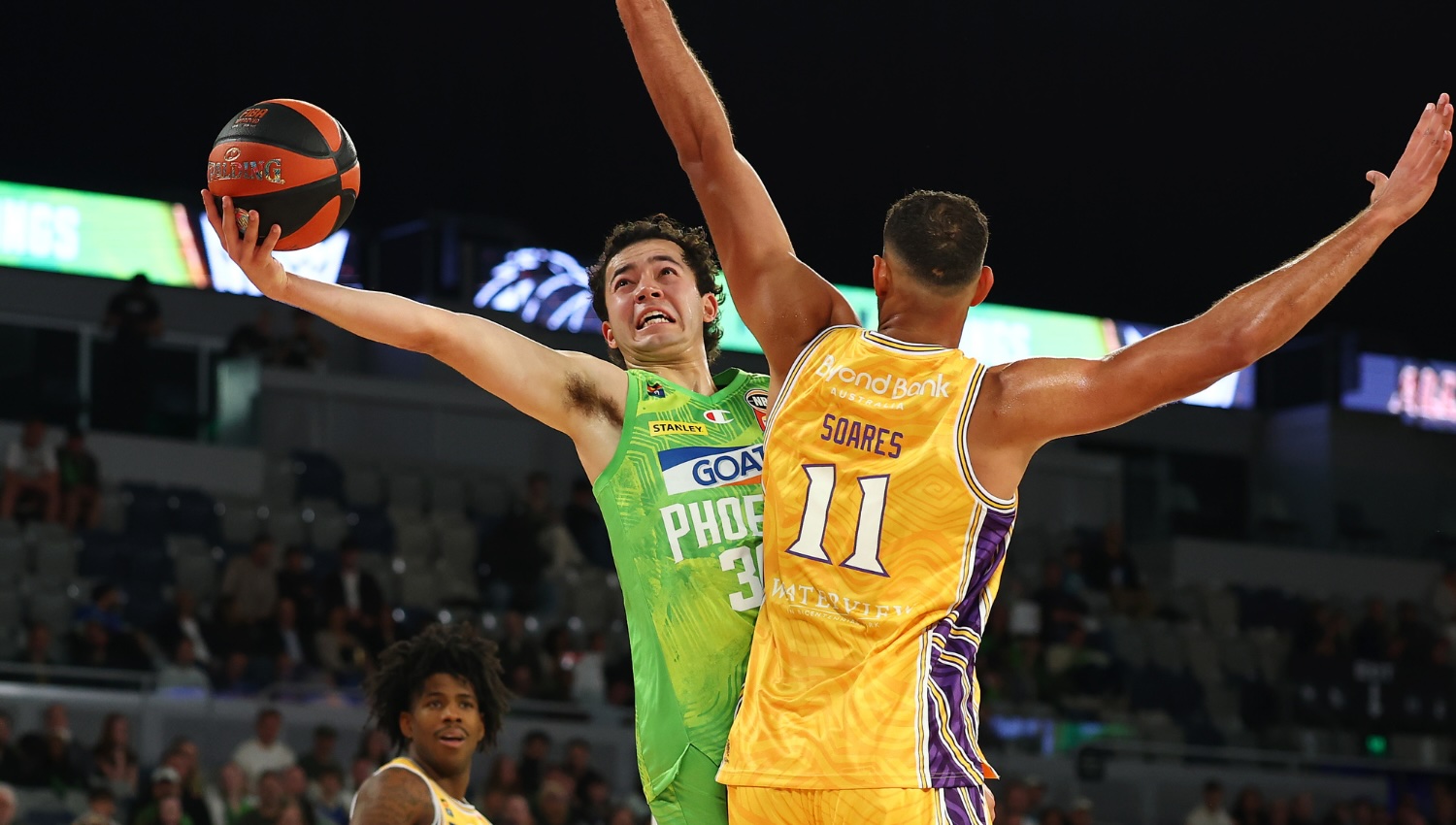
His spray came as South East Melbourne Phoenix young gun Owen Foxwell, a professional, is attracting significant interest from cashed-up US Colleges prepared to pay the rising guard life changing money, reports Matt Logue from .
Code Sports Basketball revealed Foxwell was speaking with a number of schools about a potential move to America. Foxwell's younger brother Joel is starring for the Portland Pilots in the 2025-26 season.
Australian centre – Purdue transfer Oscar Cluff – once an apprentice welder on the Sunshine Coast – is likely Australia’s top earner, with his NIL understood to be between USD $1.5-2.5 million.
"I don’t blame coaches," Calipari.
"You know, I’ve got friends that are playing with 27-year-olds, and they feel bad. I said, don’t feel bad. We don’t have any rules. Why should you feel bad?
"But let me give you this real simple. The rules be the rules. So if you put your name in the (NBA) draft — I don’t care if you’re from Russia — and you stay in the draft, you can’t play college basketball.
“'Well, that’s only for American kids'. What if your name is in that draft and you got drafted? You can’t play college because that’s our rule.
“'Yeah, but that’s only for American kids'. Okay. Okay. Now here’s the next lawsuit.
“'Well, we don’t have a say over European players'.
"You do if they’re playing in college basketball. So that means you don’t have a say over high school kids. So whatever a high school kid does before he comes here, don’t you do one thing, ’cause there’s a suit. ’Cause what you’re saying is, if he’s in Europe, we don’t have the same rules.
"'What if he puts his name in the draft?' Can’t go to college — he left his name in.
“'Well, that’s different ’cause he’s European'. Okay. You’re not doing anything with a high school player then.
"'We don’t have any jurisdiction over a high school player, do we?' We don’t. So when they come, you just gotta say, alright, now they’re here."
Calipari was bemused by London Johnson, who was heavily recruited by colleges before turning pro, play three seasons in the G League. He committed to Louisville while another G League player Thierry Darlan is going to Santa Clara.
"The other thing — the eligibility — again, real simple," Calipari continued.
"You got five years to play four. If you stay at the same school four years, we’ll give you a fifth year.
"If your coach leaves or is fired, you can transfer without penalty. You can do it once. And if the coach is fired or leaves, you could end up doing it twice. But after that, you gotta sit out. You transfer, but you gotta sit out.
"Does anybody care what this is doing for 17- and 18-year-old American kids? Do you know what this opportunity has done for them and their families?
"There aren’t gonna be any high school kids who — other than dumb people like me — are gonna recruit high school kids. I get so much satisfaction out of coaching young kids and seeing them grow and make it, and their family life changes, that I’m gonna keep doing it.
"But why would anybody else? If you can get NBA players, G League players, guys that are 28 years old, guys from Europe — do we really know their transcript? Do we have somebody over there? Do we really know their birth certificate, or don’t we?
"And then, yeah — just, there are no rules.
"Look, Tommy is old. Mark Few — there are a bunch of us that are just… we got no rules. Why did they let that kid play? Tell us all. Here’s the reason. Then we’ll all go get pros. We’ll go find them.
"Here’s my second thing. You ready? Mid-season — unless you’re in the school — this is an easy rule. We can do this. NCAA, don’t tell me about lawsuits.
"If you join a program at mid-season, you cannot play that season. If you’re in school and have to get yourself eligible, that’s okay. You can play the second term without playing the first.
"So now let me ask you this: 'what does that do for the kids in the program?'
"That you’re bringing kids in at mid-season when it was their opportunity. I mean, I just don’t get any of this.
"And again — Tommy, Mark Few, myself — we got my son, their sons are in this. I just want to help it before I’m out, for my kid. I’m very selfish. But it’s for that.
"But this stuff here — I just gave you what we could do. I’m gonna give you one other.
"The collectives on our campuses — whether you’re doing it through your media people, whatever — cannot be involved in recruiting in any way, or transfers. But if a kid’s on your campus for a year, give them what you want to stay.
"So we’ll get more kids staying. How about this — it’ll be great for them academically. They’ll probably make more money, but they’ll be academic.
"We’re not gonna have kids leaving after transferring four times. What’s the percentage of kids that make the NBA? Unless you play for me, what would be the percentage? Like, it’s like one percent or less.
"That means 99 percent of the college players that are getting money — it’s Fugazi (fake). Fugazi. Because they’re getting 400, 500, 800, one million — and they’re not pros.
"So now they have to go get a job after four stops. No college degree. No loyalty from the state or the program or anybody. You were a mercenary.
"Okay, now you gotta go get a job. I don’t care what a kid makes. It doesn’t — but I do care what we’re doing to young people.
"If all these kids could make four million, I don’t care. But what we’re doing by letting them transfer at will — transfer once, coach leaves, you can go twice without penalty — but other than that, you gotta sit out.
"Because now you get three years at one school. You’re gonna get a college degree. You can’t be 30. You got five years. Clock is ticking.
"If you go pro, I don’t care what country you’re from — you leave your name in, you cannot play college basketball. If you transfer mid-season, can’t play. You gotta sit out.
"How about we just do that stuff? We can do it without having Congress and the Senate getting 60 votes. We can do that. Let them sue us on that stuff."
Former pros are eligible if they didn’t violate specific NCAA rules
Players who have:
- Played professionally overseas
- Played in the NBA G League
- Earned income playing basketball
can still be ruled eligible if:
- They did not sign an NBA contract
- They did not stay in the NBA Draft
- Their prior earnings are not classified as violating NCAA amateurism standards
This is why:
- 24–28-year-old players
- Former full-time professionals
- Players with years of paid experience are now appearing on college rosters.
What still disqualifies you
You cannot play men's college basketball if:
- You enter and remain in the NBA Draft
- You sign an NBA contract
- You exhaust NCAA eligibility (five-year clock)
That rule applies to everyone, regardless of nationality — though enforcement has been inconsistent, which is exactly what coaches like Calipari are criticising.
Why this feels like “pro college basketball”
Because in practice:
- Players are being recruited with money
- Older, physically mature professionals are displacing teenagers
- Transfers happen instantly, often mid-year
- NIL collectives act like de facto payrolls
So while the NCAA insists college basketball is still “amateur”:
- The labour market is professional
- The incentives are professional
- The roster churn is professional
Only the legal language hasn’t caught up.
The bottom line
- Yes, professional basketballers are now playing college basketball
- No, the NCAA hasn’t formally redefined college basketball as professional
- The system now operates in a grey zone where:
- Pay is allowed
- Prior professional experience is often allowed
- But the rules are uneven, opaque, and legally fragile
That tension is exactly why this issue is exploding — and why coaches are openly saying “there are no rules.”


.jpg)