
4
May
Aussies in the NBA
Dyson’s point guard evolution lost in shooting woes

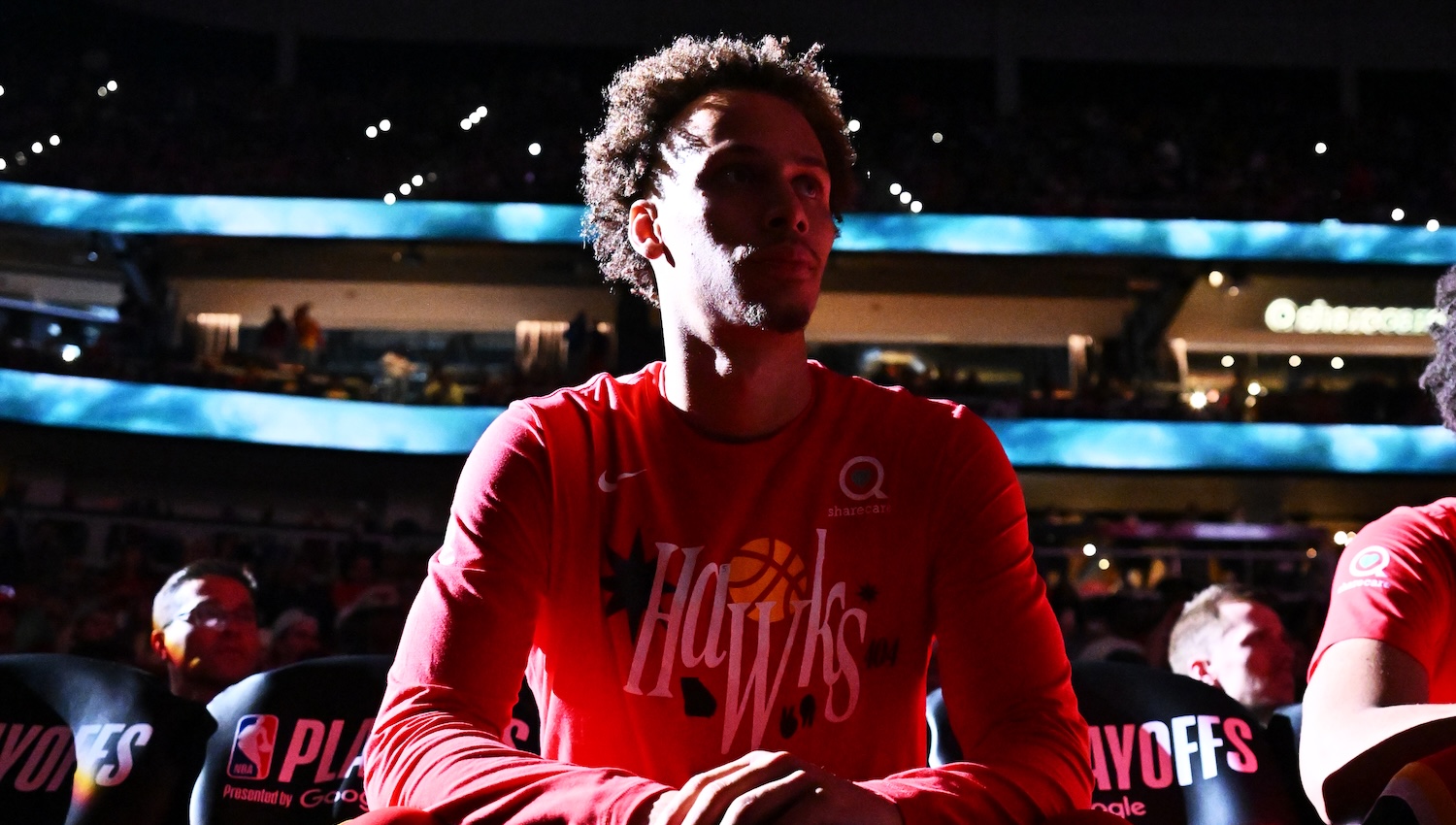
Australian Atlanta Hawks guard Dyson Daniels introduced before Game 4 against New York Knicks at State Farm Arena. Photo: Adam Hagy/NBAE via Getty Images**
Highlights
Dyson Daniels’ shooting struggled but his elite defence and impact surged to All-Star level.
- Stunning stats! Why Daniels is way better than you think
- Daniels reveals what really broke his three-point shot
- What 'angry' Dyson Daniels did after GM 6 ejection
Australian Dyson Daniels’ 2025-26 NBA Atlanta Hawks campaign will be defined by his anaemic 18.8% shooting from three-point range, but to judge his performance on a single statistic is pure folly.
It reveals more about the modern NBA than Daniels’ brutal 22-for-117 threes this season after Commissioner Adam Silver claimed the game was now a “highlight league” as part of the broadcast announcement this year.
Former Mavericks owner Mark Cuban said Silver “definitely whiffed on this one”, as are NBA fans judging Daniels' move to the point guard position early in the season and seeing anything but a resounding success.
The 22-year-old Victorian signed a USD $100M contract extension with the Hawks in September 2025, and it’s already below market value at USD $25M per season or, at the very least, one of the best value contracts in the league.
BBall-Index’s LEBRON Metric (Luck-adjusted player Estimate using a Box prior Regularised ON-OFF) reveals Daniels has more than DOUBLED his impact from 2024-25 to 2025-26 (1.02 > 2.18)
The next layer of the LEBRON Metric is LEBRON WAR (definition below), which is the impact on wins – and it’s already at an All-Star level.
In the season he won the NBA’s Most Improved Player Award, his WAR was 5.62 and this season, 7.33, which is in the 96th percentile or the top 4% in the league.
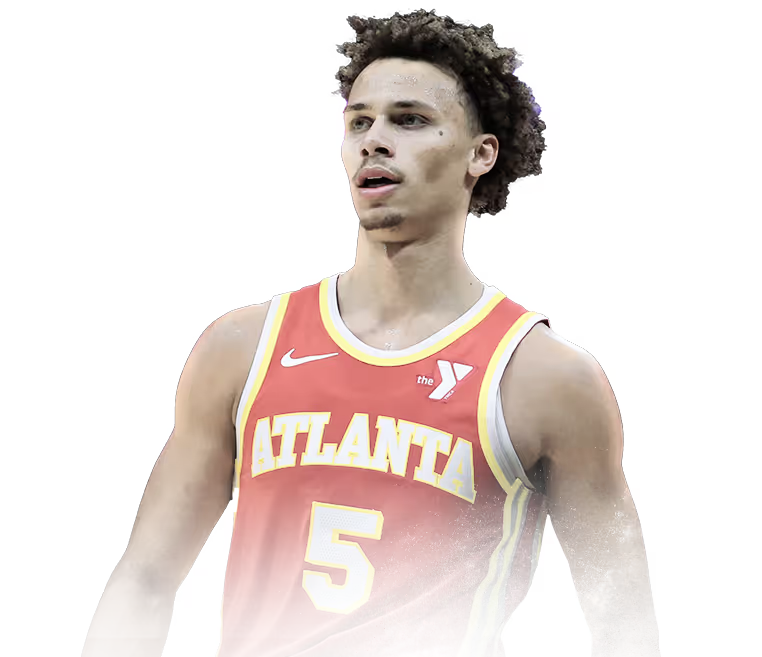
Daniels started the season alongside perennial All-Star Trae Young but finished the season as the Hawks' starting point guard after Young was injured on October 30, 2025 and later traded to the Washington Wizards in January. He was, and still is, learning on the job.
He had a career year in total assists (449) and assists per game (5.9), up from 334 (4.4 APG) in 2024-25 while remaining one of the best perimeter defenders in the league. Daniels was a first-team All-NBA Defender last season and will surely make his second team this season, because his:
Defensive Identity = ELITE (Stayed Elite, Got Better)
Perimeter Isolation Defence
- 2.87 (100th percentile) → 2.73 (99th percentile)
Already the best in the league – and stayed there
D-LEBRON
- 1.48 → 2.02 (94th → 96th percentile)
Multi-Year D-LEBRON
- 2.05 → 2.47 (96th → 97th percentile)
Daniels is now a top-tier, system-defining perimeter defender.
He finished second in the league in steals with 149, backing up his history-making 229 in 2024-25.
Where He Made Real Gains
1. Offensive Impact (Quiet but Critical Jump)
- O-LEBRON: -0.46 → +0.16
- From negative → positive player
That’s the difference between:
- Defensive specialist vs Two-way rotation lock
2. Offensive Rebounding (Massive Spike)
- -0.03 → 1.03 (63% → 89%)
Guards don’t usually make this jump.
3. Screening (Underrated Breakthrough)
- -0.99 → 0.60 (F → A-)
This is huge in modern NBA offencesHe’s now:
- Creating advantages
- Playing inside actions
- Not just a ball stopper
4. Interior Defensive Function
- Help defense: 4th percentile → 26th
- Mobile screen defence: 39% → 79%
Still not elite, but no longer a liability
The Problem That Got Worse
Shooting — It collapsed
Overall Shooting Talent
- -0.55 → -1.19 (46% → 4th percentile)
3PT Shooting Talent
- -1.08 → -2.06 (11% → 5th percentile)
Gravity
- +0.72 → -0.21 (77% → 12%)
This is Daniels’ biggest red flag.
Translation:
- Defenders are ignoring him.
- Spacing impact dropped sharply.
- Offensive ceiling is capped.
What This Actually Means
Daniels is now two very different players at once:
Elite Role Player
- Top 1% perimeter defender
- Positive offensive contributor
- High IQ, system fit
- Massive contract value
Limited Offensive Ceiling (Constraint)
- No shooting gravity
- Below-average scoring efficiency
- Not a primary offensive engine (yet)
The Key Shift
2024–25 Daniels
- Defensive specialist
- Offensive liability
2025–26 Daniels
- Defensive star
- Neutral-to-positive offensive piece
That’s a tier jump in NBA value, and why the Hawks were comfortable in trading away Atlanta hero Trae Young.
It’s a sign of greatness that Daniels is already planning his off-season development.
“Becoming more versatile – different counters, developing a mid-range game, using my size to rise over people,” he said at his media exit interview after losing 4-2 to the New York Knicks in the first round of the NBA Playoffs.
“Getting stronger is big too – not getting knocked off my line when driving, going through contact.
“There’s a lot I need to work on.
“I was pretty disappointed with this season, to be honest.
“But I know this is gonna be a big summer for me – working on my game.
“There’s a lot of learning you can take from the season.
“I’m kind of glad I had the struggles because it really motivates me and helps with my mental toughness. I think it’s set me up to have a good summer and come back prepared next year.”
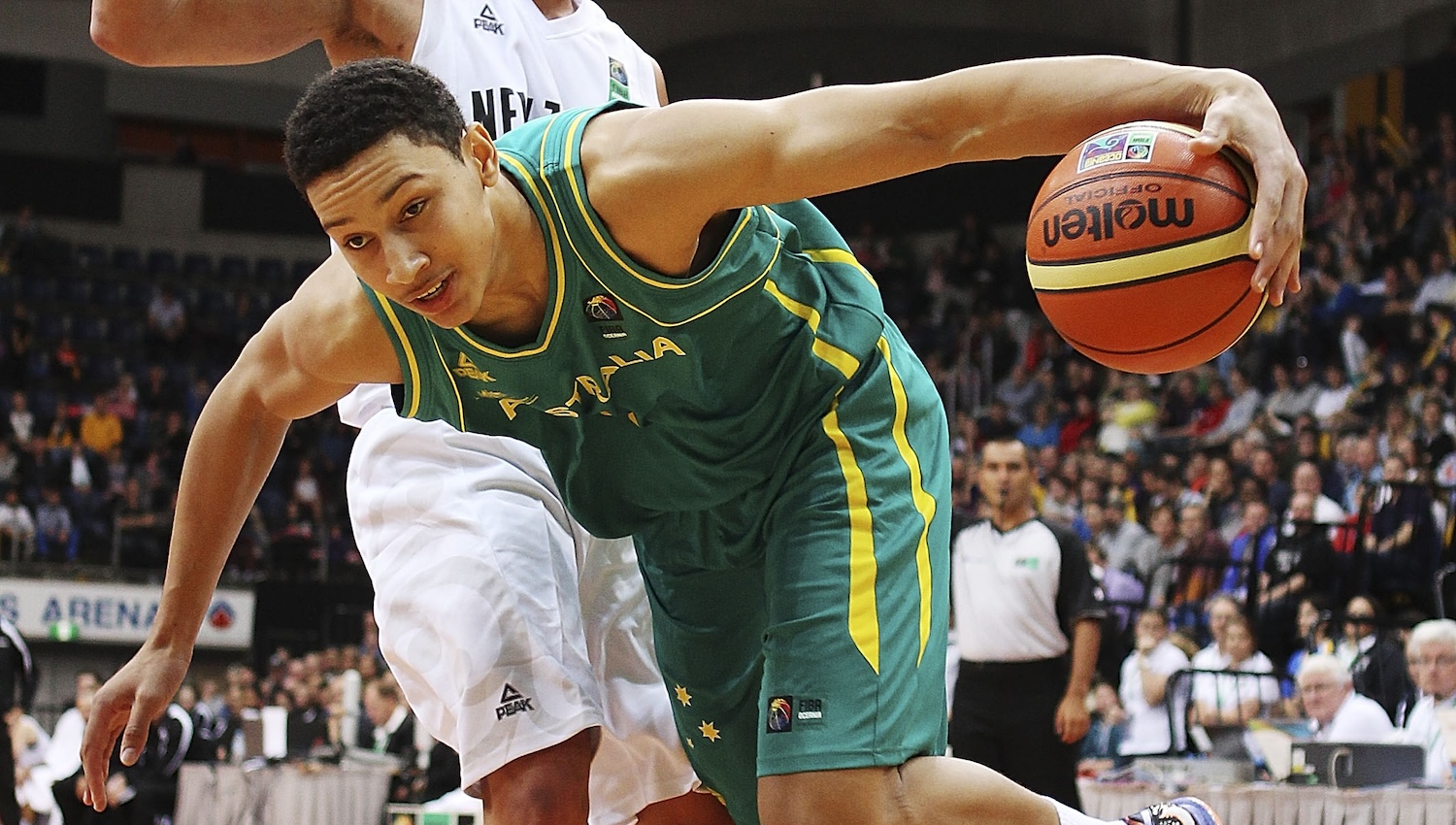
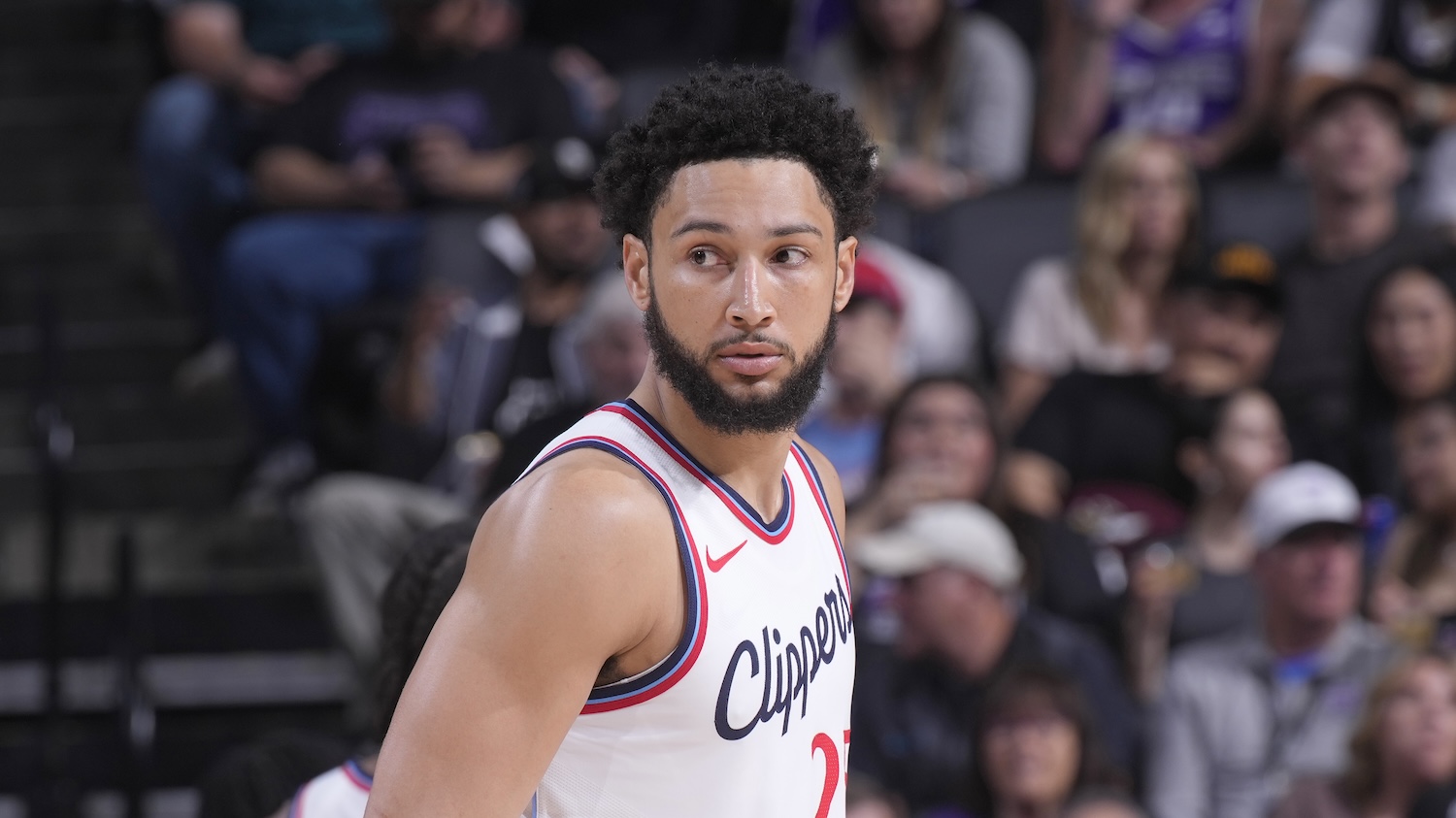
Daniels is already on track to deliver the same impact as Prime Ben Simmons in his 2019-2020 All-Star season.
Daniels has pushed himself into a rare category — the Ben Simmons archetype: Elite perimeter defender; Big guard; Playmaker; and Non-shooter. But the numbers show something more interesting:
Daniels is tracking toward Simmons’ All-Star impact but without becoming the same type of player
That’s the twist in the comparison.
Daniels’ advanced metrics jumped into elite territory this season:
- LEBRON: 2.18 (93rd percentile)
- WAR: 7.33 (96th percentile)
- D-LEBRON: 2.02 (96th percentile)
That mirrors — and in some areas exceeds — Simmons’ 2019–20 All-Star season.
Simmons that year:
- LEBRON: 1.94 (93rd percentile)
- WAR: 5.66 (95th percentile)
The takeaway is simple: Daniels is already producing All-Star-level impact — just in a different role.
Both players sit at the top of the league defensively — but how they do it matters.
Dyson Daniels
- 99th percentile perimeter isolation defence
- Point-of-attack stopper
- Guards primary ball handlers
Ben Simmons (2019–20)
- 96th percentile isolation defence
- Switch defender (1–5)
- Used as a roaming disruptor
But Daniels is more surgical – locking down guards at the point of attack – while Simmons is more positional – blowing up actions everywhere.
Simmons wasn’t just a defender — he was a system.
In 2019–20:
- O-LEBRON: +0.82 (87th percentile)
- Playmaking: 96th percentile
- Gravity: 80th percentile
He ran offence, pushed pace, and forced defensive decisions.
Daniels in 2025–26:
- O-LEBRON: +0.16 (72nd percentile)
- Playmaking: 85th percentile
- Gravity: 12th percentile
He contributes – but he doesn’t bend defences around his offence.
The twist: Same weakness, different outcome
Neither player can shoot. But it doesn’t affect them the same way.
Simmons (2019–20)
- No perimeter shot
- Still had gravity
- Elite rim pressure created space.
Daniels (2025–26)
- No perimeter shot
- No gravity
- Lower usage limits defensive attention.
That’s the difference between:
- A player you build offence around.
- A player who fits into the offence
Daniels’ real growth is hidden
Daniels made critical offensive improvements that don’t jump off the page:
- O-LEBRON: negative → positive
- Offensive rebounding: 63rd → 89th percentile
- Screening: 14th → 83rd percentile
He’s becoming:
- A better playmaker
- A smarter off-ball player
- A more functional offensive piece
Not a star creator – but a winning one.
What Daniels is becoming
Right now, Daniels is:
An elite defensive guard who no longer hurts you offensively
That’s already one of the most valuable archetypes in the league.
But Simmons, at his peak, was:
An elite defensive player who drove the offence
That’s the gap.
The swing skill that changes everything
Daniels doesn’t need to become a shooter to reach another level – but he needs one of two things:
1. Rim pressure
Become a greater downhill threat that forces rotations.
2. Shooting competence
Even league-average changes spacing completely
If either happens:
Daniels moves from elite role player to a legitimate All-Star.
“It’s not all gonna happen in one year,” Daniels said of Atlanta’s 2025-26 season.
“We took a step forward from last season.
“The biggest thing is the learning experience. We know what playoff basketball feels like now – the physicality, intensity.
“We’ve just got to keep taking steps forward.”
It’s almost a given, Daniels’ individual game will too.
What is the LEBRON Metric
LEBRON, the statistical metric, stands for “Luck-adjusted player Estimate using a Box prior Regularised ON-OFF”, which is developed by the guys over BBall-Index.
Besides being an ON-OFF metric, LEBRON also includes box-score elements to calculate an impact score per 100 possessions. LEBRON uses weights from PIPM (Player Impact Plus-Minus) and luck-adjusted Regularised Adjusted Plus Minus.
To distinguish itself from other player impact metrics, LEBRON incorporates player role with stabilising luck-adjusted RAPM calculations.
What LEBRON WAR actually means (and why it matters here)
LEBRON WAR = Wins Above Replacement (based on LEBRON impact)
It answers one simple question:
How many wins does this player add compared to a replacement-level player?
Breaking it down in plain English
- “Replacement level” = end-of-bench / G-League calibre player
- “Wins” = team wins added over a full season.
- Built from:
- On-court impact (offence + defence)
- Teammate quality
- Opponent quality
- Role + usage
- Lineup context
- Noise/luck adjustments
It’s one of the cleanest “total value” metrics in professional basketball.









.jpg)