
26/11/2026 6:16 AM
Remember when ...
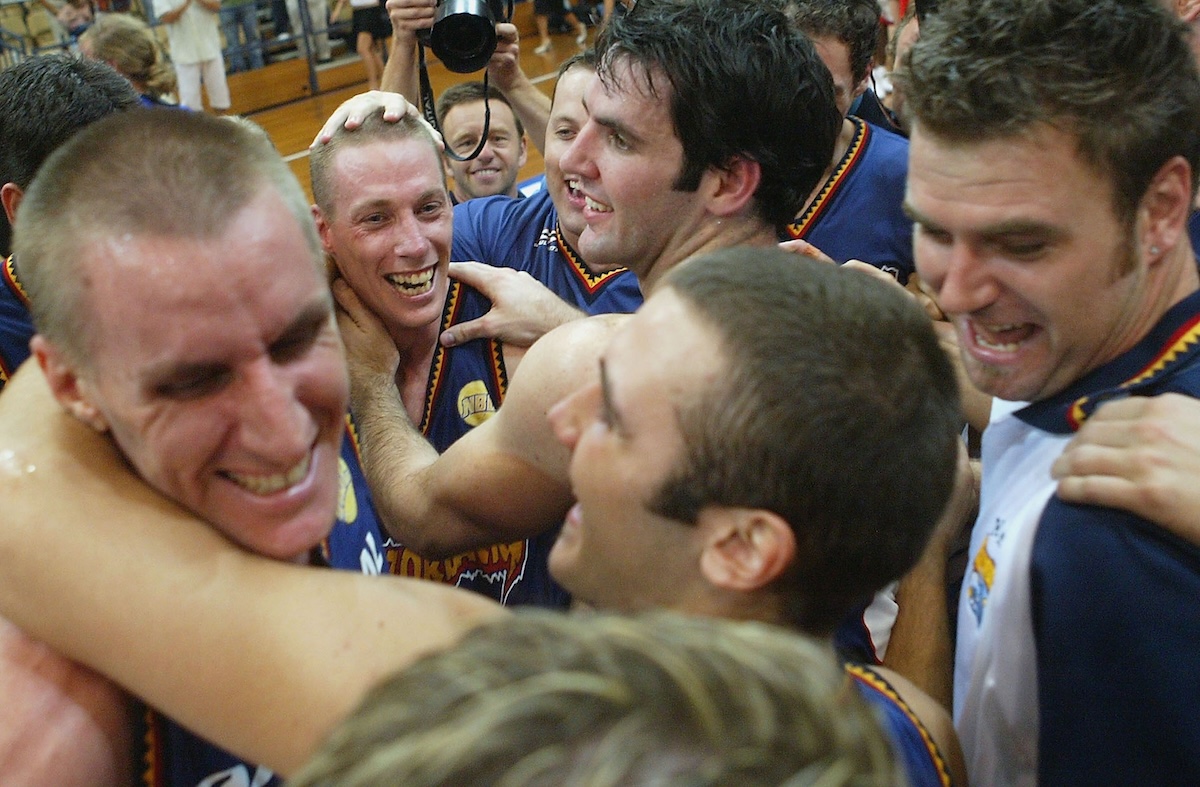
Why the South Dragons left the NBL as champions


The South Dragons pose for their official 2008-09 NBL team photo at Melbourne Sports and Aquatic Centre on October 15, 2008. Photo: Robert Prezioso/Getty Images

Highlights
Eight lost NBL clubs, five championships between them, and one that bowed out as reigning champion.
- All 165 games of the NBL27 season in one list
- Every NBL27 roster, squad list and projected depth chart
- Every injured NBL player, with expected return dates
- Hammer Time: Who is leading the league in dunks
The NBL has attempted to break into numerous markets across Australia and beyond our shores, from Singapore to suburban Tasmania. As a new writer for basketball.com.au, I wanted to kick off by looking back at the teams that came, conquered (occasionally), and disappeared like Draymond Green down the tunnel after yet another ejection.
While the 10 teams in the NBL are now stable, Australian basketball has a rich and all-too-often forgotten history of clubs that have disappeared and minds of basketball fans. In fact, the NBL once went through clubs like parents go through nappies, changed often, and sometimes, for the same reason.
Behind these discarded franchises, however, are truly remarkable stories of unlikely champions, colourful characters, and questionable business decisions; but more often than not, it comes down to a competition that has historically struggled to compete with other blockbuster Australian sports and international competitions.
So together, let’s begin by taking a trip down memory lane and revisit some of the NBL's dearly departed clubs, may they ball in peace.
Singapore Slingers (2006–2008)

Let’s kick off with my personal favourite, and it’s a strong candidate for the biggest risk in NBL expansion history. Apparently travelling from Perth to New Zealand wasn't quite enough, so yes, the NBL decided to expand into Singapore in 2006. I certainly admire the bravery needed to attempt this, and perhaps it’s easier to criticise in hindsight, but many saw it as an experiment doomed to failure (including me).
Emerging from the coffin of the Hunter Pirates, the Slingers became the competition's first Asian-based franchise, and quite possibly the last. Unfortunately, international travel proved rather expensive (who would have thought). Having initially agreed to cover teams' airfares to Singapore, the club discovered that running an international basketball franchise wasn't particularly cheap, especially for a competition that wasn’t rolling in money like the NBA.
By 2008, the Slingers were gone. The frequent flyer points must have been spectacular, though. Legend has it they are still using them today.
Canberra Cannons (1979–2003)
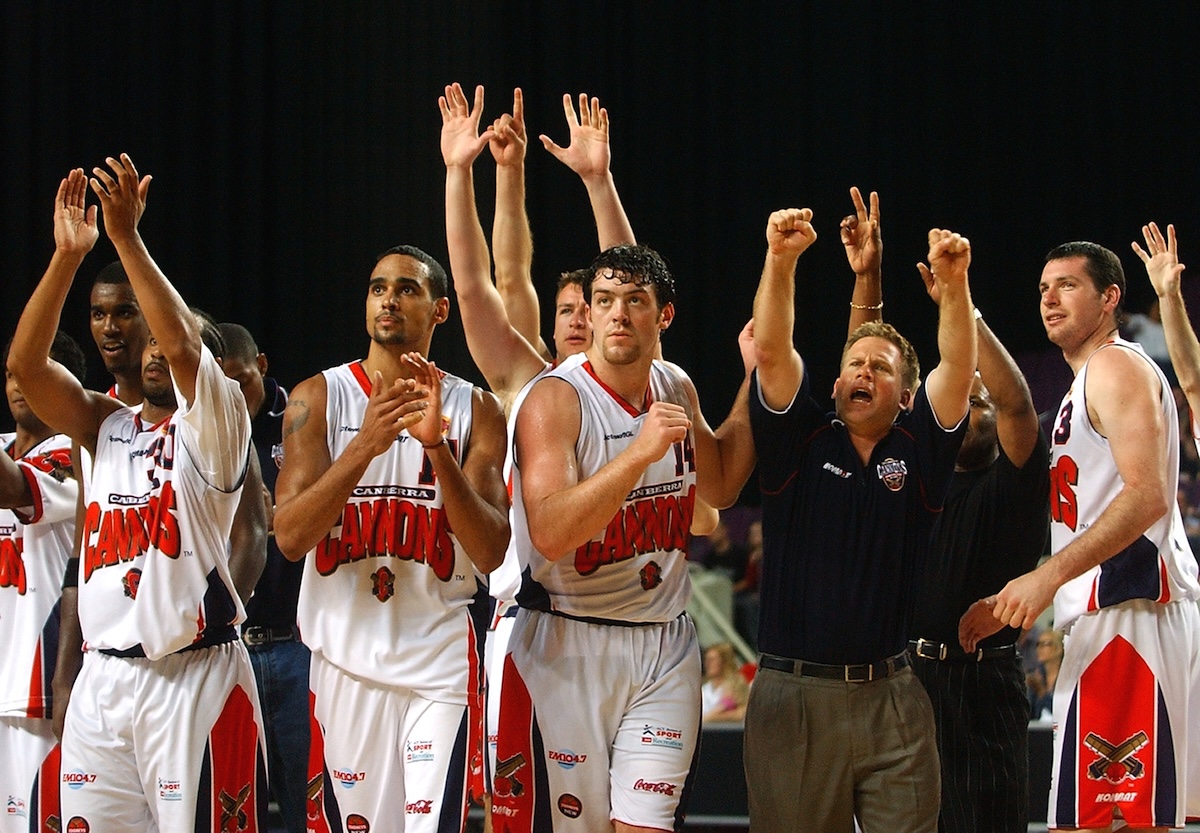
Before Canberra became synonymous with Prime Ministers taking off for holidays in Hawaii during national emergencies, it was home to one of Australia's most successful basketball teams.
The Cannons won three championships in 1983, 1984, and 1988. They even convinced NBA legend Magic Johnson to play alongside them in a 2002 exhibition match against Michigan State University (I still don’t know how they did this).
Unfortunately, even with his triple-double heroics in that game, Magic couldn't make their mounting debts disappear (pun very much intended). The club entered administration shortly afterwards, with its licence eventually relocating to Newcastle to create the Hunter Pirates. A long, storied lifetime for the Cannons; perhaps the one team on our list I’d most love to see return.
South Dragons (2006–2009)

Most clubs dream of going out on top, that is, if they have to go out at all. But if you are going to go down, you'd be best going down in a blaze of glory. Yes, that's right, the South Dragons actually ended their time in the NBL with a championship.
It was a very colourful few years at the Dragons: Captain-Coach and Australian basketball legend Shane Heal was hired and fired, and the team featured a young Joe Ingles, Mark Worthington, and legendary coach Brian Goorjian. During that time, the Dragons did complete an extraordinary turnaround from wooden-spooners to NBL champions in 2009. Then, like Ben Simmons' career in Philadelphia, they promptly vanished.
Major questions surrounding the commercial viability of the revamped NBL were the breaking point and convinced the club's owners to withdraw from the competition.
Townsville Crocodiles (1993–2016)

Spanning an impressive three decades, the Crocodiles lifted North Queensland's basketball stocks enormously during that time. I was fortunate enough to see a few of their home games when I lived in North Queensland. Great atmosphere, great crowd, great support.
Initially known as the Townsville Suns, the club featured memorable personalities such as Rob Rose, Corey 'Homicide' Williams, and Brad Newley. Their intimidating home venue, lovingly known as The Swamp to the locals, became a genuine stronghold for the club for many years.
Unfortunately, like many teams on this list, financial difficulties eventually proved too much. After years of economic uncertainty, the Crocs finally dissolved ten years ago, leaving a sizeable hole in North Queensland basketball that remains unfilled.
Gold Coast Blaze (2007–2012)

The glitter strip of the Gold Coast has never been particularly good at keeping national sporting franchises alive and healthy. From the A-League to Rugby League, some have dubbed the Gold Coast Australia's sporting graveyard, and the Blaze was no exception.
Featuring the iconic Shane Heal, Mark Worthington, and a young Chris Goulding, the club reached the finals three times in five seasons. Unfortunately, financial problems led the franchise into voluntary administration before it withdrew from the NBL in 2012.
The Blaze burned brightly, but briefly. In hindsight, that was probably an unfortunate name choice.
West Sydney Razorbacks / Sydney Spirit (1998–2009)
The Razorbacks were a force during the early 2000s, reaching two Grand Finals and boasting stars including Sam Mackinnon and John Rillie.
However, when the Sydney Kings departed in 2008, the Razorbacks rebranded themselves as the Sydney Spirit.
Apparently, changing your name was easier than fixing your finances. It comes as no surprise that the new identity struggled to capture the public's imagination, or Spirit, if you will (see what I did there).
When the club finally folded after the 2008–09 season, it left future Perth Wildcats legend Damian Martin searching for a new basketball home.
Launceston Casino City (1980–1982)

Possibly the greatest name in Australian basketball history, and if I were alive during their NBL years, I'm sure I would have bought membership and supported the hell out of Casino City.
Representing northern Tasmania, Casino City featured Australian Olympian Ian Davies and achieved something remarkable in 1981. They won the NBL championship, defeating the Nunawading Spectres 75–54.
Unfortunately, the good times didn't last. As many before and after, the club disappeared after just three seasons because of financial issues; they hit the jackpot in 1981, only to discover that the house doesn't always win (I do love a pun; I'll show myself out).
Hobart Devils (1983–1996)
Tasmania has another skeleton in its closet, in the shape of a Devil (gosh, I'm on fire today). Long before Tassie found its winning formula in the JackJumpers, the Hobart Devils spent 14 seasons trying to establish themselves in the national competition. Unfortunately, the Devils never reached the finals. Not a single time.
Despite their intimidating name, they proved considerably less frightening on the basketball court. The club eventually folded in 1996, leaving Tasmania without an NBL team until the arrival of the aforementioned JackJumpers in 2021.
Let's hope the new Devils namesake lasts a little longer, and does a little better, in the AFL.
Gone, But Not Forgotten
The NBL's history is filled to the rafters with ambitious experiments (more than just about any other code in Australia, for mine). They included unlikely Australian champions, helped develop future stars at home and abroad in the US, and ultimately delivered clubs that meant a great deal to their communities.
While the competition has become considerably more stable in 2026-2027, these forgotten franchises remind us that Australian basketball's journey has rarely been straightforward and has been full of character.
But you never know where the next team might pop up. Perhaps we shouldn't throw away those old jerseys just yet. Just ask Michael Jordan; there's always room for a comeback … and who doesn’t love a retro jersey anyway?
About the Author
Sam Lewis is a sports writer, columnist, and elite academy coach. He has been published widely in national publications such as Men's Health Magazine, The Australian, and The Guardian. Sam has been around basketball his entire life and grew up watching Leroy Loggins dominate the competition for the Brisbane Bullets.