
27
Jan
Final Box Scores
Box Scores: Day 1 at the Australian Championships

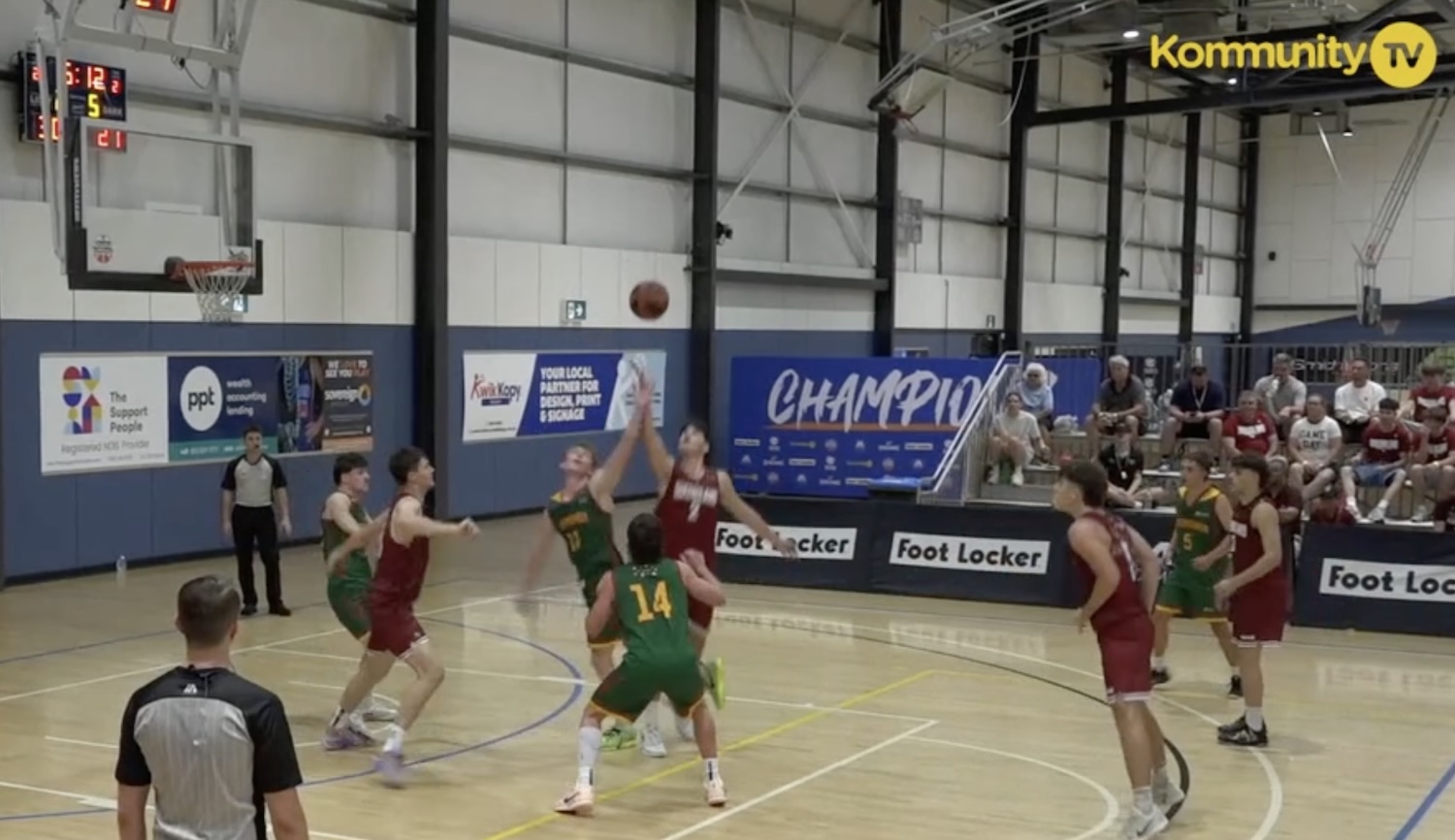
Tasmania and Queensland went head-to-head in the first round of the men's tournament. Photo: KommunityTV Live Stream
Fixtures, players, results and live streams from every game at the 2026 Australian U20 Championships
- Watch every Ballarat 2026 U20 game live on KommunityTV
- Every 2026 Under-20 player and games in one list
- Why basketball.com.au is Australia's ULTIMATE basketball destination
basketball.com.au is delivering the most comprehensive coverage of the 2026 Australian Under-20 Men’s and Women’s Basketball Championships, with every game, every player, and live streaming available throughout the tournament in Ballarat, Victoria this week.
- Day 1 Results and Box Scores
- Day 2 Results and Box Scores
- Day 3 Results and Box Scores
- Day 4 Results Only (Technical Difficulties)
- Day 5: Results and Box Scores
In partnership with KommunityTV (KTV), fans can watch every game live while accessing fixtures, results, statistics, and full player lists in one place.
How to watch Ballarat 2026 U20 Championships live
Women's Tournament
- Pool A: New South Wales; South Australia; Victoria; and Australian Capital Territory
- Pool B: Queensland; Victoria Navy; Tasmania; and Western Australia
Day 1: Tuesday, January 27, 2026
Victoria 77, New South Wales 70
- Quarter Scores: Q1 18–22 │ Q2 21–16 │ Q3 19–21 │ Q4 12–18
- Largest Lead: Victoria by 9
- Game Context: Pool play – Day 1
Victoria’s advantage was built on shot efficiency and possession control. The Victorians converted 51 percent from the field and consistently generated second and third opportunities through a +13 rebounding margin, with Sophie Taylor finishing with 19 points and eight rebounds and Imogen Trout adding 13 points and nine boards. Their ability to close defensive possessions limited New South Wales’ opportunities to fully leverage pressure.
New South Wales stayed competitive through defensive activity and transition scoring, forcing 19 turnovers and generating 22 points off mistakes. Jessie-May Hall orchestrated the offence with 14 points and five assists, while Ruby Perkins logged 34:24 and scored 14 points as NSW kept the margin within reach through the middle quarters. However, perimeter inefficiency stalled momentum, with NSW finishing 4-from-27 from three.
Victoria separated late by staying composed and continuing to attack the paint. Tayli DiMarco’s 17 points and three assists provided stability as the game tightened, while Victoria’s rebounding edge and ball movement (17 assists) allowed them to close the contest in the final quarter without needing to change tempo or rotation structure.
NSW led late in the fourth quarter but Victoria steadied in the last three minutes to seal it.
Key Performers
New South Wales
- Jessie-May Hall — 14 points, five assists in 27:39
- Ruby Perkins — 14 points in 34:24
- Freya Bijkerk — 12 points, seven rebounds
Victoria
- Sophie Taylor — 19 points, eight rebounds
- Tayli DiMarco — 17 points, three assists
- Imogen Trout — 13 points, nine rebounds
By the Numbers
- Victoria: Points: 77 │ FG: 33/64 (51%) │ 2P: 28/48 (58%) │ 3P: 5/16 (31%) │ FT: 6/13 (46%) │ REB: 47 │ AST: 17 │ STL: 6 │ BLK: 6 │ TO: 19 │ PIP: 42 │ PTS off TO: 10 │ Bench: 9
- New South Wales: Points: 70 │ FG: 28/71 (39%) │ 2P: 24/44 (54%) │ 3P: 4/27 (14%) │ FT: 10/17 (58%) │ REB: 34 │ AST: 9 │ STL: 11 │ BLK: 1 │ TO: 11 │ PIP: 44 │ PTS off TO: 22 │ Bench: 22
Victoria Navy 76, Western Australia 63
- Quarter Scores: Q1 26–6 │ Q2 21–18 │ Q3 14–24 │ Q4 15–15
- Largest Lead: Victoria Navy by 33
- Game Context: Pool play – Day 1
Victoria Navy built the result early, establishing control with a dominant first quarter that set the tone for the contest. Navy held Western Australia to just six points in the opening period while Zara Sestan poured in 24 points in just over 22 minutes, stretching the floor and punishing closeouts. The early separation was reinforced on the glass, with Evelyn Martyn pulling down 18 rebounds, allowing Navy to generate repeat possessions and keep Western Australia pinned in the half court.
Western Australia responded after halftime with its best stretch of the game, outscoring Navy 24–14 in the third quarter as Alyssa Bowen led the push with 22 points and increased rim pressure. Aysha Kemp added 12 points and eight rebounds, helping Western Australia briefly stabilise the contest through second-chance opportunities. However, turnovers continued to blunt momentum, with Navy forcing 24 giveaways across the game.
Victoria Navy steadied in the final quarter, matching Western Australia score-for-score and closing the game without allowing momentum to swing. Sienna Stone’s 10 points off the bench and Navy’s composure at the free-throw line (11-from-13) ensured the margin remained intact. Combined with a 59–49 rebounding edge and 22 assists, Navy were able to close the game without needing to shorten rotations or alter tempo.
Key Performers
Victoria Navy
- Zara Sestan — 24 points in 22:32
- Evelyn Martyn — 12 points, 18 rebounds
- Sienna Stone — 10 points, six rebounds
Western Australia
- Alyssa Bowen — 22 points, eight rebounds
- Aysha Kemp — 12 points, eight rebounds
- Emma Clark — nine points, six rebounds
By the Numbers
- Victoria Navy: Points: 76 │ FG: 27/87 (31%) │ 2P: 16/53 (30%) │ 3P: 11/34 (32%) │ FT: 11/13 (84%) │ REB: 59 │ AST: 22 │ STL: 16 │ BLK: 5 │ TO: 16 │ PIP: 26 │ PTS off TO: 19 │ Bench: 20
- Western Australia: Points: 63 │ FG: 19/62 (30%) │ 2P: 15/46 (32%) │ 3P: 4/16 (25%) │ FT: 21/30 (70%) │ REB: 49 │ AST: 8 │ STL: 6 │ BLK: 4 │ TO: 24 │ PIP: 26 │ PTS off TO: 9 │ Bench: 13
Queensland 74, Tasmania 68
- Quarter Scores: Q1 21–11 │ Q2 15–16 │ Q3 24–21 │ Q4 14–20
- Largest Lead: Queensland by 18
- Game Context: Pool play – Day 1
Queensland created early separation with a strong first quarter, holding Tasmania to 11 points while building a double-digit margin that shaped the rest of the game. The Queenslanders consistently generated paint scoring, finishing with 46 points in the paint, with Prasaysus Notoa posting 13 points, 14 rebounds and five assists to anchor possessions at both ends. Emma Petrie added 13 points as Queensland’s offence stayed functional through multiple lineups.
Tasmania worked back into the contest through physicality and activity, particularly on the perimeter, staying alive with 30 percent three-point shooting. Nikki Parker led Tasmania with 21 points and provided consistent shot creation, while Millie Baker recorded nine points, 11 rebounds and five assists to keep Tasmania competitive across the middle quarters. Chloe Broomhall added nine points and 10 rebounds, giving Tasmania second-chance looks and extra possessions.
Queensland steadied whenever Tasmania threatened, using depth and defensive pressure to control key stretches. Keriana Hippolite scored 11 points off the bench, and Queensland’s ability to win the turnover battle (16–20) and produce 21 bench points helped hold the margin through the final quarter. Tasmania closed the gap late with a 20-point fourth, but Queensland’s earlier work and composure at the line (11-from-14) was enough to close out the win.
Key Performers
Tasmania
- Nikki Parker — 21 points
- Portia Chopping — 13 points, four assists
- Millie Baker — nine points, 11 rebounds, five assists
Queensland
- Prasaysus Notoa — 13 points, 14 rebounds, five assists
- Emma Petrie — 13 points
- Vahyliah Seumanutafa — 12 points, seven rebounds
By the Numbers
- Queensland: Points: 74 │ FG: 29/73 (39%) │ 2P: 24/51 (47%) │ 3P: 5/22 (22%) │ FT: 11/14 (78%) │ REB: 45 │ AST: 16 │ STL: 13 │ BLK: 1 │ TO: 16 │ PIP: 46 │ PTS off TO: 14 │ Bench: 21
- Tasmania: Points: 68 │ FG: 25/67 (37%) │ 2P: 17/41 (41%) │ 3P: 8/26 (30%) │ FT: 10/12 (83%) │ REB: 44 │ AST: 14 │ STL: 11 │ BLK: 5 │ TO: 20 │ PIP: 32 │ PTS off TO: 11 │ Bench: 8
South Australia 105, Australian Capital Territory 44
- Quarter Scores: Q1 27–16 │ Q2 27–14 │ Q3 25–7 │ Q4 26–7
- Largest Lead: South Australia by 61
- Game Context: Pool play – Day 1
South Australia established control from the opening period and never allowed the game to settle, building separation through pressure defence and constant paint touches. The South Australians scored 72 points in the paint and repeatedly turned live-ball turnovers into easy points, finishing with 41 points off turnovers as the lead extended across every quarter.
The result was driven by disruptive defence and depth. South Australia recorded 27 steals and forced 34 ACT turnovers, generating a steady stream of transition possessions and short-court opportunities. Keira Gardiner led the scoring with 17 points on 8-from-11, while Sarah Warner added 16 points and kept pressure on the rim through the second and third quarters.
ACT competed on the glass and had moments of structure in the half court, but struggled to generate clean looks and couldn’t absorb the defensive pressure for four quarters. Zara Funnell led ACT with nine points and four assists, with Katiah-Ann Tait adding eight points and six rebounds and Achol Agok contributing eight rebounds. South Australia’s control of tempo and possession count ensured the margin continued to stretch through the second half.
Key Performers
Australian Capital Territory
- Zara Funnell — nine points, four assists
- Katiah-Ann Tait — eight points, six rebounds
- Achol Agok — six points, eight rebounds
South Australia
- Keira Gardiner — 17 points
- Sarah Warner — 16 points
- Krystal Thompson — 13 points, six assists
By the Numbers
- South Australia: Points: 105 │ FG: 41/88 (46%) │ 2P: 37/67 (55%) │ 3P: 4/21 (19%) │ FT: 19/32 (59%) │ REB: 57 │ AST: 24 │ STL: 27 │ BLK: 8 │ TO: 12 │ PIP: 72 │ PTS off TO: 41 │ Bench: 44
- Australian Capital Territory: Points: 44 │ FG: 17/59 (28%) │ 2P: 14/46 (30%) │ 3P: 3/13 (23%) │ FT: 7/10 (70%) │ REB: 38 │ AST: 9 │ STL: 3 │ BLK: 1 │ TO: 34 │ PIP: 28 │ PTS off TO: 5 │ Bench: 11
Men’s Tournament Fixtures
- Pool A: Victoria Navy; South Australia; New South Wales; and Australian Capital Territory
- Pool B: Victoria; Queensland; Western Australia; and Tasmania
Day 1: Tuesday, January 27, 2026
Tasmania 75, Queensland 69
- Quarter Scores: Q1 20–16 │ Q2 21–16 │ Q3 13–11 │ Q4 21–26
- Largest Lead: Tasmania by 13
- Game Context: Pool play – Day 1
Tasmanian Mason Ling had a dunk and two free throws in the final minute to propel the Islanders to their first win out the tournament. Tasmania established control early through physicality and balance, winning the opening half behind efficient interior scoring and steady guard play. Jack Smith led the way with 18 points, repeatedly finding gaps in Queensland’s coverage, while Logan Gibson added 11 points and nine rebounds, anchoring Tasmania’s work on the glass. The Tasmanians’ ability to score inside (48 percent on two-point attempts) allowed them to dictate tempo through the first three quarters.
Queensland stayed within reach through effort plays and second chances, led by Harry Cook’s dominant stretch off the bench. Cook finished with 24 points and 19 rebounds in 24:33, providing interior scoring and offensive rebounding that kept Queensland alive despite perimeter struggles. Brodie McGregor added 16 points, eight rebounds and four assists, while Queensland generated 26 second-chance points to offset shooting inefficiency.
The game tightened late as Queensland pushed the pace in the fourth quarter, cutting into the margin with transition scoring and defensive pressure. However, Tasmania closed from the free-throw line and maintained composure in late possessions. Lewis Rattray (13 points) and Jasper Hay (14 points, eight rebounds, four assists) helped steady the offence, while Tasmania’s edge in ball security and timely shooting ensured they held off the late surge to secure the win.
Key Performers
Queensland
- Harry Cook — 24 points, 19 rebounds
- Brodie McGregor — 16 points, eight rebounds, four assists
- Ash McGrath — 11 points
Tasmania
- Jack Smith — 18 points, six rebounds
- Jasper Hay — 14 points, eight rebounds, four assists
- Lewis Rattray — 13 points
By the Numbers
- Tasmania: Points: 75 │ FG: 28/72 (38%) │ 2P: 22/45 (48%) │ 3P: 6/27 (22%) │ FT: 13/21 (61%) │ REB: 45 │ AST: 11 │ STL: 8 │ BLK: 1 │ TO: 11 │ PIP: 44 │ PTS off TO: 13 │ Bench: 8
- Queensland: Points: 69 │ FG: 28/80 (35%) │ 2P: 25/58 (43%) │ 3P: 3/22 (13%) │ FT: 10/16 (62%) │ REB: 58 │ AST: 13 │ STL: 5 │ BLK: 6 │ TO: 15 │ PIP: 50 │ PTS off TO: 11 │ Bench: 31
New South Wales 105, Victoria Navy 84
- Quarter Scores: Q1 30–15 │ Q2 31–27 │ Q3 27–20 │ Q4 17–22
- Largest Lead: New South Wales by 27
- Game Context: Pool play – Day 1
New South Wales set the game’s tone early with a 30-point first quarter and sustained scoring pressure across the first half. NSW shot 52 percent from the field and 36 percent from three, creating separation through shot-making and ball movement, with Bailey Macarthur delivering 29 points on 10-from-18 shooting and Bailey Hanson adding 17 points and eight rebounds as the margin extended into double digits.
Victoria Navy had stretches where it generated scoring through the middle quarters, but NSW consistently had an answer, keeping the tempo and scoreboard moving. Jarvis Neal led Navy with 17 points, while NSW’s interior finishing and pace ensured the lead held through the third quarter. Even with both teams turning it over (NSW 22, Navy 21), NSW converted the extra opportunities into 27 points off turnovers, keeping control of the contest.
New South Wales closed the game without allowing momentum to swing, balancing perimeter shot-making with enough pressure to maintain the gap. Bol Diing finished with 11 points and six assists, and NSW’s bench production remained a feature, contributing 36 points to support the starting group. For Victoria Navy, Malik Davis scored 12 points and Levi Munyard added 10 points with three assists, but Navy’s perimeter efficiency (5-from-27 from three) and the early deficit proved too much to overcome.
Key Performers
New South Wales
- Bailey Macarthur — 29 points
- Bailey Hanson — 17 points, eight rebounds
- Ethan Marten-Coney — 13 points, seven rebounds, three assists
Victoria Navy
- Jarvis Neal — 17 points
- Malik Davis — 12 points
- Levi Munyard — 10 points, three assists
By the Numbers
- New South Wales: Points: 105 │ FG: 36/69 (52%) │ 2P: 25/39 (64%) │ 3P: 11/30 (36%) │ FT: 22/34 (64%) │ REB: 48 │ AST: 19 │ STL: 10 │ BLK: 5 │ TO: 22 │ PIP: 42 │ PTS off TO: 27 │ Bench: 36
- Victoria Navy: Points: 84 │ FG: 33/79 (41%) │ 2P: 28/52 (53%) │ 3P: 5/27 (18%) │ FT: 13/26 (50%) │ REB: 42 │ AST: 14 │ STL: 9 │ BLK: 5 │ TO: 21 │ PIP: 48 │ PTS off TO: 18 │ Bench: 30
Victoria 99, Western Australia 93
- Quarter Scores: Q1 24–31 │ Q2 20–24 │ Q3 33–17 │ Q4 22–21
- Largest Lead: Western Australia by 18
- Game Context: Pool play – Day 1
Victoria recovered from a sluggish opening half to overturn an 18-point deficit, using a decisive third-quarter surge to flip the game and claim a six-point win over Western Australia. After conceding 55 points in the first two quarters, Victoria tightened its defensive coverage and reshaped the contest with a 33–17 third term that shifted momentum permanently.
Western Australia controlled early phases through pace and interior pressure. Harrison Fitzgerald was central to that opening run, scoring 20 points with eight rebounds, while Andreas Grubisa added 17 points, attacking downhill and drawing fouls. WA built its lead by consistently getting to the paint, finishing with 58 points inside, and winning the bench scoring battle 47–38.
The game turned when Victoria began punishing help rotations from the perimeter. After shooting modestly from outside in the first half, Victoria finished 10-from-22 from three (45 percent), with Lachlan Kanngiesser knocking down four triples for 15 points off the bench. That spacing unlocked driving lanes for Jai Fa’ale, who posted 14 points and five assists, and allowed Victoria to stabilise its offensive flow.
Victoria’s balance proved decisive late. Joel Robinson played 32 minutes and finished with 12 points and five assists, while Bailey Marshall added 14 points with strong efficiency. Austin Foxwell (11 points) and Henry Sewell (10 points, seven rebounds) contributed across both ends as Victoria edged ahead on the glass (48–42) and generated extra possessions during the key third-quarter stretch.
Western Australia stayed within striking distance in the final term, but missed perimeter opportunities — finishing 5-from-27 from three (18 percent) — limited their ability to respond once Victoria established control. Despite strong rebounding nights from Billy McRae (nine assists) and Fitzgerald, the momentum swing proved too steep to recover.
Key Performers
Western Australia
- Harrison Fitzgerald — 20 points, eight rebounds
- Andreas Grubisa — 17 points
- Marley Sam — 14 points, three assists
Victoria
- Lachlan Kanngiesser — 15 points, seven rebounds
- Jai Fa’ale — 14 points, five assists
- Bailey Marshall — 14 points
By the Numbers
- Victoria: Points: 99 │ FG: 37/73 (50%) │ 2P: 27/51 (52%) │ 3P: 10/22 (45%) │ FT: 15/25 (60%) │ REB: 48 │ AST: 20 │ STL: 8 │ BLK: 4 │ TO: 20 │ PIP: 50 │ PTS off TO: 20 │ Bench: 38
- Western Australia: Points: 93 │ FG: 36/83 (43%) │ 2P: 31/56 (55%) │ 3P: 5/27 (18%) │ FT: 16/25 (64%) │ REB: 42 │ AST: 19 │ STL: 7 │ BLK: 1 │ TO: 14 │ PIP: 58 │ PTS off TO: 25 │ Bench: 47
South Australia 107, Australian Capital Territory 58
- Quarter Scores: Q1 25–16 │ Q2 25–13 │ Q3 24–12 │ Q4 33–17
- Largest Lead: South Australia by 49
- Game Context: Pool play – Day 1
South Australia asserted control early and never loosened its grip, building separation through defensive pressure, paint dominance, and depth scoring. The margin was already double figures by quarter time and continued to grow as South Australia repeatedly disrupted ACT’s ball movement and converted turnovers into points at the other end.
The South Australians finished with 22 steals and forced 30 ACT turnovers, turning those possessions into 42 points off turnovers and 33 fast-break points. Their interior efficiency was decisive, scoring 74 points in the paint on 62 percent shooting inside the arc, while ACT struggled to generate perimeter rhythm, finishing just 3-from-30 from three (10 percent).
Offensively, balance defined South Australia’s performance. Alex Dickeson led with 18 points and four assists, controlling tempo and consistently getting downhill. James Mackenzie added 15 points, six rebounds, and four assists, while Rio Bruton (16 points) and Isaac Riddle (11 points, nine rebounds) provided scoring and physicality across the middle minutes. South Australia’s bench added further separation, contributing 43 points and sustaining pressure through all four quarters.
ACT showed resilience in stretches, particularly through Ajak Nyuon, who finished with 24 points on 9-of-14 shooting and accounted for a significant portion of ACT’s interior scoring. Sam Steel added eight points, and Lachlan Gudgeon-Back contributed nine, but the combination of turnovers and South Australia’s transition efficiency made it difficult for ACT to stabilise the contest.
Key Performers
Australian Capital Territory
- Ajak Nyuon — 24 points, six rebounds
- Lachlan Gudgeon-Back — nine points, five rebounds
- Sam Steel — eight points
South Australia
- Alex Dickeson — 18 points, four assists
- Rio Bruton — 16 points
- James Mackenzie — 15 points, six rebounds, four assists
By the Numbers
- South Australia: Points: 107 │ FG: 44/88 (50%) │ 2P: 40/64 (62%) │ 3P: 4/24 (16%) │ FT: 15/19 (78%) │ REB: 50 │ AST: 18 │ STL: 22 │ BLK: 3 │ TO: 10 │ PIP: 74 │ PTS off TO: 42 │ FBP: 33 │ Bench: 43
- Australian Capital Territory: Points: 58 │ FG: 23/67 (34%) │ 2P: 20/37 (54%) │ 3P: 3/30 (10%) │ FT: 9/13 (69%) │ REB: 41 │ AST: 10 │ STL: 7 │ BLK: 6 │ TO: 30 │ PIP: 38 │ PTS off TO: 9 │ FBP: 9 │ Bench: 27
What is KommunityTV?
KommunityTV is an Australian digital streaming platform focused on live and on-demand coverage of grassroots and community sport.
In short: it’s a broadcast and content platform for basketball competitions that don’t sit on mainstream TV, fully endorsed and supported by basketball.com.au.
🏀 Live Streaming
- Streams junior, state, school, and community-level sport
- Commonly used for:
- Representative tournaments
- Junior championships
- State leagues
- School sport events
- Basketball is a major pillar (including events like ACJBC-style tournaments)
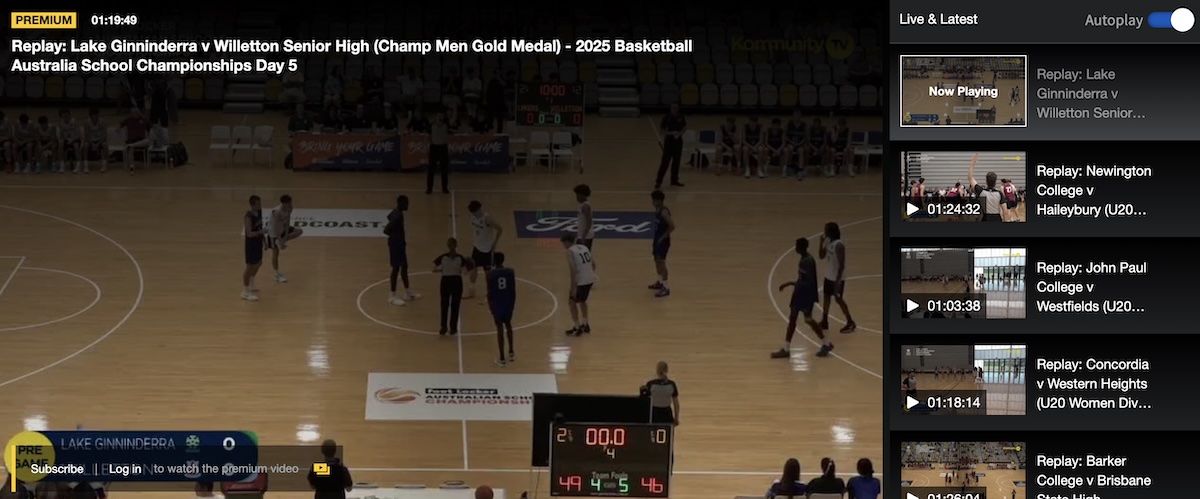
📺 On-Demand Replays
- Full-game replays available after live streams
- Useful for:
- Player development
- Coach review
- Recruiting and talent ID
- Families watching remotely











.jpg)

.jpg)