
17
Feb
In-Depth Analysis
Inside BA's 'Everybody's Game' 2040 strategic plan


The Australian Opals celebrate winning the 2025 FIBA Asia Cup last year. Photo: FIBA.com
Featured
Basketball Australia unveils 2040 Vision built on alignment, facilities and national brand unity.
- 83 new coaching modules in BA's online etrainu
- NBA super agent reveals 5 secrets to being a professional basketballer
- Boom! 1.3 million Aussies play the game we all love
"Everybody's game" is how Basketball Australia is pitching its 2040 Vision strategy.
“Basketball is deeply embedded in communities across Australia, and the passion for our game has never been stronger,” Basketball Australia CEO Matt Scriven said.
“This Strategic Plan is about harnessing that momentum – improving the experience for every participant, protecting the safety and integrity of the game, and working together as one basketball community to elevate our sport nationally and internationally.”
In reality, the strategy released early this month is modernisation and alignment rather than a transformational:
- Recognition of infrastructure constraints.
- Desire for greater national coherence.
- Movement toward professionalised commercial operations.
- Preparation for Olympic cycle opportunities.
Its success depends less on vision clarity, which, from a BA perspective, is strong, and more on stakeholder alignment, execution discipline, and organisational capacity.
Basketball Australia chair John Carey said: “Much more is possible when we work together.
"We are honoured to lead Australian basketball through the next phase of its development, and we share the excitement and optimism of the entire basketball community for what lies ahead."
What does it mean
Rather than prioritising participation growth alone, the plan moves toward improving system quality, participant experience, governance alignment, and commercial maturity. It recognises basketball is already experiencing strong demand but faces structural constraints – particularly facilities, volunteer sustainability, and fragmented operating models.
The strategy is built around five pillars:
- Participating – improve facilities, safety, program quality and school engagement.
- People – strengthen volunteer, coach and official capacity.
- Performing – enhance high-performance pathways and medal outcomes.
- Leading – align governance, roles, rules and business models.
- Impact – unify the national brand and grow commercial returns.
In essence, this is a system-elevation strategy designed to prepare Australian basketball for LA28 and Brisbane 2032 while stabilising rapid growth.
The Approach
1. Elevate Quality Over Volume
The plan explicitly states that simply growing participation is not the priority for 2026–2028. Instead, the focus is on:
- Facilities planning and database creation.
- Retention tracking.
- Safe Sport framework.
- Improving the participant experience.
This reflects a shift in maturity from expansion to optimisation.
2. Centralise Data and Coordination
A strong emphasis is placed on:
- National databases.
- Evidence-based investment.
- Volunteer registration portals.
- Standardised national rules.
- Clarified roles across BA, states and professional leagues.
The approach seeks to reduce duplication and create system-wide coherence.
3. Commercial & Brand Positioning
Under “Impact,” the strategy commits to:
- A unified national basketball brand.
- Clear commercial rights packages.
- National team brand amplification.
- Event hosting evaluation frameworks.
This signals a move toward monetising basketball’s cultural momentum.
4. Strengthen High Performance Infrastructure
The plan reinforces:
- Centre of Excellence expansion.
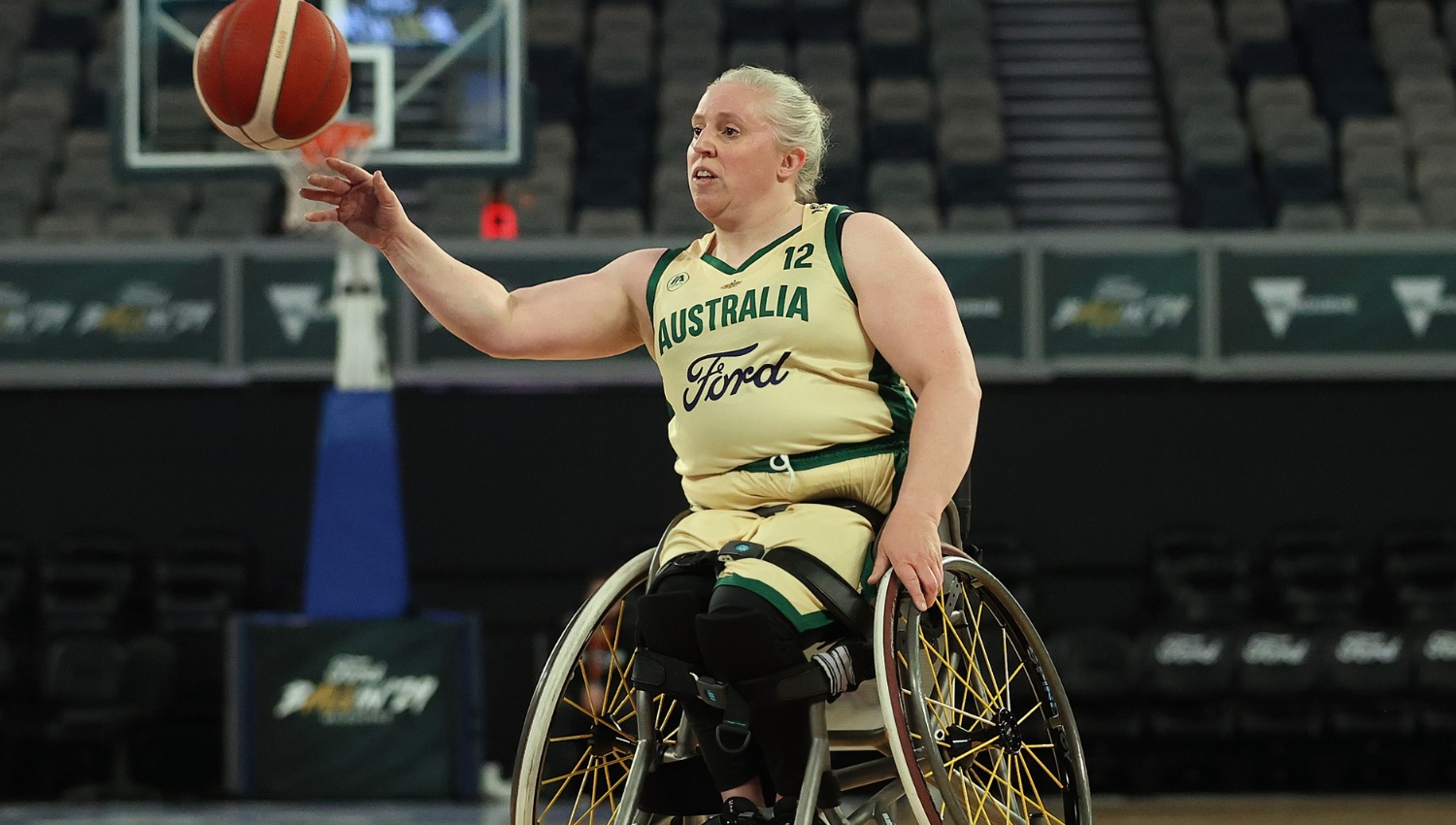
- 3x3, wheelchair and officiating pathways.
- Performance Health Division.
- Alignment with Sport Australia’s “Win Well” philosophy.
It connects elite success directly to grassroots growth and cultural influence.
5. Invest in Gender Equity & Inclusion
Dedicated women & girls strategy, DEI resources and representation targets are embedded structurally rather than treated as supplementary.
This aligns the organisation with contemporary governance expectations and long-term participation trends.
Reward Potential
If executed effectively, the strategy offers significant upside.
1. System Stability
A coordinated facilities plan and volunteer framework could stabilise participation bottlenecks and reduce churn.
2. Commercial Growth
A unified national brand and rights framework could increase sponsor confidence and unlock larger, multi-level partnerships.
3. Government Influence
An aligned government engagement strategy strengthens basketball’s case for infrastructure investment ahead of Brisbane 2032.
4. High-Performance Continuity
Embedding performance, health and pathway clarity increases the probability of sustained international success.
5. Cultural Consolidation
Formalising basketball’s cultural footprint strengthens its long-term competitive position relative to other Australian sports.
Key Risks
1. Centralisation Friction
Moves toward national alignment, databases and commercial consolidation may create tension with:
- State associations.
- Professional leagues.
- Existing local commercial partners.
Stakeholder buy-in will determine success.
2. Capacity vs Ambition
The plan introduces multiple new systems simultaneously:
- Facilities strategy.
- Volunteer portal.
- National rules harmonisation.
- Performance Health Division.
- Brand overhaul.
- Government engagement strategy.
Execution complexity is high for a three-year window.
3. Facilities Influence Without Direct Control
Basketball Australia does not directly control local or state government capital investment decisions. While the strategy proposes a national facilities database and development pipeline, delivery ultimately depends on external stakeholders.
Without binding funding agreements, formalised co-investment frameworks, or legislated commitments, there is a reputational risk if facility expansion targets are perceived as under-delivered. Expectations may rise nationally, while practical authority to execute remains largely local.
This creates a dependency risk: strategic intent is clear, but the outcomes of the infrastructure rely on partners outside Basketball Australia’s direct control.
4. Medal Outcome Dependence
High-performance targets are partially outside administrative control. Underperformance at LA28 could overshadow structural progress.
5. Commercial vs Cultural Balance
As basketball’s popularity grows, there is a clear intent to expand commercial rights, unify branding, and increase revenue. However, aggressive monetisation carries inherent tension.
Grassroots basketball culture in Australia is community-driven, volunteer-supported and locally authentic. If commercial strategies are perceived as top-down, overly corporate, or disconnected from community realities, they risk eroding trust and goodwill.
The challenge is balance: converting cultural momentum into sustainable revenue without compromising the authenticity, accessibility and community identity that underpin the sport’s growth.
The risk vs reward
The strategy relies on alignment with all States and Territories. Its specific challenges are potential fail points:
- Slow execution
- Partial implementation
- Stakeholder drift
- Initiative fatigue
- Missed deadlines
- Diluted accountability
In these scenarios, the strategy becomes a document rather than a driver.
1. Failure of Stakeholder Alignment
The strategy relies heavily on national alignment across:
- State and Territory Associations
- Professional leagues (NBL and WNBL)
- Local associations and clubs
- Government partners
If states resist centralised databases, nationally aligned rules, or clarified accountabilities, implementation slows immediately.
This is not a strategy BA can deliver alone. If alignment becomes political rather than collaborative, execution stalls.
Most likely failure trigger: Quiet resistance rather than open opposition.
2. Facilities Delivery Gap
Facilities are positioned as a priority, but BA does not control:
- Local government budgets
- Planning approvals
- School infrastructure
- State capital works
If waitlists remain high and visible progress on court development is slow, the strategy risks being seen as aspirational rather than practical.
Expectation management will be critical.
Failure point: Public commitment without visible infrastructure wins.
3. Overstretch of Organisational Capacity
This is a high-complexity plan including:
- National volunteer portal
- Safe Sport Framework
- Brand unification
- Commercial rights refresh
- Performance Health Division
- Government engagement strategy
- National school plan
- Tournament review
- High-performance facilities plan
If BA’s internal resourcing does not scale with ambition, execution fatigue will appear.
Failure point: Too many initiatives progressing at once without prioritisation.
4. Centralisation Without Trust
Moves toward:
- National data ownership
- Role clarification
- Commercial consolidation
- Governance standardisation
May be perceived as power consolidation.
If stakeholders believe value is being extracted rather than shared, cooperation weakens.
Failure point: Alignment becomes compliance-driven rather than partnership-driven.
5. Commercial Overreach
The strategy aims to convert cultural momentum into commercial growth.
If:
- Sponsorship becomes overly corporate,
- Community feels diminished,
- National brand overrides local identity,
There is reputational risk.
Basketball’s strength in Australia is its grassroots authenticity. Misjudging this balance could damage long-term goodwill.
Failure point: Revenue growth at the expense of community trust.
6. High-Performance Outcome Risk
LA28 medal targets are embedded as measures of success.
Elite sport outcomes are volatile. A single Olympic cycle underperformance can:
- Undermine perception of strategy success.
- Shift media narrative
- Create governance pressure
Even if structural improvements are progressing.
Failure point: Strategy judged solely on medal results.
7. Volunteer Sustainability Risk
The plan depends on:
- Improved volunteer recognition
- Better ratios of coaches/referees to players
- Diversity growth
If volunteer fatigue continues – or worsens – experience quality declines regardless of strategic frameworks.
Retention systems must deliver real on-the-ground relief, not just databases.
Failure point: Administrative solutions without reducing workload burden.
8. Brand Unification Complexity
Creating a unified Australian basketball brand sounds straightforward.
In reality:
- States have entrenched identities.
- Professional leagues have independent commercial models.
- National teams operate on different cycles.
If brand architecture becomes confusing or diluted, commercial and cultural impact weakens.
Failure point: Attempting uniformity in a federated system.
The 2026–2028 strategy is structurally coherent, modern in tone, and appropriately aligned to the broader 2040 Vision. It recognises that Australian basketball is no longer in a growth-startup phase – it is in a systems-consolidation phase.
The shift from “grow participation” to “elevate experience” is strategically sound. Facilities constraints, volunteer fatigue, governance fragmentation and commercial under-leverage are real pressure points. Addressing them is necessary before the sport can sustainably expand again.
The strategy’s strength lies in:
- Clear pillars and measurable actions
- Recognition of infrastructure bottlenecks
- Commitment to governance alignment
- Professionalisation of commercial operations
- Structured high-performance reinforcement
However, the plan’s success depends almost entirely on execution across a federated system where Basketball Australia does not control many of the key levers – particularly facilities funding, state cooperation, and professional league dynamics.
The strategy will not fail because of poor vision.It will fail, if it does, because of:
- Stakeholder misalignment
- Organisational overstretch
- Over-centralisation without trust
- Infrastructure expectations exceeding influence.
In short:
This is a rational, well-constructed strategy. Its risk is not ambition – it is delivery complexity.
If alignment holds and priorities remain disciplined, it positions Australian basketball strongly for LA28 and Brisbane 2032.
If coordination falters, it risks becoming incremental rather than transformational.

.jpg)












.png)