
12
Feb
Breaking News
Indiana Pacer Johnny Furphy out 'eight to 12 months'


Australian Johnny Furphy lays on the baseline in Toronto after falling awkwardly on Monday, February 9, 2026 (AEDT). Photo: Getty Images
Highlights
Johnny Furphy exited Indiana’s loss to Toronto with a right knee injury, confirmed as a ruptured ACL
- Cool name, terrible Johnny Furphy hot take
- Johnny Furphy delivers first NBA double-double
- Johnny Furphy's 'Training Day' with Pascal Siakam
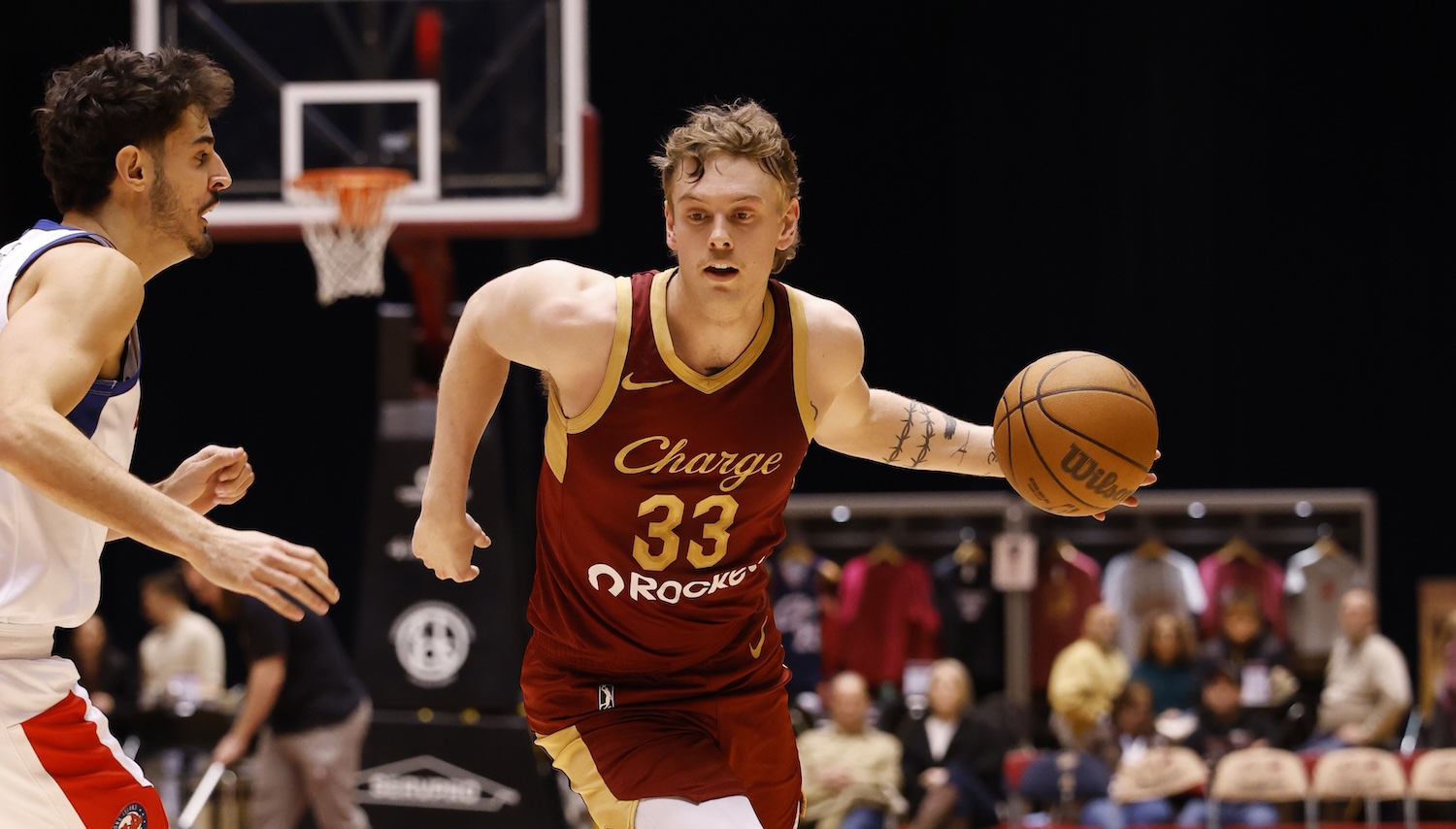
Australian rising star Johnny Furphy tore his ACL after he came down awkwardly, grabbing his right knee, after an explosive dunk during the Indiana Pacers 122-104 loss to the Toronto Raptors in Canada on Monday, February 9, 2026 (AEDT).
Pacers head coach Rick Carlisle said today: "No doubt that he's going to make a full recovery but whatever the necessary timetable is, that's what it will be."
Carlisle estimated Furphy will be out between eight to 12 months.
The Indiana Pacers confirmed Furphy, 21, had an MRI at the Hospital for Special Surgery in New York on Tuesday, which revealed the tear.
The Australian "was able to walk to the bench with help, but then was taken back to the locker room in a wheelchair" in Toronto yesterday.
He had played 15 minutes as a starter, had four points (2-from-3), two rebounds and three assists.
Furphy's injury means he will miss the remainder of the 2025-26. His timetable for return is uncertain.
Indiana Pacers head coach Rick Carlisle said yesterday: "We’re not sure about the Furphy situation. He’ll get testing tomorrow in New York, and we’ll see where things are.
"It’s pretty clear that the third quarter was the difference in the game. Their small lineup was a very good adjustment for them, and we didn’t do well with it. We did very poorly with it. They got stops, they got downhill, they got to the rim, and we didn’t have enough resistance. So there you go.
"That’s the difference. That’s the entire difference in the game.
"We don’t know what it is yet, so we’re hoping it’s not that bad. But we don’t know right now, and so we’re just going to hope for the best."
What a Right ACL Tear Is
The ACL (anterior cruciate ligament) is one of the main stabilising ligaments in your knee. It runs diagonally through the centre of the joint and stops the tibia (shin bone) from sliding forward or rotating too much under the femur (thigh bone).
A right ACL tear means that ligament has been partially or completely ruptured in your right knee.
How it usually happens
- Sudden change of direction
- Pivoting or cutting (basketball, netball, football)
- Landing awkwardly from a jump
- Decelerating hard then twisting
Often it’s non-contact.
What it feels like
- A “pop” at the moment of injury (common but not universal)
- Immediate swelling (within 1–2 hours)
- Knee feels unstable, like it might “give way”
- Difficulty continuing activity
- Pain initially, but instability becomes the bigger issue
Diagnosis
- Clinical tests (Lachman, anterior drawer, pivot shift)
- MRI to confirm:
- Full vs partial tear
- Associated damage (meniscus, MCL, cartilage, bone bruising)
Rehab Pathways (Two Options)
Rehab depends on:
- Age
- Sport demands
- Stability needs
- Associated injuries
1. Non-Surgical Rehab (Selected Cases)
Possible if:
- Partial tear
- Low-pivot sport
- Good neuromuscular control
- No repeated instability
Focus:
- Strength
- Proprioception
- Movement control
Many athletes eventually opt for surgery if instability persists.
2. Surgical Reconstruction + Rehab (Most Athletes)
The torn ACL does not heal on its own. Surgery replaces it with a graft (usually hamstring, patellar tendon, or quad tendon).
Rehab is long but structured.
Phase 1: Acute / Pre-hab (0–2 weeks)
Goals
- Reduce swelling
- Restore knee extension
- Activate quads
- Normal walking pattern
Work
- Ice, compression
- Quad sets, heel slides
- Straight-leg raises
- Gait retraining
Phase 2: Early Strength (2–6 weeks post-op)
Goals
- Full range of motion
- Build foundational strength
Work
- Squats
- Step-ups
- Hamstring work
- Core stability
- Stationary bike
Phase 3: Strength + Control (6–12 weeks)
Goals
- Single-leg strength
- Knee control under load
Work
- Split squats
- Single-leg RDLs
- Lunges
- Balance and perturbation work
Phase 4: Running & Plyometrics (3–6 months)
Goals
- Reintroduce impact
- Prepare knee for sport-like forces
Work
- Straight-line running → acceleration
- Jump-land mechanics
- Low-level plyometrics
- Change-of-direction prep
Phase 5: Return to Sport (6–9+ months)
Goals
- Confidence
- Reactive stability
- Game-speed movement
Work
- Cutting, pivoting
- Reactive drills
- Sport-specific patterns
- Strength symmetry testing
Return-to-play is criteria-based, not time-based.
Key Rehab Benchmarks
Before return to sport, clinicians usually look for:
- ≥90–95% strength symmetry
- Good landing mechanics
- No swelling after sessions
- Psychological readiness (huge factor)
Long-Term Outlook
- Most athletes return to sport
- Re-tear risk exists, especially in first 12 months
- Strong rehab = better career longevity
- Good ACL rehab often makes athletes better movers than before
Indiana Pacers beat writer Alex Golden wrote Scott Agness wrote: "The reactions said it all. It was hard on all of the Pacers. Great concern for Johnny Furphy, who suffered a right leg injury and was taken back to the locker room in a wheel chair."
Furphy made his first career start for the Pacers back on December 28, 2025 and wasted no time taking advantage of it with several highflying dunks to an already stacked highlight reel despite a tough loss on the road to the Miami Heat.
He missed the first 21 games of the 2025-26 season with a foot injury before starting the Pacers' last 20 games as Carlisle was giving the second-year Kansas Jayhawks NCAA star growth minutes for the injury-depleted 2025 NBA Finalists.
Furphy told Indiana legend Quinn Buckner during a podcast on January 6: "I think compared to last year, I feel like I’m more comfortable coming into the second year.
"I know what to expect. There’s not gonna be as many surprises as it was last year. Obviously it’s a long, long year, so I’m feeling a lot more comfortable and I’m excited.
"I’m pretty young, so I think I’m just scratching the surface."
Buckner, 71, who won an NBA Championship alongside Indiana legend Larry Bird with the Boston Celtics in 1984, showed plenty of admiration for the athletic 2.03m wing out of Kansas.
"I don’t know if anybody could understand fully what it’s like to be an international player in a game like this," Buckner asked Furphy.
"You gotta make those adjustments. How have you been able to do that?
"Obviously I gotta be able to hit open shots," Furphy said.
"And so that’s so important, being as consistent as possible. I’ve had a lot of support from the coaching staff, a lot of individual workouts, helping me just become more consistent with my shots. So still a long way to go.
"I feel like I’ve always been the youngest and smallest guy on every team I’ve played for, so I am familiar with how it is. But this is just on a bigger scale.
"Like some of the guys that are just genuine athletes. It's such a big part of the game, the physicality. Just scratching the surface."
No injury update has been given on Furphy (yet).