
20
Mar
Exclusive Interview
Kelsey Griffin urges WNBL to seize global moment

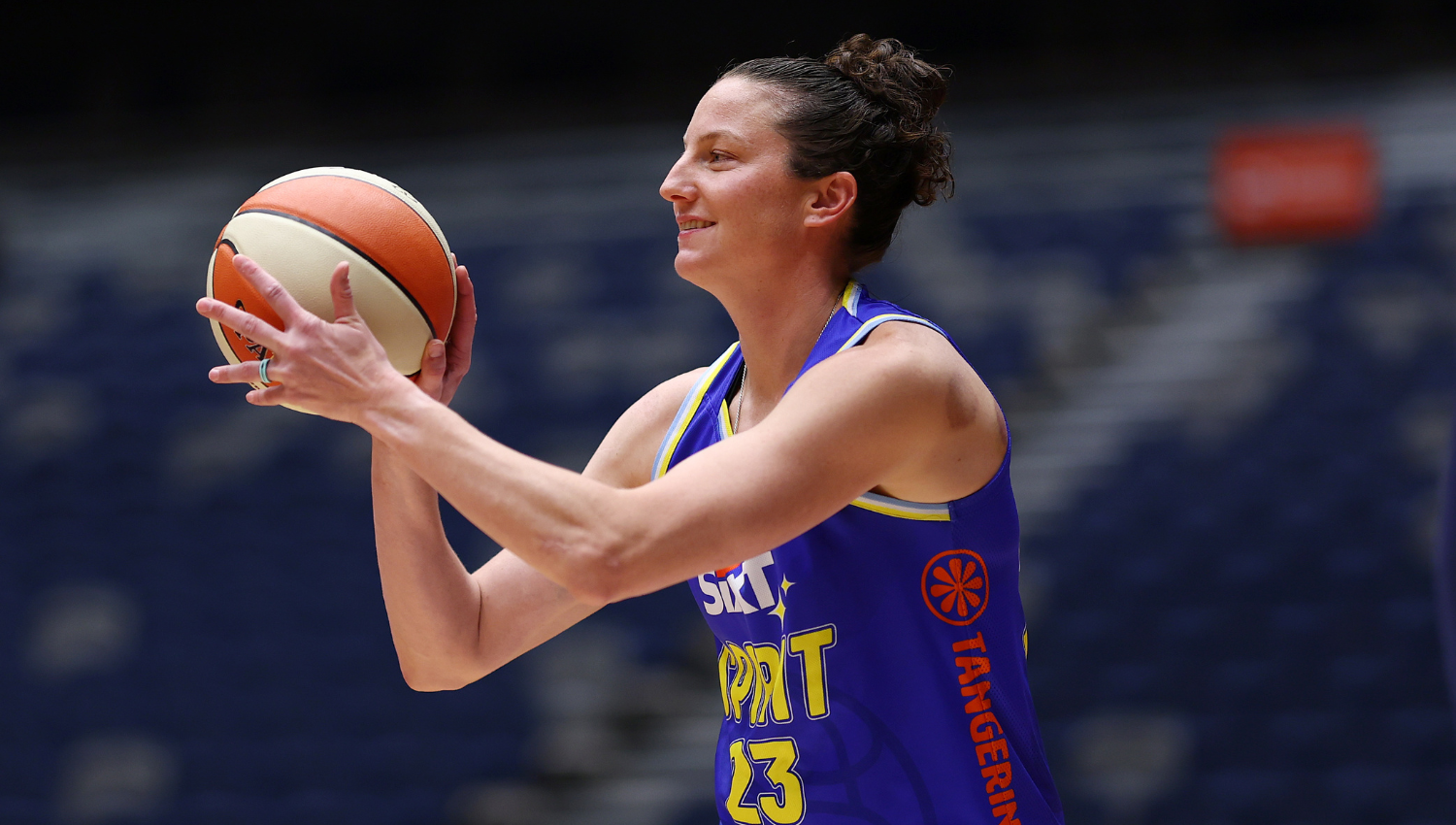
Kelsey Griffin of the Spirit warms up ahead of the round 10 WNBL match between Bendigo Spirit and Adelaide Lightning at Red Energy Arena on December 19, 2025 in Bendigo, Australia. Photo: Morgan Hancock/Getty Images
Podcasts
Kelsey Griffin explains why the new WNBA CBA could reshape pathways and opportunities for Australian
- Why Unrivaled's 2026 matters for Aussies in Smith, Magbegor and Allen
- Championship completes Alanna Smith's Unrivaled year
- Kelsey Griffin urges WNBL to expand into Asia
Former WNBA player and WNBL legend Kelsey Griffin believes the landmark new WNBA CBA is a "pivotal moment" for the global basketball market and women's sports as the league prepares for an exciting new era.
The Bendigo Spirit captain, who played five seasons for the Connecticut Sun between 2010-2014 and recently became a WNBL Life Member, joined basketball.com.au for an exclusive Q&A after the WNBA and Women's National Basketball Players Association finally reached a verbal agreement on a new collective bargaining agreement just less than two months away from tip-off on the league's 30th season..
ESPN's Shams Charania first reported the new CBA will see the salary cap increase from $1.5 million in 2025 to $7 million for the upcoming season, minimum salary will increase to more than $300,000 after being just $66,079 last season, while the average wage will be around $600,000 - up from $120,000 in 2025. A supermax contract in the WNBA will now start from $1.4 million compared to under $250,000 last season.
Griffin - the third overall pick in the 2010 WNBA draft, a five-time WNBL champion, 2018 WNBL MVP and most recently a member of the 2025-26 WNBL All-Second Team - spoke about her admiration for the players who stood firm on what they believed they deserved, how the new conditions compare to her time in the league, what impact it may have on the WNBL and more.

First of all as a stalwart of the game who’s seen women’s basketball struggle for support at the start to now you see this WNBA CBA and how big it is - what’s your feelings as an athlete after seeing this finally happen? What can you say about the women who held strong in these negotiations and didn’t settle?
As someone who played in the WNBA and remembers the reality of what my salary looked like, seeing the compensation packages now being discussed is incredible. But what stands out to me even more — particularly now at 38, with an MBA and a deeper understanding of the business — is the nuance behind what’s unfolding. I spent two major assessments analysing the US Women’s National Soccer Team’s equal pay negotiations, which I believe set a powerful precedent and empowered athletes to find their voice alongside their players’ associations.
What I’ve particularly appreciated in the current WNBA negotiations is the level of player involvement — the fact that they are not just present but actively at the table shaping outcomes. That doesn’t happen without strong leadership and a unified playing group. It’s also important to recognise the broader context that made this possible. The league’s 11-year, $2.2 billion broadcast deal fundamentally shifted the economic landscape. At the same time, the explosion of women’s college basketball has driven new audiences into the WNBA — boosting viewership, increasing attendance and strengthening the league’s commercial position. Because of this convergence, players understood that the timing was right to stand firm on what they believed was fair and appropriate remuneration. And importantly, they had leverage.
The emergence of Unrivaled — founded by two WNBAPA Vice Presidents — created a credible alternative, offering equity opportunities and competitive salaries in a condensed season, while allowing players to remain in the US. I think it’s really important to acknowledge that this was a long time in the making — and highly complex. It wasn’t as simple as players deciding they deserved more and getting it. There was sustained effort, strategic alignment, and, critically, the right timing that brought all of these elements together.
Can you explain what you think this means from seniors to even junior female basketballers now?
I think women’s basketball, and women’s sport more broadly, is demonstrating that young girls can genuinely see a career in this space. Yes, the financial growth is a key part of that, but those financials are being driven by something even more important and that's visibility. And that, to me, is the real shift we’re seeing in the WNBA.
With increased visibility comes recognition, more players becoming household names, which then creates a ripple effect: greater investment, improved salaries, and stronger professional pathways. It would be remiss of me not to highlight the impact this has on young girls and boys. Players like my personal favourite, A’ja Wilson, New York Times bestselling author, incredible business woman and a genuine superstar, are now receiving the platform they deserve. That visibility allows them to be even more powerful role models, sharing their stories with a broader audience and inspiring the next generation.
Can you rewind back to when you were in the WNBA and what it was like In comparison to what you see and hear now?
I recently did a podcast with Fleur McIntyre, and hearing about the Phoenix Mercury’s facilities, analytics department, player development systems, and overall team philosophy honestly made me wish I was 10 years younger, or maybe WNBA front office is what I want to aspire to! What excites me most about where the WNBA is right now is the level of professionalism being offered to players. And I think this was a critical part of the negotiations that may not have made headlines in the same way as salary discussions.
When I played in Connecticut, we were practicing at a Division III college and flying commercial. That was a stark contrast to my college experience at Nebraska, where we flew private and had access to state-of-the-art facilities. While players absolutely want to be paid what they’re worth, there’s also astrong desire to be surrounded by the best in order to perform at our best and that includes elite coaches, physios, facilities, and overall conditions.
Raising league standards in these areas is a huge win for all players. I also love seeing the growth in staff and technology across WNBA teams, supporting players who want to reach the highest level. Anyone who knows my story understands how challenging my transition from college to the pros was and I truly believe that continued investment in player development (like the addition of roster spots) will only strengthen the league.
How do you think this trickles down back to say Aussie athletes and even the WNBL?
I believe this is a pivotal moment for the global basketball market. It’s not just about the WNBA, leagues like Unrivaled, Athletes Unlimited and Project B are expanding opportunities, offering competitive salaries and introducing more flexible season formats. What will be particularly interesting is the ripple effect across established international leagues such as EuroLeague, EuroCup, the CBA (China), and the WNBL. Will WNBA players continue to play overseas in the offseason, or will increased investment from teams come with an expectation that players prioritise recovery, development, and longevity over additional contracts?
Over the next five years, the global landscape could look very different. From a WNBL perspective, if I were a GM or owner, I would be proactively exploring partnerships with WNBA teams to build a formal development pathway - one that helps bridge the gap from college to the WNBA. By working closely with front offices and coaching staff, and leveraging the technology, analytics and development systems already embedded within WNBA organisations, WNBL clubs could position themselves as an extension of that pathway. This creates a mutually beneficial model. For WNBL teams, it strengthens the talent pipeline and provides access to resources that may otherwise be limited by budget constraints.

For WNBA teams, it offers a structured environment to develop draft picks who need support transitioning to the professional level. And most importantly, for athletes, it provides clarity, purpose and alignment, knowing that both organisations are invested in their progression, while benefiting from the strong individual development capabilities within the WNBL. Realistically, unless the WNBL secures a major broadcast deal that drives significant revenue, it will remain challenging to compete with international salaries through sponsorship alone. That makes differentiation critical.
Aligning with the WNBA, offering a clear pathway to a minimum $300,000 salary, access to world-class facilities and the opportunity to compete against elite talent, could be the WNBL’s compelling point of difference. And importantly, this isn’t theoretical. There is already a growing list of WNBA players who have followed this pathway successfully - Veronica Burton and Naz Hillmon among the most recent examples, demonstrating that this model can work and scale.
**Brayden Heslehurst is the website editor for basketball.com.au but also an assistant coach for the Bendigo Spirit**

.avif)




.avif)
.avif)