
31
Dec
In-depth Analysis
'To whom it may concern': DMac drops hammer


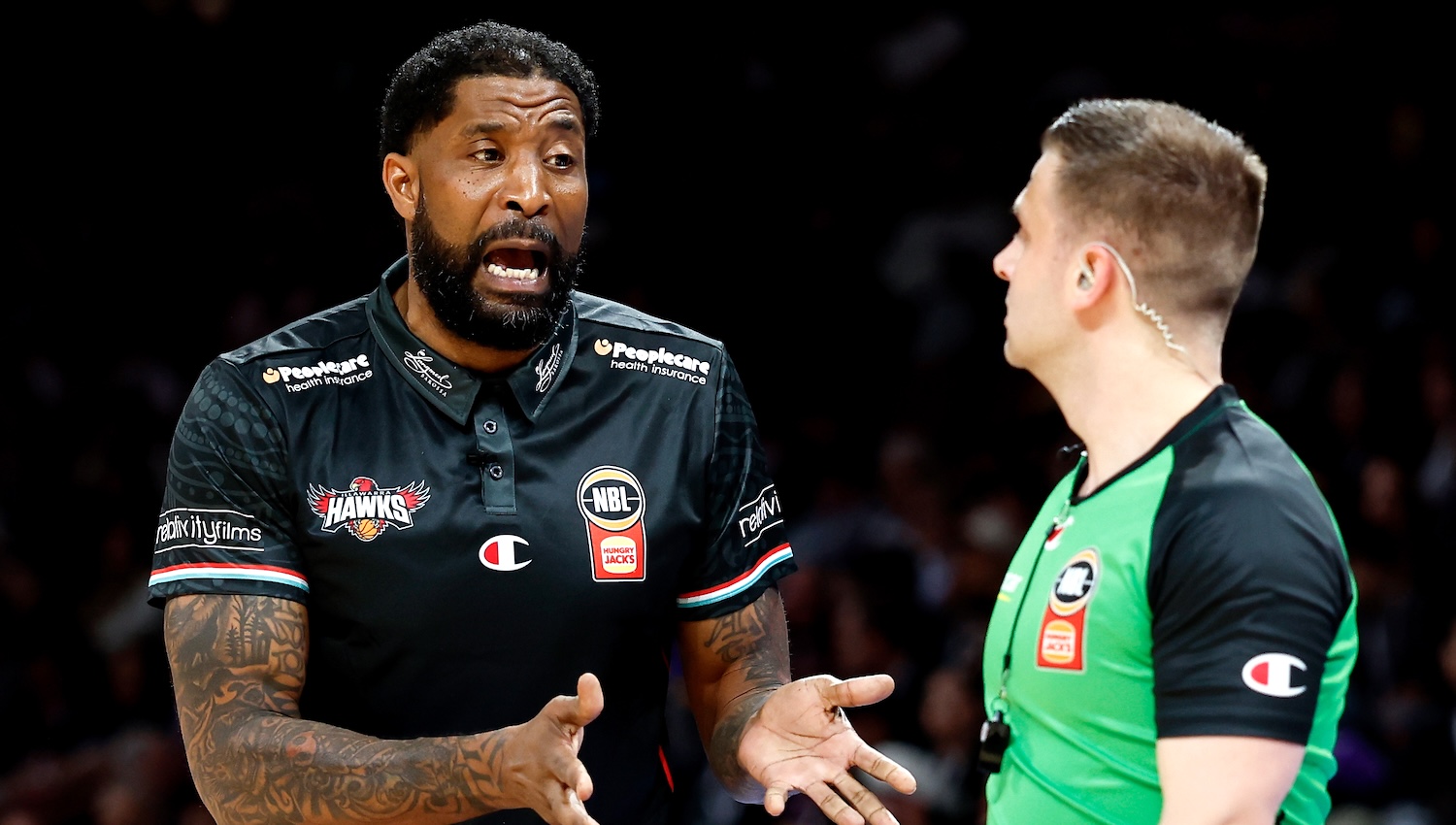
Interim Brisbane Bullets head coach Darryl McDonald states his case for a permanent appointment. Photo: YouTube.com
Highlights
Darryl McDonald’s blunt post-game case to lead Brisbane exposes Bullets’ instability, coaching churn
- Brisbane Bullets sack Justin Schueller after two seasons
- Brisbane Bullets shock: Advisor Stu Lash appointed head coach
- Stu Lash out: '(I) will continue to support the club'
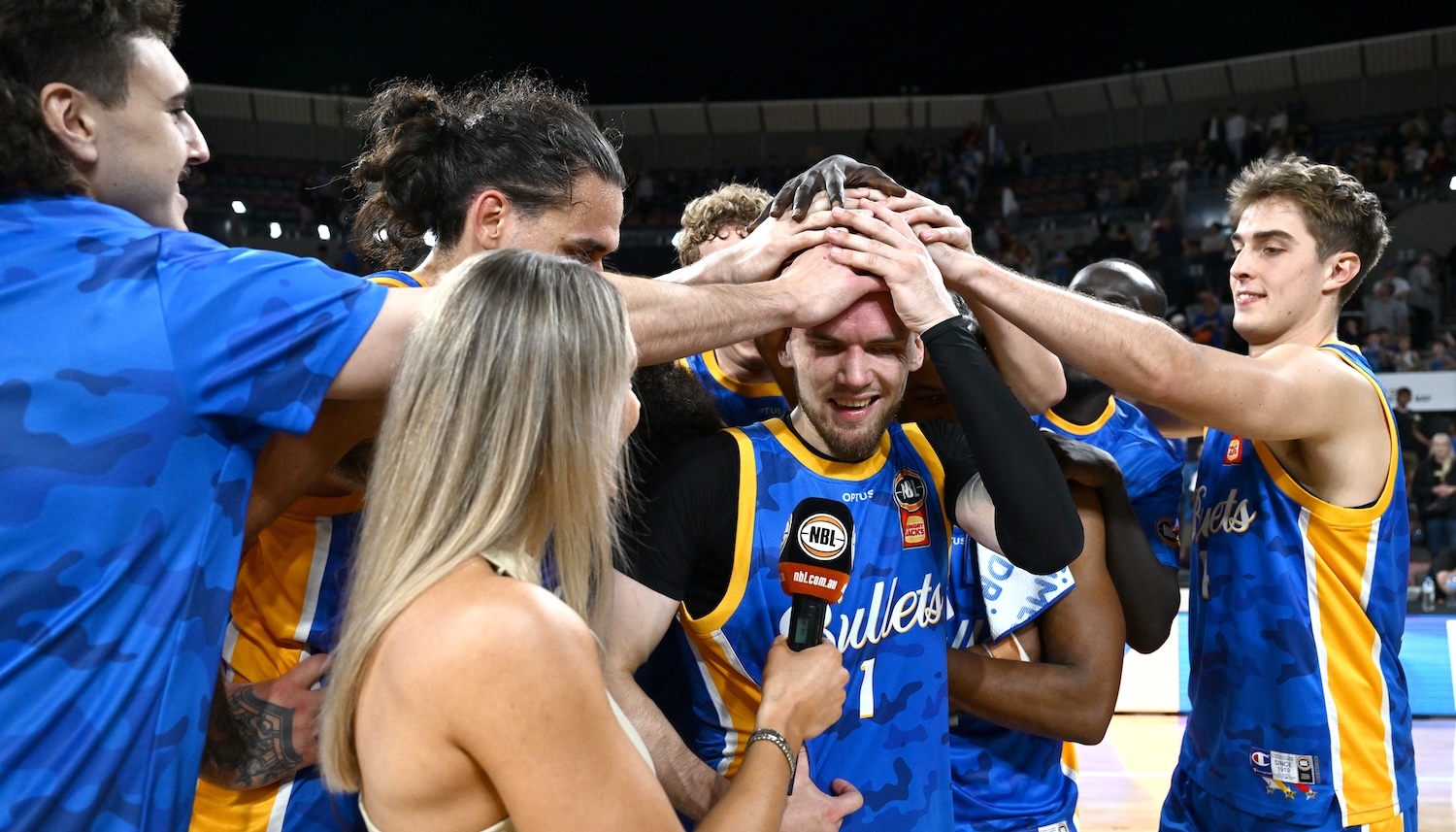
As far as cover letters go for a job application, former NBL star and now Brisbane Bullets head coach Darryl McDonald's straight fire.
The 61-year-old McDonald's would read like this: "They don’t need a coach – I’m right here, man.
"Stop bringing these coaches from the States. It hasn’t worked. What we doing is overhauling people. You got a coach right here.
"I know what it takes to win in this league. I’ve won in this league as a player and as an assistant coach. If you feel the need to go get somebody, okay – but the club needs stability. That’s the one thing we haven’t had.
"I haven’t spoken to Jason (Levien) yet. I’m trying to get on a call with him. But I understand – there’s a contract on the table for a guy in the States, but he wouldn’t come until next year. So most likely I’ll finish the year.
"They think a big name’s gonna come in and change things. But you’ve already got somebody in the seat. If you give me the opportunity and give me what I want, I’ll win in this league. I know I can."
This was McDonald's response in the post game press conference after the Bullets were dismantled by the Sydney Kings in Round 14 of NBL26 on Tuesday, December 30, 2025 at Qudos Bank Arena.
McDonald has stepped in for now former head coach Stu Lash, whose appointment shocked experts around the league before the start of NBL26. Lash had no senior or professional coaching experience. The Bullets stumbled to 5-13 before Lash stepped aside on December 18.
It's near impossible to argue D-Mac isn't qualified, he was an assistant coach on Melbourne United's 2021 championship team and as a player:
- 3-time NBL champion (1994, 2006, 2008)
- 2-time NBL All-Star Game MVP (1996, 2006)
- 3-time All-NBL First Team (1994–1996)
- All-NBL Second Team (2006)
- 4-time All-NBL Third Team (2000–2002, 2007)
- NBL Best Sixth Man (2004)
- 3-time NBL Good Hands Award (1994–1997)
- 8-time NBL leader in steals (1994–1997, 1999–2001, 2003)
He is also no stranger to stepping into to the role when head coaches depart in the heat of battle. McDonald stepped in for Al Westover at the Melbourne Tigers in 2010-11 and again when Chris Anstey stepped down after one game as the head coach of Melbourne United in 2014-15.
Ten years later, he's back in the hot seat.
The Bullets reportedly had a contract in front of an Australian coach shortly after Lash's departure but it was withdrawn in preference of signing an American head coach.
Brutally, the Brisbane has appointed EIGHT head coaches in seven seasons.
McDonald is a basketball junkie, has made his case for being a permanent appointment but if he doesn't get the role, he would be willing to return as an assistant.
"Absolutely," McDonald declared.
"I love coaching. If they want me as an assistant, I’ll do it. If they don’t, I move on. I love the game too much.
"If I could do basketball for the rest of my life, I would. It’s the reason I’m where I am today."
Brisbane's Overall Record Since its return (2016–17 to 2025–26)
- Games: 282
- Wins: 114
- Losses: 168
Winning Percentage: 40%
2025-26 NBL Season
Average Loss Margin
- 16 losses
- Total points lost by: 261
- Average loss margin: 18.2 points
Brisbane Bullets Losses — Worst to Best
- Sydney Kings 116 Brisbane Bullets 79 (37 pts)
- South East Melbourne Phoenix 107 Brisbane Bullets 78 (29 pts)
- Brisbane Bullets 84 New Zealand Breakers 113 (29 pts)
- Illawarra Hawks 116 Brisbane Bullets 89 (27 pts)
- Brisbane Bullets 76 South East Melbourne Phoenix 103 (27 pts)
- Adelaide 36ers 90 Brisbane Bullets 65 (25 pts)
- Sydney Kings 95 Brisbane Bullets 70 (25 pts)
- Brisbane Bullets 62 Perth Wildcats 86 (24 pts)
- Brisbane Bullets 86 South East Melbourne Phoenix 109 (23 pts)
- Illawarra Hawks 100 Brisbane Bullets 85 (15 pts)
- Brisbane Bullets 86 Melbourne United 95 (9 pts)
- Adelaide 36ers 87 Brisbane Bullets 80 (7 pts)
- Melbourne United 99 Brisbane Bullets 93 (6 pts)
- Brisbane Bullets 87 Melbourne United 92 (5 pts)
- Brisbane Bullets 82 Tasmania Jackjumpers 84 (2 pts)
- Cairns Taipans 83 Brisbane Bullets 82 (1 pt)
Brisbane Bullets NBL26 Campaign
Record: 6–16 │ Streak: L-L-W-L-L │ Pts For / Against / Diff: 1,877 / 2,097 │ Diff: -220 │ Ladder: 9th
2024–25 NBL Season
- Head Coach: Justin Schueller
- Captain: Mitch Norton
- Ladder: 8th
- Games: 29 │ Wins: 12 │ Losses: 17 │
- Pts For: 2,678 │ Pts Against: 2,838 │ Diff: –160
- Club MVP: Casey Prather
The 2024–25 season was a high-output but defensively compromised campaign for the Brisbane Bullets — one that finally delivered offensive firepower, yet again fell short of converting scoring into winning leverage.
Offensively, Brisbane produced 92.3 points per game, their best output since the early Lemanis era, built on strong shooting efficiency (.462 FG, .376 3PT, .767 FT). The Bullets generated offence from multiple sources, spaced the floor effectively, and leaned into modern perimeter volume without collapsing interior efficiency (.512 on two-pointers). This was the most balanced shot profile Brisbane had fielded in several seasons.
However, ball movement remained a limiting factor. Despite the scoring jump, assists fell to 444, and too many possessions still relied on individual shot creation rather than layered advantage. Turnovers (375) stayed manageable, but the offence often peaked at “good” rather than consistently “great.”
Defensively, the season was decisive. Opponents scored 160 more points across the season, shooting an alarming .501 from the field and .587 on two-pointers. Brisbane struggled to contain dribble penetration, protect the rim, and close defensive possessions, despite competitive rebounding numbers (1,153 total rebounds). The Bullets were frequently forced into shootouts — and while they could score, they could not consistently stop runs.
From a roster perspective, 2024–25 represented offensive clarity without defensive identity. The pieces fit better on one end of the floor than the other, and while roles were clearer than in previous seasons, the imbalance between scoring and stopping remained unresolved.
Casey Prather
Role: Primary scorer + offensive fulcrum
- 21.3 ppg (team-high)
- 30.8 mpg
- 16.3 FGA per game
- High efficiency: .473 FG, .399 3PT
Prather was the offensive centrepiece of the 2024–25 Bullets. He carried volume without sacrificing efficiency, punished mismatches, and gave Brisbane a legitimate go-to option on the wing. His scoring consistency underpinned the team’s offensive leap and set a clear hierarchy that had often been missing in previous seasons.
Keandre Cook
Role: Secondary scorer + perimeter spacer
- 16.7 ppg
- 31.1 mpg
- 7.1 3PA per game
Cook provided spacing gravity and shot volume, stretching defences and complementing Prather’s on-ball scoring. While streaky at times, his willingness to shoot and ability to score off movement were critical to Brisbane’s improved offensive profile.
Tyrell Harrison
Role: Interior finisher + glass presence
- 14.3 ppg
- 9.7 rpg
- Elite efficiency: .645 FG
Harrison was Brisbane’s most reliable interior presence, finishing at a high rate and controlling the defensive glass. His productivity anchored lineups that otherwise leaned heavily toward perimeter offence.
2023–24 NBL Season
- Head Coach: Justin Schueller
- Captain: Nathan Sobey
- Ladder: 7th
- Games: 28 │ Wins: 13 │ Losses: 15 │
- Pts For: 2,458 │ Pts Against: 2,534 │ Diff: –76
- Club MVP: Nathan Sobey
The 2023–24 season was a year of partial correction without breakthrough for the Brisbane Bullets — improved defensive effort and interior efficiency, but still short of the offensive cohesion and perimeter consistency required to climb the ladder.
Offensively, Brisbane averaged 87.8 points per game, but did so on sub-league-average efficiency (.443 FG, .307 3PT). While the Bullets remained solid finishing inside the arc (.505 on two-pointers) and generated consistent free-throw pressure (.750 FT), perimeter shooting continued to lag. The lack of three-point efficiency compressed spacing and limited the offence’s ceiling, particularly late in games.
Ball movement declined sharply. Assists dropped to 406 for the season, one of the lowest totals of the modern era, while turnovers (342) remained stubbornly high. Too many possessions relied on individual creation rather than advantage-based flow, placing strain on primary scorers and reducing lineup flexibility.
Defensively, there were clear signs of improvement. Brisbane increased physicality and activity — 173 steals, 109 blocks, and strong rebounding volume (1,134 total rebounds) — and narrowed the points differential compared to the previous season. However, opponents still shot better overall (.466 FG, .537 2PT), and Brisbane struggled to consistently contain penetration or protect the paint against stronger front courts.
From a roster perspective, 2023–24 was about re-stabilising the base. Roles were more defined than in 2022–23, effort levels were higher, and defensive intent improved — but offensive identity remained unresolved, particularly around spacing, shot creation hierarchy, and late-clock reliability.
Nathan Sobey
Role: Primary scorer + offensive driver
- 20.1 ppg (team-high)
- 30.1 mpg
- 15.5 FGA per game
- Elite foul pressure: 6.9 FTA, .859 FT
Sobey was once again Brisbane’s offensive engine, carrying the heaviest creation load and generating consistent rim pressure. While efficiency from the field fluctuated, his ability to score, draw fouls, and create late-clock offence kept Brisbane competitive across long stretches.
Tyler Johnson
Role: Secondary scorer + wing creator
- 15.8 ppg
- 28.6 mpg
- 11.8 FGA per game
Johnson provided a reliable secondary scoring option, capable of attacking mismatches and spacing the floor. However, the lack of consistent perimeter support around him limited the overall offensive leverage of Brisbane’s wing rotation.
Josh Bannan
Role: Interior scorer + rebounding presence
- 11.9 ppg
- 7.2 rpg
- 29.0 mpg
Bannan was a bright spot in the frontcourt, supplying physicality, rebounding, and interior finishing. His development helped stabilise lineups and contributed to Brisbane’s improved defensive effort, even as broader team issues persisted.
2022–23 NBL Season
- Head Coach: James Duncan I Sam Mackinnon I Greg Vanderjagt
- Captain: Aron Baynes
- Ladder: 9th
- Games: 28 │ Wins: 8 │ Losses: 20 │
- Pts For: 2,365 │ Pts Against: 2,600 │ Diff: –235
- Club MVP: Nathan Sobey
The 2022–23 season was a clear regression for the Brisbane Bullets, marked by declining efficiency, defensive slippage, and an inability to consistently control games at either end of the floor.
Offensively, Brisbane averaged 84.5 points per game, but did so with reduced efficiency (.439 FG, .325 3PT). While their two-point finishing remained solid (.512 on twos), perimeter shooting failed to provide enough spacing or scoring punch, and free-throw production (.763 FT) did not offset the lack of reliable half-court creation. Shot quality dipped, and too many possessions ended without a clear advantage generated.
Ball movement stalled relative to previous seasons. Assists fell to 481, while turnovers climbed to 440, reinforcing a pattern of high-effort offence without structural clarity. Brisbane often relied on individual shot-making rather than sustained offensive flow, particularly in close or late-game situations.
Defensively, the season was decisive in the wrong direction. Opponents scored 235 more points across the season, shot better from the field (.453 FG) and from two (.543 2PT), and consistently generated higher-quality looks. While rebounding volume was competitive, Brisbane struggled to protect the paint, finish possessions, and defend without fouling. The result was a defence that absorbed pressure rather than applying it.
From a roster perspective, 2022–23 reflected instability and misalignment. New personnel were integrated, but roles fluctuated, rotations shifted, and chemistry never settled. The Bullets were capable of strong individual performances, but those efforts rarely translated into sustained team success.
Tyler Johnson
Role: Primary scorer + late-clock option
- 15.8 ppg (team-high)
- 28.6 mpg
- 11.8 FGA per game
- Efficient scorer: .480 FG, .367 3PT, .785 FT
Johnson was Brisbane’s most reliable offensive presence. He provided scoring across all three levels, handled late-clock responsibility, and carried a steady usage load in an otherwise uneven offence. His efficiency stood out in a season where consistency was rare.
Nathan Sobey
Role: Lead guard + rim-pressure creator
- 15.3 ppg
- 32.0 mpg
- 4.7 assists per game
Sobey remained Brisbane’s primary initiator, generating downhill pressure and playmaking opportunities. However, defensive attention and limited spacing reduced his efficiency, and the burden placed on him highlighted the lack of secondary creation.
Aron Baynes
Role: Interior anchor + screen-setter
- 11.7 ppg
- 7.8 rebounds per game
Baynes provided physicality, rebounding, and interior scoring, but Brisbane struggled to consistently leverage his presence into defensive stability or sustained offensive advantage.
2021–22 NBL Season
- Head Coach: James Duncan
- Captain: Jason Cadee
- Ladder: 8th
- Games: 28 │ Wins: 10 │ Losses: 18 │
- Pts For: 2,379 │ Pts Against: 2,500 │ Diff: –121
- Club MVP: Robert Franks
The 2021–22 season marked a reset year for the Brisbane Bullets, both stylistically and structurally, following the turbulence of the hub-heavy 2020–21 campaign and the end of the Andrej Lemanis era.
Offensively, Brisbane took a step back in output, averaging 84.9 points per game, down sharply from the previous two seasons. Efficiency softened across the board (.447 FG, .323 3PT, .721 FT), and while the Bullets remained effective inside the arc (.525 on two-pointers), perimeter consistency and foul pressure declined. The offence leaned more heavily on half-court execution, without the same pace or spacing that had driven earlier scoring spikes.
Ball movement remained functional (496 assists), but the offence lacked rhythm and continuity. Turnovers crept back up (422 total), and too many possessions ended without a clear advantage created. Brisbane often relied on individual shot-making rather than systemic pressure, particularly late in games.
Defensively, the Bullets were competitive but ultimately overmatched. Opponents scored 121 more points across the season, shot slightly better from two and three, and forced Brisbane into difficult scoring exchanges. Rebounding volume was strong (1,168 total rebounds), but it did not translate into consistent control of tempo or scoreboard pressure.
From a roster perspective, 2021–22 was a season of recalibration. New pieces were integrated, roles shifted frequently, and lineups lacked the cohesion required to sustain winning stretches. The Bullets were capable of strong single-game performances, but consistency proved elusive.
Robert Franks
Role: Primary scorer + interior–perimeter hybrid
- 18.2 ppg (team-high)
- 33.0 mpg
- 13.2 FGA per game
- Efficient scoring: .497 FG, .391 3PT, .763 FT
Franks was the clear offensive focal point for Brisbane in 2021–22. He provided scoring at all three levels, rebounding presence, and physicality, often carrying the offence through difficult stretches. His versatility allowed Brisbane to toggle between small and big lineups, but the reliance on his shot-making also highlighted the lack of a consistent secondary creator.
Lamar Patterson
Role: Secondary creator + physical wing
- 16.1 ppg
- 29.1 mpg
- 14.4 FGA per game
Patterson remained a central offensive figure, operating as a downhill attacker and secondary organiser. While still productive, his efficiency dipped, and his burden reflected the broader offensive challenges Brisbane faced in generating clean looks.
Nathan Sobey
Role: Attacking guard + foul generator
- 16.1 ppg
- 29.1 mpg
- 5.0 FTA per game
Sobey’s season was truncated, but his presence was felt through rim pressure and free-throw generation. Without him available consistently, Brisbane struggled to maintain guard-driven advantage creation.
2020–21 NBL Season
- Head Coach: Andrej Lemanis
- Captain: Jason Cadee
- Ladder: 6th
- Games: 36 │ Wins: 18 │ Losses: 18 │
- Pts For: 3,204 │ Pts Against: 3,274 │ Diff: –70
- Club MVP: Nathan Sobey
The 2020–21 season was the most volatile and disrupted campaign of the Brisbane Bullets’ post-return era, shaped heavily by hub conditions, roster churn, and availability instability.
On paper, Brisbane produced 91.0 points per game, maintaining a high-output offence built around pace, guard creation, and interior efficiency. Shooting numbers were respectable (.451 FG, .334 3PT), and finishing inside remained a strength (.521 on two-pointers). The Bullets continued to lean into a modern shot profile, with nearly 1,000 three-point attempts across the season.
However, this was the first season where offensive coherence clearly fractured. Despite solid raw scoring, efficiency fluctuated game to game, turnovers climbed (436 total), and lineups lacked continuity. Ball movement remained present (658 assists), but decision-making under pressure regressed relative to 2019–20.
Defensively, the profile slipped. Opponents out-shot Brisbane from three (.369 vs .334), forced more assists, and generated more steals. Rebounding volume increased, but it did not translate into consistent control of games. The statistical symmetry — points for and against finishing exactly equal — accurately reflected a team stuck between dangerous and unreliable.
From a roster perspective, 2020–21 marked the end of the Andrej Lemanis era in practice, if not formally. Core offensive pieces remained, but chemistry, clarity, and defensive identity all eroded under external pressures. Brisbane could still score with anyone on a given night — but sustaining form became increasingly difficult.
Nathan Sobey
Role: Primary scorer + lead guard
- 21.1 ppg (team-high)
- 34.1 mpg
- 15.8 FGA per game
- High efficiency for volume: .458 FG, .382 3PT, .887 FT
Sobey emerged as the clear offensive leader in 2020–21. He carried the heaviest creation load of his Bullets tenure, combining perimeter shooting, downhill pressure, and improved free-throw generation. While his usage was essential to Brisbane’s scoring viability, it also underscored how heavily the offence leaned on him in unstable lineups.
Vic Law
Role: Secondary scorer + physical wing
- 18.8 ppg
- 32.6 mpg
- 15.4 FGA per game
Law provided Brisbane with a reliable secondary scoring option, capable of attacking mismatches and contributing across multiple phases. His physicality and rebounding helped stabilise stretches of play, even as overall team consistency wavered.
Lamar Patterson
Role: Shot creator + transition scorer
- 14.2 ppg
- 12.6 FGA per game
Patterson’s role diminished relative to previous seasons, but he remained an important source of shot creation and experience. His reduced availability and shifting usage mirrored the broader instability of the season.
2019–20 NBL Season
- Head Coach: Andrej Lemanis
- Captain: Multiple
- Ladder: 5th
- Games: 28 │ Wins: 15 │ Losses: 13 │
- Pts For: 2,607 │ Pts Against: 2,557 │ Diff: +50
- Club MVP: Lamar Patterson
The 2019–20 season represented Brisbane’s most complete offensive season since returning to the NBL, and the clearest expression of the roster build that had been evolving since 2017.
The Bullets averaged 93.1 points per game, their highest output across the four-season stretch, driven by strong efficiency (.471 FG, .360 3PT) and elite finishing inside the arc (.546 on two-pointers). Brisbane generated offence at scale — 2,015 field-goal attempts and 806 three-point attempts — while maintaining balance rather than drifting into low-efficiency volume.
Ball movement reached its peak. Brisbane recorded 528 assists across the season, comfortably their best mark of the era, reflecting a team that could initiate offence from multiple positions and sustain advantage through second and third actions. Turnovers (346 total) remained controlled despite the increased pace and usage.
Defensively, the profile improved incrementally rather than dramatically. Rebounding climbed to 1,014 total rebounds, blocks rose to 98, and steals held steady. Brisbane were more physical and more active than in earlier seasons, but still relied on system defence rather than disruption, leaving limited margin when offensive rhythm dipped.
From a roster perspective, 2019–20 was the apex of Brisbane’s Andrej Lemanis-era identity: high-scoring, guard- and wing-driven, spacing-heavy, and offensively versatile. What remained elusive was the final step — converting offensive firepower into sustained ladder dominance and defensive reliability.
Lamar Patterson
Role: Primary scorer + possession driver
- 21.4 ppg (team-high)
- 29.6 mpg
- 16.6 FGA per game
- High usage: .461 FG, .338 3PT, .774 FT
Patterson was the undisputed offensive engine of the 2019–20 Bullets. He controlled possessions, absorbed defensive attention, and consistently generated offence both on and off the ball. His role expanded further from 2018–19, with Brisbane increasingly comfortable living with the results of Patterson-led possessions late in the clock.
Nathan Sobey
Role: Secondary scorer + attacking guard
- 16.5 ppg
- 14.1 FGA per game
- 3.4 assists per game
Sobey provided Brisbane with a second high-usage creator, complementing Patterson with pace, penetration, and transition pressure. While efficiency fluctuated, his ability to stress defences off the bounce was central to Brisbane’s scoring surge and overall offensive ceiling.
2018–19 NBL Season
- Head Coach: Andrej Lemanis
- Captain: Adam Gibson
- Ladder: 4th
- Games: 28 │ Wins: 14 │ Losses: 14 │
- Pts For: 2,503 │ Pts Against: 2,480 │ Diff: +23
- Club MVP: Lamar Patterson
The 2018–19 season was the high-water mark of Brisbane’s post-return offensive output, even as the overall campaign remained frustratingly uneven.
Brisbane made a clear stylistic shift toward pace, spacing, and perimeter volume, averaging 88.9 points per game on .465 shooting from the field and an elite .391 from three. The Bullets attempted 744 threes across the season — a major jump from previous years — and leaned heavily into drive-and-kick offence and early-clock perimeter looks. Inside the arc, they remained efficient (.510 on twos), showing a genuinely modern shot profile.
This was also Brisbane’s most creator-driven offence of the Andrej Lemanis era. The ball moved more freely (527 assists), turnovers dropped again, and multiple players were capable of initiating offence rather than simply finishing it. Possessions were quicker, more decisive, and less reliant on grinding half-court execution.
Defensively, however, the gains were less convincing. While Brisbane generated more steals and maintained rebounding competitiveness, they remained vulnerable in physical matchups and struggled to consistently control fouling and rim protection. When shots weren’t falling, the Bullets lacked a reliable defensive lever to stabilise games.
From a roster perspective, this season represented maximum offensive upside without matching defensive certainty. Brisbane were dangerous on any given night and capable of outscoring quality opponents — but still lacked the balance and consistency required to translate scoring power into sustained success.
Lamar Patterson
Role: Primary scorer + offensive organiser
- 18.1 ppg (team-high)
- 28.4 mpg
- 13.8 FGA per game
- Multi-level scoring: .455 FG, .371 3PT, .819 FT
Patterson was the clear offensive hub of the 2018–19 Bullets. He combined volume scoring with physicality, foul drawing, and secondary playmaking, giving Brisbane its most complete offensive presence since re-entering the league. Unlike previous lead scorers, Patterson could both initiate and finish possessions, making him the team’s most reliable late-clock option.
Cameron Gliddon
Role: High-volume perimeter shooter + floor spacer
- 13.7 ppg
- 6.9 3PA per game
- .392 from three
Gliddon was the spacing engine of Brisbane’s offence. His willingness to shoot off movement and in transition stretched defensive coverages and unlocked driving lanes for others. While not a primary creator, his shooting gravity was central to the Bullets’ offensive spike.
2017–18 NBL Season
- Head Coach: Andrej Lemanis
- Captain: Adam Gibson
- Ladder: 8th
- Games: 28 │ Wins: 9 │ Losses: 19 │
- Pts For: 2,347 │ Pts Against: 2,487 │ Diff: –140
- Club MVP: Travis Trice
The 2017–18 season represented a clear step forward for the Brisbane Bullets — not yet a contender, but no longer merely re-establishing credibility. Brisbane doubled its win total from the previous season and finished squarely mid-table, competitive on most nights and structurally more coherent at both ends of the floor.
Offensively, the Bullets were more productive and more efficient. They averaged 83.8 points per game, improving across every major shooting indicator (.475 FG, .363 3PT, .806 FT). Shot quality improved inside the arc in particular, with a .519 two-point percentage, reflecting better spacing, stronger interior finishing, and more reliable secondary scoring.
Unlike 2016–17, Brisbane now had a clear offensive engine. The offence flowed through Perrin Buford, whose combination of volume scoring, physicality, and foul drawing gave Brisbane a reliable possession-to-possession option. Ball movement improved, assist numbers climbed, and turnovers dropped sharply, signalling a more decisive offensive identity.
Defensively, Brisbane remained more disciplined than disruptive, but execution improved. Turnovers forced increased, fouls committed fell significantly, and the Bullets were better at finishing possessions despite still lacking elite rim protection. The net result was a rare statistical symmetry: points for and against finished exactly even, a fair reflection of a true .500 team.
From a roster perspective, this season marked Brisbane’s transition from foundation to functionality. Roles were clearer, import impact was stronger, and the margin between Brisbane and finals-level teams narrowed meaningfully — even if it had not yet disappeared.
Perrin Buford
Role: Primary scorer + physical two-way wing
- 16.2 ppg (team-high)
- 31.2 mpg
- 12.6 FGA per game
- Efficient across zones: .504 FG, .410 3PT, .706 FT
Buford was the offensive centre of gravity for Brisbane in 2017–18. He provided consistent shot creation, attacked mismatches, and absorbed defensive attention in ways the Bullets lacked the previous season. While not a pure organiser, his ability to score at all three levels stabilised the offence and gave Brisbane a late-clock option they could trust.
Daniel Kickert
Role: Interior scorer + pick-and-pop big
- 14.0 ppg
- 9.8 FGA
- High efficiency: .522 FG, .579 2PT, .922 FT
Kickert built on his 2016–17 foundation year with increased volume and sustained efficiency. He remained a dependable interior presence and a reliable release valve, thriving within Brisbane’s improved spacing. As before, his offence was largely play-dependent, but his consistency underpinned the Bullets’ improved scoring output.
2016–17 NBL Season
- Head Coach: Andrej Lemanis
- Captain: Adam Gibson
- Ladder: 8th
- Games: 28 │ Wins: 10 │ Losses: 18 │
- Pts For: 2,268 │ Pts Against: 2,392 │ Diff: –124
- Club MVP: Torrey Craig
The 2016–17 season was the return of the Brisbane Bullets to the NBL, and it played out exactly like a foundation year: competitive, functional, but ultimately limited.
Brisbane finished the season as a middle-to-lower tier team, capable of staying in games but rarely imposing themselves over four quarters. Their offense was balanced rather than explosive, averaging 80.6 points per game on solid efficiency (.460 FG, .358 from three, .806 at the line). They attacked the paint first, took care of their free throws, and avoided extreme shot-profile weaknesses.
However, that balance came at a cost. The Bullets lacked a true offensive engine. Ball movement was steady but not decisive, reflected in near assist–turnover parity, and there was no consistent closer or primary creator who could bend defensive schemes or control late-game possessions.
Defensively, Brisbane competed but did not disrupt. Steal and block rates were modest, foul rates were high, and rebounding sat squarely in the middle of the league. They defended within structure rather than through pressure or playmaking, which left them vulnerable when shots weren’t falling.
From a roster perspective, the season was about establishing credibility, not contention. Imports and locals filled roles responsibly, but no unit dominated any phase of the game. The Bullets were rarely blown out, but just as rarely decisive.
Torrey Craig
Role: Volume scorer + physical wing
- 15.2 ppg (team-high)
- 30.3 mpg
- 12.0 FGA per game (highest on roster)
Craig was the offensive focal point by volume, not by control. He took the toughest shots, absorbed contact, and carried the physical burden of the offence. His efficiency (.463 FG, .398 from three) was solid given his usage, but he was not a natural shot-creator off the dribble in late-clock situations. He finished offense more than he organised it.
Daniel Kickert
Role: Interior scorer + pick-and-pop big
- 12.8 ppg
- 8.9 FGA
- Elite efficiency: .544 FG, .571 on twos, .951 FT
Kickert was Brisbane’s most efficient high-minute scorer. He punished switches, finished inside, and drew fouls at a strong rate. Importantly, his offence was dependent on others — he thrived as a finisher rather than a creator.
About the Author
Peter Brown is the head coach of the Sydney Comets Women’s Youth League team in the Waratah Basketball League in NSW. He is also the assistant coach for the Comets NBL1 women’s team in the NBL East Conference. Peter is a 30-year journalist, starting as a sports reporter at the NT News in the early 1990s. He played junior basketball for the Northern Territory at national championships from U16 to U20 and for the Territory’s senior men’s team at numerous international tournaments. Peter has been a basketball fan since the early 80s, especially the NBA. Basketball is his passion — and his opinions his own. Email peter.brown@basketball.com.au with feedback.

.png)

.jpg)