
16
Dec
Analysis
Exposed: Dark side of Kobe's Mamba Mentality

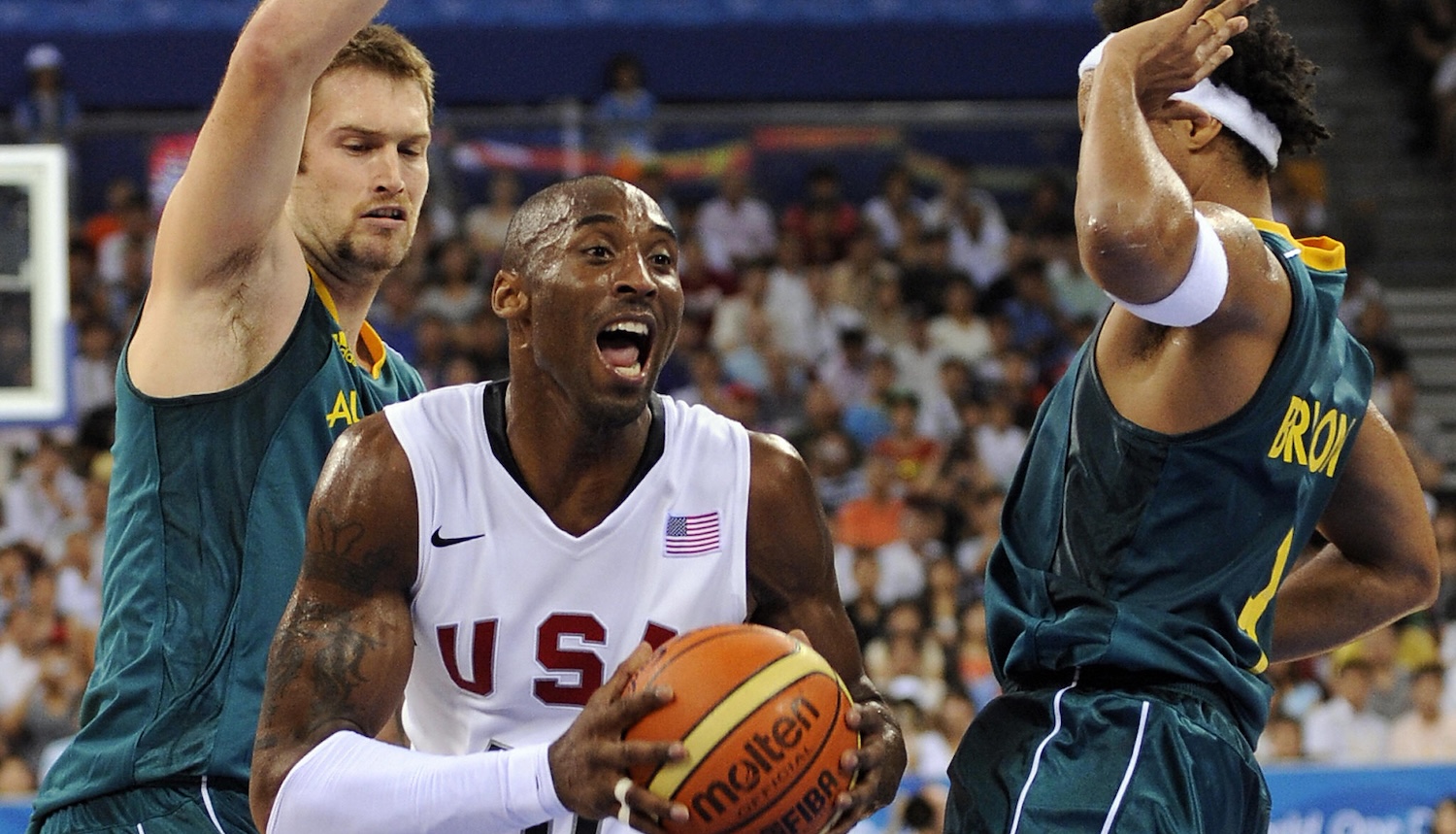
USA's Kobe Bryant drives to the basket past Australia's David Barlow (right) during the men's quarterfinal basketball match USA vs. Australia on August 20, 2008 at the Olympic basketball arena in Beijing, as part of the 2008 Beijing Olympic Games. Photo: TIMOTHY A. CLARY/AFP via Getty Images)
Highlights
Gary Vitti reveals the extreme cost behind Kobe's Mamba Mentality and why it isn’t safe to copy
- Kobe Bryant twice torched Australia at the Olympics on Team USA’s path to gold
- Long-time Lakers trainer Gary Vitti revealed the extreme realities behind Mamba Mentality
- Bryant pushed physical and psychological limits few athletes could survive
- Experts warn copying Kobe’s approach carries serious physical and mental risks
- Mamba Mentality works best when adapted, not blindly imitated
The Australian Boomers were twice run over by the "Mamba Mentality" at the Olympic Games while multiple Australians bore witness to Kobe Bryant's relentlessness during his 1,346 NBA career for the Los Angeles Lakers.
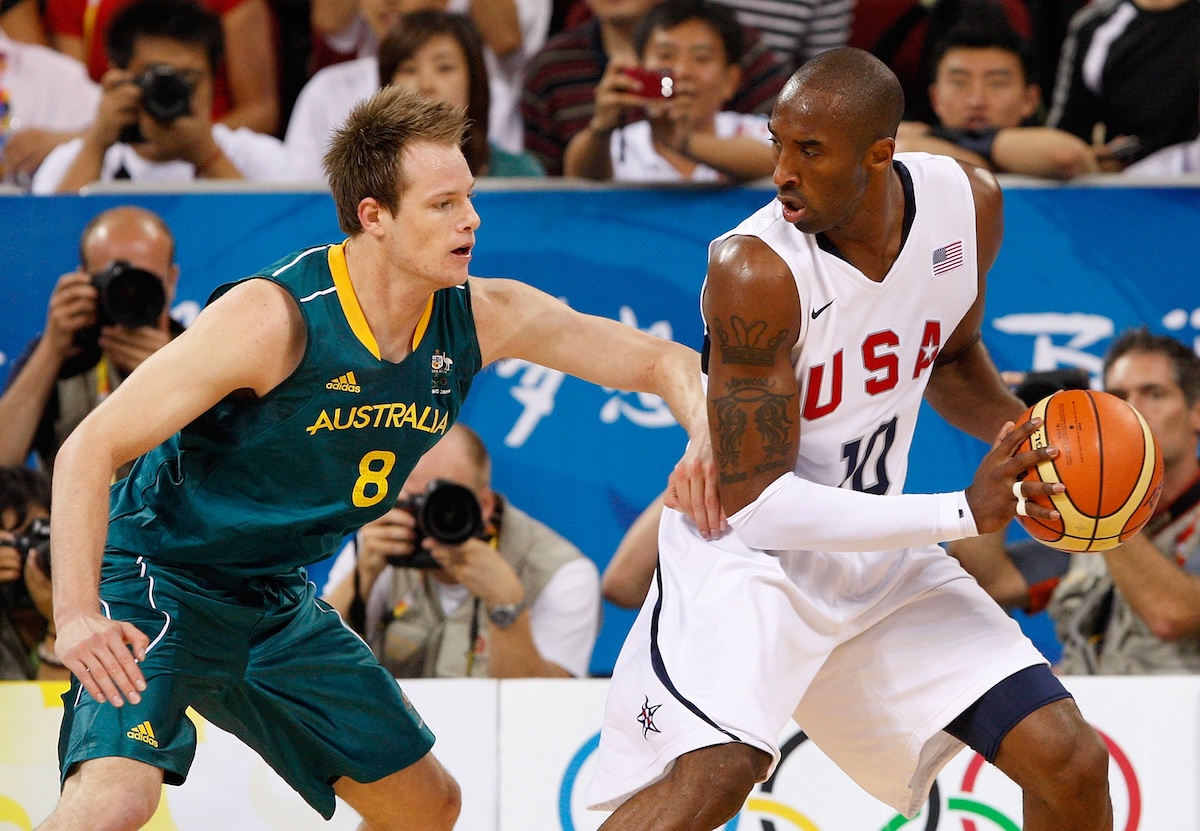
Bryant, who tragically passed away in January 2020, dropped 25 points (10-from-16) in a 116-85 route at the 2008 Beijing Olympic Games and four years later, 20 points in a 119-86 blow-out at the 2012 London Olympics. He led the US to two gold medals.
But long-time Lakers trainer Gary Vitti, who spent 20 years with Bryant from 1997 to 2016 as part of his 36-year career, has revealed the dark side to now lauded "Mamba Mentality" approach to playing, training and ignoring injuries.
Vitti, 68, revealed NBA superstar let US Navy seals use the brutal torture technique of waterboarding "to see what the big deal was".
“Everybody looks at Kobe and sees him as this talented, unbelievable, one of the greatest basketball players that has ever lived — and I get that," Vitti told Lakers legend Byron Scott.
"But if you looked at Kobe through my eyes, you don’t actually see that.
"If you didn’t know him, didn’t work with him, didn’t know any of this behind-the-scenes stuff — what I saw was: was he big? Yeah, compared to me he was big. But by NBA standards, he wasn’t that big.
"Was he quick? Yeah. Was he fast? Yeah. Could he jump? Sure — but he didn’t have a 42-inch vertical. He wasn’t Zach LaVine. He wasn’t one of those high flyers.
"So what was there about him that he ends up with five rings, and more gifted players have none?
"And that’s when you have to do the deep dive.
"Work ethic — off the chart. A lot of guys work hard. Kobe worked as hard or harder than anybody. But not everybody works smart.
"Kobe was an extremely intelligent guy. Everything about him was calculated — almost choreographed. He learned from his mistakes and from the mistakes of others. He prepared. I don’t think he ever went into anything unprepared.
"He might have known the opponent’s offense better than they knew it themselves.
"Tough — tougher than anybody I’ve ever known. Literally tougher than anybody. He took ‘can’t’ and ‘won’t’ out of his vocabulary and replaced them with ‘can’ and ‘will.’
"Little-known fact: he told me he got waterboarded because he wanted to see what the big deal was.
"He was hanging out with some Navy SEALs, and he let them waterboard him.
"You know what waterboarding is — they lay you down, strap you in, put a towel over your face, and pour water so it feels like you’re drowning.
"He let them do that to him — by choice.
"It was a mental exercise. He knew he wasn’t going to drown. He knew none of the guys who went through it drowned.
"The question for him was: 'can you handle it or not?'"
NBA folklore is littered with anecdotes about Bryant's relentless work ethic and ability to play through injuries. He famously drained two free throws after rupturing his Achilles tendon in April 2013 against the Golden State Warriors and came back in just days from a severely sprained ankle in the 2000 NBA Finals to lead the Lakers to a crucial road win against the Indiana Pacers en route to his first title.
By the end of his career, Kobe had played through or came back from:
- A ruptured Achilles
- A fractured knee
- A torn rotator cuff
- Chronic ankle instability
- Multiple fractures
- Finger dislocations
- Persistent soft-tissue degeneration
Vitti, who was the Lakers trainer for Kareem Abdul-Jabbar, Magic Johnson, Shaquille O'Neal, James Worthy and Scott, revealed Kobe routinely played with injuries that would sideline most players but said his earlier training habits had accelerated attrition.
It was the price Bryant was willing to pay to be a five-time NBA champion, two-time NBA Finals MVP, 2008 MVP, 11-time All-NBA First Teamer and 18-time All-Star.
Sports science and sports psychologists have warned of the risks and against the dangers associated with Kobe's Mamba Mentality: "Mamba Mentality isn’t about suffering more. It’s about thinking better, preparing deeper, and competing cleaner."
1. Physical Breakdown Risk
Experts: Sports medicine doctors, athletic trainers, load-management researchers
Core issue: Relentless training and playing through pain can outpace the body’s ability to recover.
What experts warn:
- Chronic overuse injuries
- Playing through structural damage (not just soreness)
- Long-term joint degeneration
- Shortened athletic lifespan
Why Kobe was the exception:
- Elite genetics
- World-class medical support
- Unmatched body awareness
- Ability to compartmentalise pain signals
Why most athletes aren’t: They lack one or more of the above.
Expert consensus: “Pain tolerance is not injury intelligence.”
2. Psychological Burnout & Identity Collapse
Experts: Sports psychologists, high-performance psychologists
Core issue: The mentality ties self-worth directly to output, dominance, and winning.
Risks include:
- Emotional exhaustion
- Anxiety when performance dips
- Depression post-injury or post-career
- Identity loss after retirement
Key danger: When everything is about winning, failure becomes existential, not situational.
Many former elite athletes report: “I didn’t know who I was when I wasn’t competing.”
3. Obsessive Traits Becoming Maladaptive
Experts: Clinical psychologists, behavioural scientists
Core issue: Traits that drive excellence can cross into compulsion.
Warning signs:
- Inability to rest without guilt
- Training despite medical advice
- Emotional detachment from relationships
- Control issues with teammates or staff
Kobe managed this through structure and purpose. Many athletes spiral into overtraining or isolation instead.
4. Team Chemistry & Leadership Risk
Experts: Coaches, leadership researchers, organisational psychologists
Core issue: Extreme internal standards can fracture teams.
Common problems:
- Teammates feel constantly inadequate
- Fear-based motivation replaces trust
- Reduced creativity and joy
- “Win at all costs” mentality erodes empathy
Important distinction experts make:
- Internal Mamba Mentality = powerful
- Externally imposed Mamba Mentality = toxic
5. Normalising Harmful Behaviour
Experts: Ethics scholars, youth-sport researchers
Core issue: Young athletes imitate outcomes without understanding cost.
Examples:
- Ignoring injuries because “Kobe would”
- Believing suffering equals greatness
- Romanticising self-destruction
- Mistaking punishment for discipline
Experts stress: “What was survivable for a once-in-a-generation athlete can be dangerous for a developing body or mind.”
6. Survivorship Bias
Experts: Performance analysts, data scientists
Core issue: We see the success, not the graveyard of imitators.
For every Kobe:
- Hundreds trained just as hard
- Many burned out
- Many got injured
- Many never reached elite levels
The myth: “If I do what he did, I’ll get what he got.”
The reality: You also inherit the risks — without his safeguards.
7. Mental Health Stigma
Experts: Athlete welfare advocates
Core issue:
“Mamba Mentality” can discourage vulnerability.
Consequences:
- Athletes hide pain (mental and physical)
- Seeking help is seen as weakness
- Emotional suppression becomes default
- Crisis intervention comes too late
Ironically, Kobe himself evolved past this, especially post-career — but the simplified myth didn’t.
How Experts Say to Use the Mamba Mentality Safely
Most experts now frame it this way:
Keep:
- Preparation
- Accountability
- Craft mastery
- Competitive edge
- Intellectual obsession with improvement
Discard:
- Pain glorification
- Sleep deprivation
- Isolation as virtue
- Ignoring medical input
- Self-worth = performance
Replace with:
- Sustainable intensity
- Recovery as discipline
- Mental flexibility
- Long-term performance thinking
Vitti revealed Kobe's Mamba Mentality wasn't just basketball focused. He was obsessed with pushing the limits of human behaviour under pressure.
"Back in 2005, Kobe came up to me on the team plane carrying a DVD of Saw 2," Vitti said.
"There’s a scene where a guy has to surgically remove his own eye in 60 seconds to get a key and survive.
"He handed me the DVD, looked me straight in the eye, and said, 'I could do it. I know I could do it'.
"And then he walked away.
"I went home and popped the DVD in. I’m watching this sick ass movie, right?”
"For him to hand that to me and tell me he could do it — and look me straight in the eye — yeah, I believed him."
Kobe Bryant — Major / Career-Defining Injuries
1. Right Achilles Tendon Rupture
- Date: April 12, 2013
- Game: vs Golden State Warriors
- Details: Complete rupture
- Notable moment: Shot two free throws after the injury
- Impact: Missed playoffs; permanently altered late-career mobility
2. Left Shoulder Rotator Cuff Tear
- Date: January 21, 2015
- Details: Full-thickness tear
- Treatment: Season-ending surgery
- Impact: Limited shooting mechanics and strength late career
3. Right Knee Tibial Plateau Fracture
- Date: December 17, 2013
- Details: Fracture in knee joint surface
- Impact: Occurred during Achilles rehab; further delayed return
4. Right Knee ACL Tear (Partial / Sprain Spectrum)
- Date: 2011 playoffs (chronic degeneration rather than full rupture)
- Details: Severe knee instability issues, heavy bracing required
- Impact: Long-term mobility decline
Significant Recurring Injuries
5. Severe Ankle Sprains (Multiple)
- Years: 1999–2013
- Most notable:
- 2000 NBA Finals vs Indiana (missed Game 3)
- Impact: Required frequent taping, injections, manual mobilisation
6. Finger Dislocations & Fractures
- Examples:
- 2009: Right index finger dislocation
- 2016: Severe finger dislocation vs Spurs
- Notable: Often returned to game before taping was completed
7. Broken Nose
- Dates:
- 2003: Broken nose (elbow)
- 2012: Broken nose vs Miami Heat
- Treatment: Played with protective mask
8. Hand & Wrist Fractures
- Examples:
- 2003: Fractured right hand
- Multiple seasons: Wrist sprains and hand contusions
- Impact: Shooting pain, altered mechanics
Muscle & Soft-Tissue Injuries
9. Hamstring Strains
- Years: Multiple
- Severity: Moderate to severe
- Impact: Short absences; reduced explosiveness
10. Calf Strains
- Years: Late career (2012–2014)
- Impact: Often precursors to Achilles stress
11. Groin Strains
- Years: Recurrent throughout career
- Impact: Limited lateral movement
Foot & Lower-Body Injuries
12. Plantar Fasciitis
- Years: Chronic
- Impact: Persistent pain, especially late career
13. Bone Spurs (Foot & Ankle)
- Years: Mid-to-late career
- Impact: Required ongoing pain management
14. Toe Injuries
- Details: Turf toe-type injuries, bruising, joint inflammation
- Impact: Affected push-off and balance
Back & Spine
15. Lower Back Strains
- Years: Intermittent
- Impact: Missed practices, required core management
16. Neck Strain / Stinger Episodes
- Years: Occasional
- Impact: Short-term discomfort, limited rotation
Single-Game / Acute Injuries
17. Concussion-Type Symptoms
- Details: Elbows to head, facial contact
- Era: Pre-modern concussion protocol (not formally diagnosed)
18. Eye Injuries / Corneal Abrasions
- Details: Scratches, swelling from contact
- Impact: Temporary vision impairment
Kobe Bryant's Hall of Fame Career
- 5× NBA champion (2000–2002, 2009, 2010)
- 2× NBA Finals MVP (2009, 2010)
- NBA Most Valuable Player (2008)
- 18× NBA All-Star (1998, 2000–2016)
- 4× NBA All-Star Game MVP (2002, 2007, 2009,[b] 2011)
- 11× All-NBA First Team (2002–2004, 2006–2013)
- 2× All-NBA Second Team (2000, 2001)
- 2× All-NBA Third Team (1999, 2005)
- 9× NBA All-Defensive First Team (2000, 2003, 2004, 2006–2011)
- 3× NBA All-Defensive Second Team (2001, 2002, 2012)
- 2× NBA scoring champion (2006, 2007)
- NBA Slam Dunk Contest champion (1997)
- NBA All-Rookie Second Team (1997)
- NBA 75th Anniversary Team
- Nos. 8 & 24 retired by Los Angeles Lakers
- Naismith Prep Player of the Year (1996)
- Gatorade National Player of the Year (1996)
- McDonald's All-American (1996)
- First-team Parade All-American (1996)
- Fourth-team Parade All-American (1995)




.jpg)

.jpg)


.png)