23
May
Aussies in NCAA
'Money for nothing': Eligibility shift sparks chaos

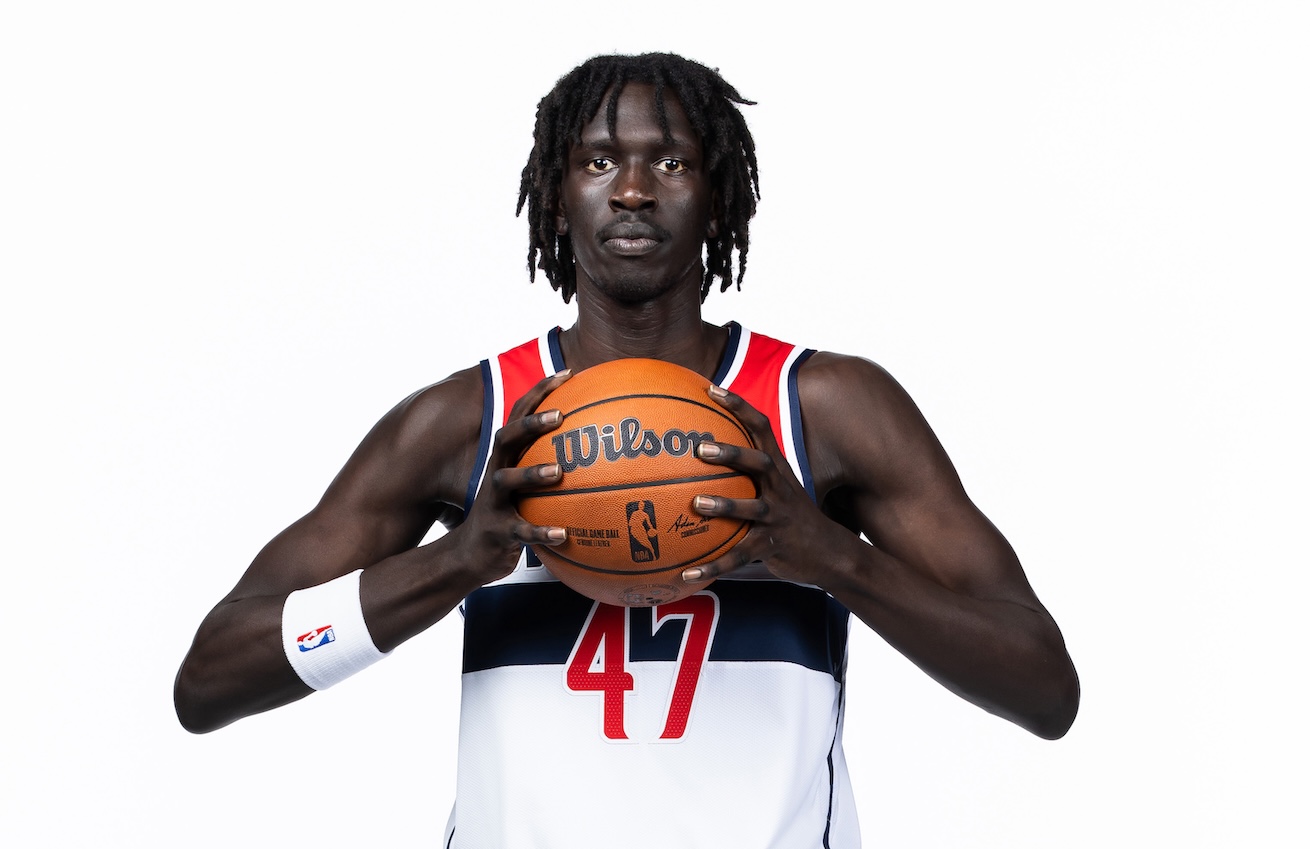
Washington Wizards and Australian basketball prospect Akoldah Gak poses for a portrait during NBA Media Day ahead of the 2025–26 NBA season at Capital One Arena in Washington, D.C. Photo: Stephen Gosling/NBAE via Getty Images
NCAA eligibility changes could reshape the pathway for Australians entering US college basketball.
- Every Australian in the NCAA Women's basketball in 2026-27
- Every Australian in NCAA Men's basketball in 2026-27
- Latest News: Read more about Aussies in NCAA
- Every Australian player in the 2026 Transfer Portal
For decades, NCAA basketball was the domain of amateur athletes chasing dreams of playing professionally – until Name, Image and Likeness payments became a thing.
NIL money has opened a Pandora's Box that is now impossible to close, and the NCAA’s approach to plugging the loophole dam now appears, well, amateurish.
After schools committed millions to the EuroLeague, the NBL, and overseas players last season, and ahead of the 2026-27 season the timing of the eligibility criteria has sent a shockwave through basketball communities around the world.
What it means for players who have already signed with American colleges next season remains unclear and anxiously uncertain.
The NIL era started with only limited guard rails and now the NCAA is suddenly trying to pull the handbrake.
South East Melbourne Phoenix and Australian Boomers guard Owen Foxwell has committed to Wisconsin; Sydney’s Akoldah Gak has signed with Oklahoma after playing in the G-League with the Capital City Go-Go's; and Brisbane Bullets guard Tristian Devers has committed to the Washington Huskies while Illawarra Hawks development player Kobe McDowell-White has reportedly received an offer from University of Tennessee at Chattanooga.
Laughably, Kansas State Australian star Tess Heal was stood down by the NCAA during the 2025-26 season because she signed with an NBL1 contract with the Keilor Thunder. She was later re-instated but missed several games despite hundreds of players earning money via the NIL.
The number of Australian men and women set to play division one college basketball in the US in 2026-27 is closing in on 180. More than 50 Australians have transferred to new schools via the 2026 Transfer Portal.
The NCAA’s new international eligibility guidance is mainly targeting two things:
- Professional league participation
- Compensation received before enrolling in college
The problem is that the language is broad and the enforcement is still unclear.
Here’s what changed:
Players can lose eligibility if they:
- Signed agreements with professional teams
- Played in leagues considered fully professional
- Received compensation above “actual and necessary expenses”
The NCAA specifically referenced leagues with minimum salaries above expenses, including:
- NBA
- WNBA
- NFL
- Premier League baseball/soccer examples
It would mean NBL Next Stars Dash Daniels and Luke Paul could be ineligible to play college basketball even if they wanted to, along with other rising stars who have been paid to play in the NBL or WNBL.
But the key issue for basketball is Europe.
The NCAA is now strongly implying that major international leagues – especially the EuroLeague and top domestic leagues like Spain’s ACB – could make players ineligible.
Highly-respected Draft Express' analyst Jonathan Givony declared the NCAA was closing the door on international players: "The NCAA's new (very poorly timed) rule sends a clear message: international players are no longer welcome in the college game.ACB, France, Italy, Australian NBL and anyone who's ever played for a EuroLeague team, even for next to nothing, are suddenly permanently ineligible?"
SEC Associate Commissioner Garth Glissman responded to Givony's post with: I have great respect for Jonathan’s work dating back to my time at the NBA, but I respectfully disagree with his characterisation of the NCAA’s approach to international players.
"The NCAA does not seek to exclude all international players.
"Rather, the NCAA seeks to implement common sense limits on whether, and the extent to which, international players who have played multiple seasons of high level pro basketball overseas have remaining NCAA eligibility.
"Getting this issue right is essential to preserve fairness and opportunities at predominantly taxpayer-funded American colleges for American kids who typically graduate from HS at age 18 and, as a practical matter, must immediately enrol in college if they want to continue playing high-level basketball."
.jpg)
Why this new rule matters for international players
Previously, schools believed elite international pros could still play NCAA basketball because multiple players were cleared last season, including:
- Dame Sarr (Duke)
- Ivan Kharchenkov (Arizona)
- James Nnaji (Baylor)
- Elias Rapieque (Kansas State)
- Thijs De Ridder (Spanish ACB)
That encouraged colleges to aggressively recruit international professionals in 2026.
Now the NCAA is essentially saying:
“Not so fast.”
The biggest rule shift
The NCAA appears to be moving toward an age-and-professionalism model instead of the looser interpretation schools had been operating under.
Under the new interpretation:
- Playing professionally for longer periods could cost players seasons of NCAA eligibility.
- Some players could become fully ineligible.
- Cases will be reviewed individually based on:
- Salary earned
- Length of professional experience
- Strength of the league played in
The “actual and necessary expenses” issue
This is the grey area causing panic.
Traditionally, international players could still be eligible if they only received:
- Housing
- Food
- Travel
- Small living expenses
Now, if a player earned a genuine salary above those expenses, the NCAA may treat them as professionals.
That potentially impacts:
- NBL Next Stars
- EuroLeague juniors
- NBL1 imports overseas
- Australian Institute/CoE pathway players who signed overseas
- Young Australians in Europe
Another major change: NGB waivers
The NCAA also tightened the rules around the “NGB waiver” (National Governing Body waiver).
That waiver previously helped older international players preserve their eligibility by delaying college while playing for national teams.
Now:
- Those waivers are much harder to obtain
- They may disappear entirely if the NCAA adopts a full age-based eligibility model later this year.
Why coaches are angry
Schools have already spent huge NIL money recruiting these players.
Some EuroLeague players reportedly agreed to seven-figure college deals before this guidance dropped.
So coaches feel the NCAA changed the interpretation after rosters and budgets were already built.
Adding even more uncertainty, Sports Illustrated’s Kevin Sweeney, who broke the story, wrote: “It’s still very early in the eligibility review process for the vast majority of the top international talent that has signed with college programs in recent weeks, so the practical impact of these changes is still unclear.”
Code Sports Basketball reporter Michael Randall hammered the NCAA: "The NCAA clearly cannot get out of its own way.
"NIL has been a clown show from the start – turned college hoops into the Wild West because they didn’t have a clue what they were opening the door to, now a ridiculous correction the other way."











.avif)




.avif)